





Europe accepts responsibly-caught Coral Triangle tuna
The first-ever Philippine shipment of handline-caught tuna with catch certificates successfully entered into the European market in February.
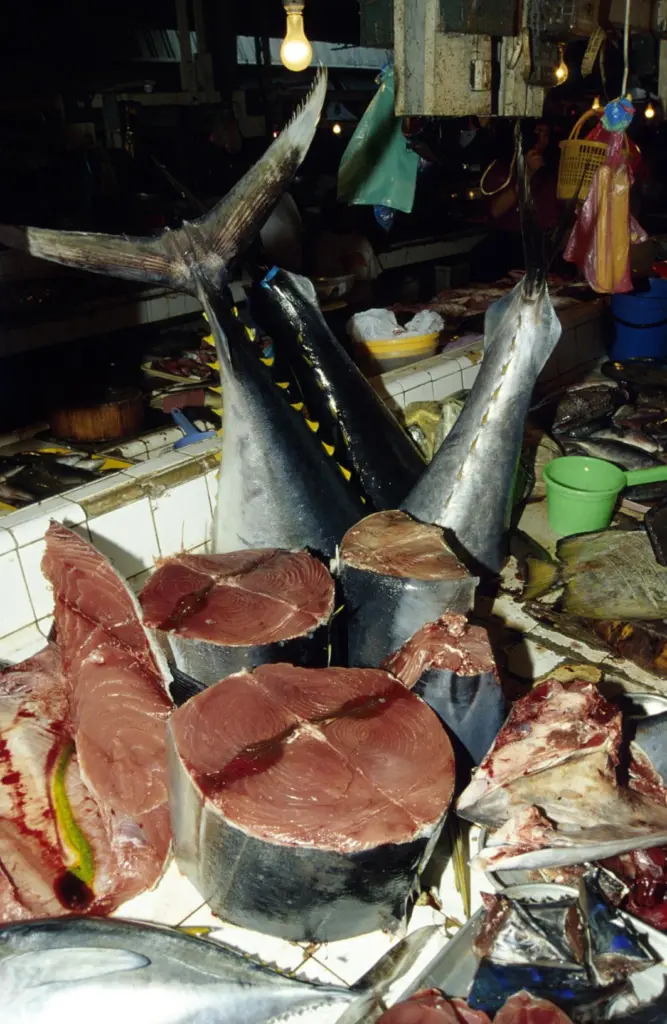
This first batch of fresh/chilled loined tuna caught in Mindoro, Philippines, came with catch certificates ensuring their traceability and verifying that they were from registered boats operating in legalised areas using highly selective fishing gear.
“This positive development comes just after the EU banned untraceable tunas from entering its ports at the start of this year,” says Dr Jose Ingles, WWF Coral Triangle Programme Tuna Strategy Leader.
The traceability system was developed and facilitated by the Philippine Bureau of Fisheries and Aquatic Resources (BFAR) and approved by the EU earlier this year. These traceable tunas came from Mindoro through a project partnership with WWF, the local government, and the private sector, as a response to the stringent catch certification policy imposed by the EU in light of growing consumer demand for sustainable seafood products.
With this first shipment, it is now possible to trace back the tuna loins to the fisher, the boat, and the exact location of the fish aggregating device where the fish was caught.
Tuna in the Coral Triangle, which spans the Philippines, Indonesia, Malaysia, Papua New Guinea, Solomon Islands and Timor-Leste, adds considerably to the economies of many developing nations and supports the livelihoods of millions of people in this region and beyond.
The Coral Triangle contains spawning and nursery grounds and migratory routes for commercially-valuable tuna species such as bigeye, yellowfin, skipjack and albacore, producing more than 40% of the total catch for the Western Central Pacific region, and representing more than 20% of the total global catch.
Related Articles
 FISHERIES
 FISHERIES
 WORLD FISHING EVENTS