




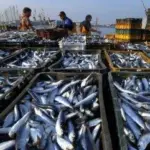

Escaping the heat
If predictions of ocean warming come to pass, scientists now know what to expect thanks to a new study carried out by Australia’s James Cook University (JCU) that revealed fish tend to retreat to deeper water to escape the heat.
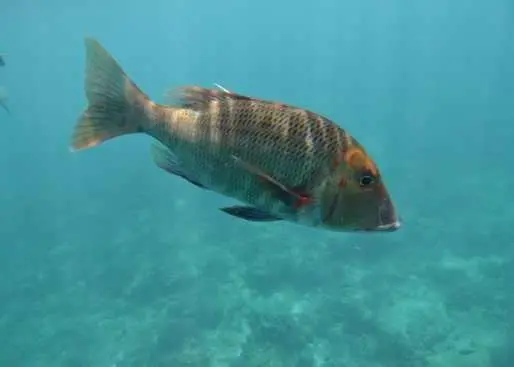
For the study, JCU scientists tagged 60 redthroat emperor fish at Heron Island in the southern Great Barrier Reef. The fish were equipped with transmitters that identified them individually and signalled their depth to an array of receivers around the island for up to a year.
According to the data, fish were less likely to be found on the reef slope on warmer days. Scientists considered temperature, air pressure, rainfall, wind and moon phases as reasons for the shift, but discovered the only significant correlation was with temperature – the redthroat emperor were consistently monitored when water was less than 24 degrees Celsius.
Lead researcher, Dr Leanne Currey, said: “This is a commercially important fish and we are looking at a significant depth shift.”
Redthroat emperor is caught by commercial and recreational anglers near coral reefs, and is the second most favoured fish, behind the coral trout.
“If it’s not around in the shallows in the future then fishers will have to redirect their efforts and it may be significantly harder to catch them. The fish has been known to tolerate depths of up to 160m,” Dr Currey added.
Dr Currey said instead of diving deeper, the species may instead shift south in search of cooler water at the same depth. She said some redthroat emperor had recently been caught off Perth, far from their normal habitat further up the West Australian coast.
The next phase of the research is to investigate whether the fish could adapt physiologically to warmer sea temperatures, as it appeared other species could.
Related Articles
 FISHERIES
 FISHERIES
 WORLD FISHING EVENTS