





Engine room simulator for Ghana
The Regional Maritime University (RMU) has awarded Kongsberg Maritime a contract to deliver its K-Sim Engine simulator for its premises in Accra, Ghana.
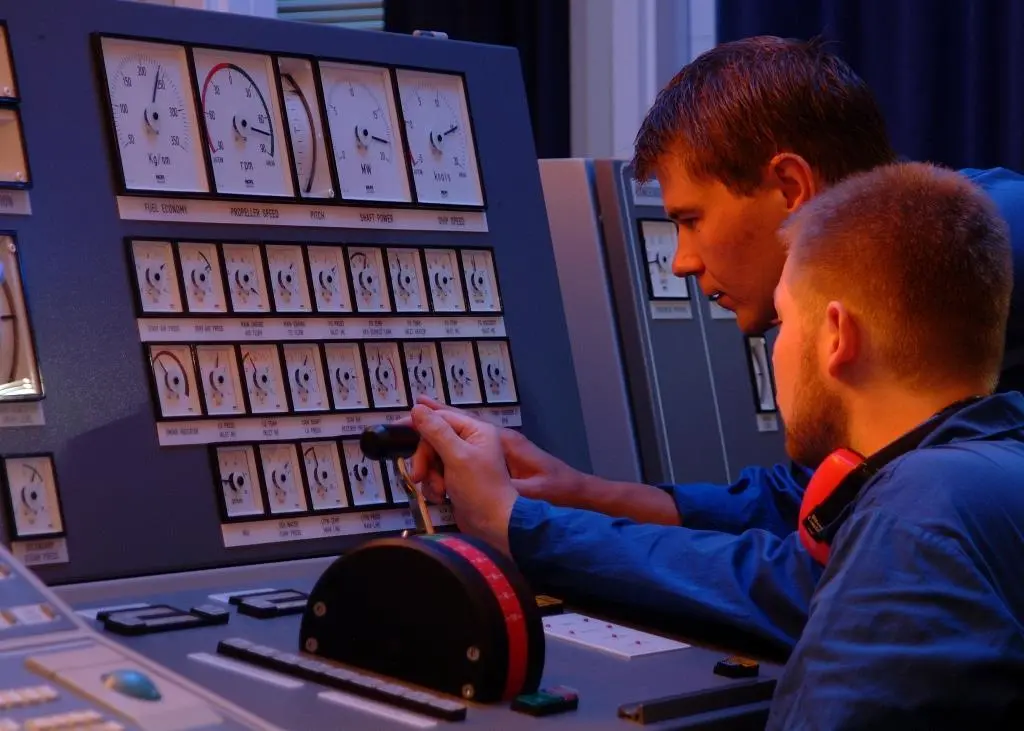
The highly advanced Full Mission Engine Room Simulator (ERS), which is due for delivery in May 2014, will enable RMU to provide education according to STCW requirements.
RMU exists to enhance development of the maritime transport sector and the fishing industry in member states through the maritime education of students, training of marine personnel, research and consultancy and promotion of maritime cooperation.
“One of the drivers for acquiring a new generation ERS was to promote regional co-operation in the maritime industry, focusing on training to ensure sustained growth and development,” comments Augustus Addy-Lamptey, Ag Dean of the Faculty of Engineering, RMU. “The technical capabilities of K-Sim Engine and the long-term training possibilities it gives us will help us to reach our goal of becoming known and recognised as the tertiary institution of choice in advanced maritime education and training, in Africa and beyond.”
The K-Sim Engine delivery for RMU comprises a full-mission ERS approved by DNV-GL according to Standards for Certification 2.14 (2011). Demonstrating the flexibility of K-Sim Engine, four vessel models will be available on the simulator: Trawler, Ferry, Anchor Handling Tug and Supply vessel (AHTS), and a low speed VLCC. Kongsberg Maritime will also deliver eight K-Sim Engine desktop stations, with Ferry, High Speed Craft with waterjet, AHTS vessel and VLCC models installed.
K-Sim Engine is in operation at maritime and offshore training institutes worldwide. It offers a wealth of functionality and configuration possibilities. Functionality at RMU includes 3D applications for Kongsberg Maritime’s BigView interactive mimic panel system, which can visualise in 3D, for example, fire in a compartment as well as the impact of firefighting actions.
The simulation models feature compressors, purifiers auxiliary generators, oil fired boilers and main engine along with all control, monitoring, emergency and alarm functions –simulated to high degrees of physical realism and meeting DNV requirements. The engine control room console also features a separate simulated CCTV for flue gas indication.
Related Articles
 FISHING TECHNOLOGY
 FISHING TECHNOLOGY
 COMMENT