





End of the line for bottom trawling?
A landmark agreement has been reached to end high seas bottom trawling, one of the world’s most destructive fishing practices, in nearly a quarter of the world’s oceans.
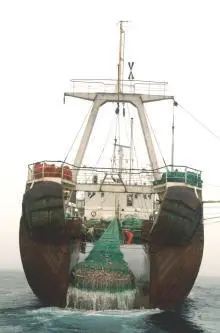
The deal, made at an international fisheries meeting in Chile by some 20 countries, including the majority of the world’s high seas fishing nations, seeks to protect marine life and vulnerable ecosystems in a huge area of the oceans – the high seas of the whole of the South Pacific Ocean from the equator to the Southern Ocean, stretching from Chile to Australia.
“The agreement is a great leap forward for halting the decline in ocean biodiversity and establishing good fisheries management on the high seas,” said Alistair Graham, High Seas Policy Advisor at WWF International.
Matthew Gianni of the Deep Sea Conservation Coalition (DSCC), which campaigns for high seas protection from bottom trawling, was present at the RFMO meeting and said, “This is a major step forward in the protection of biodiversity on the high seas. This is the most significant meeting of fishing nations since the UN GA resolution and it has done what the resolution required. It can be done, it has been done, and it’s time for all countries to do the same in all other ocean regions.”
The agreement will exclude bottom trawling from high seas areas where vulnerable ecosystems are likely or known to occur, until an impact assessment is undertaken and until precautionary measures to prevent destruction of marine life, such as vulnerable fish stocks, cold water corals and sponges, are implemented.
Observers will also be required on all high seas bottom trawlers to ensure that regulations are followed. The cost of these observers is to be borne by the fishing vessel. This, together with rising fuel prices, and the requirement to conduct research and assessments of the fisheries, says WWF, will increase the cost of fishing and may well render high seas bottom trawling uneconomic and effectively lead to its end.
The deal goes into force on 30 September, well ahead of a deadline set by the UN General Assembly to halt bottom trawling in areas not covered by competent fisheries management organisations by the end of this year.
The measures agreed at the meeting will remain in force until the formal establishment of the South Pacific RFMO in several years time.
According to WWF, the meeting was less successful with regards to open water fisheries. Important stocks of squid and mackerel are fished in the area. Some of these stocks are feeling the brunt of high fishing levels. Chilean jack mackerel, one of the economically most important fisheries in the South Pacific, has been reported as fully exploited. WWF is very concerned that the agreed interim measures to protect the pelagic mackerel stock while an agreement is being finalised are inadequate.
“If mackerel stocks are allowed to be overfished, the ecological, social and economic impacts would be serious, especially for dependent local communities and for species such as tuna and swordfish that feed upon mackerel,” Alistair Graham said.
Related Articles
 FISHERIES
 FISHERIES
 WORLD FISHING EVENTS