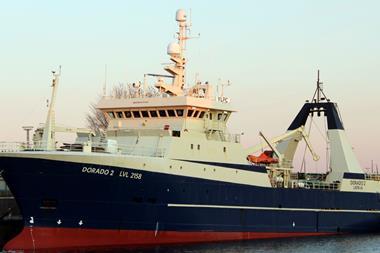




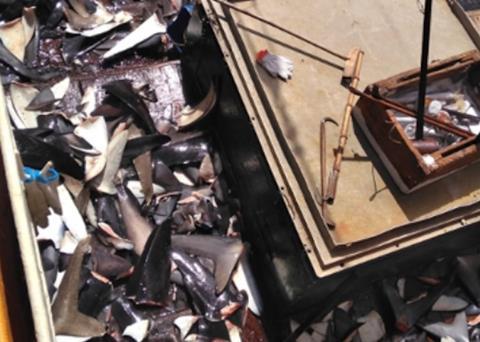
?Taiwan’s Fisheries Agency has fined the owners of a distant water vessel 10.25 million New Taiwan Dollars (US$ 370,000) for illegal shark finning and catching prohibited species such as oceanic whitetip sharks.
The vessel’s licence was also suspended for 11 months. The Environmental Justice Foundation (EJF), which submitted the first evidence on the vessel to the Taiwanese authorities, has welcomed this outcome but warns that its investigations show that Dong Cheng 368 is one of many, and that systemic changes, such as mandatory CCTV and more extensive port inspections are needed to truly tackle the problem.
“It is good to see that our evidence was useful for the Fisheries Agency in apprehending and sanctioning the perpetrators of these environmental crimes, but equally it is disappointing that the government is not actively uncovering these abuses itself,” said EFJ CEO Steve Trent.
EJF submitted its investigation data to the Fisheries Agency in 2018, after interviewing crew who had made statements to the effect that they had been ordered to remove sharks’ fins and discard the bodies. This is illegal under Taiwanese law.
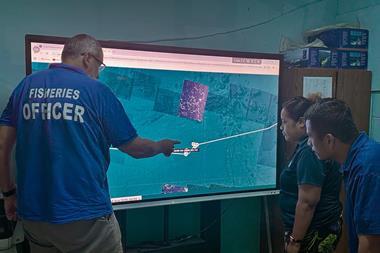
The Fisheries Agency subsequently inspected the vessel while discharging, and found evidence of shark finning.
The vessel was then issued with a considerable fine and its licence has been for 11 months.
EJF’s investigation also established that crew on board Dong Cheng 368 alleged that they were made to work for extremely long hours – sometimes 14 hours with only a 3-4 hour rest before the next shift – but although the vessel is still under investigation by the authorities, no further sanctions have been made.
EJF’s submission included evidence of human rights abuse and illegal fishing from more than 60 other Taiwanese vessels, many of which are still being investigated by the authorities.
“Our investigations indicate that these practices, and the human rights abuse that often accompanies them, are widespread within the Taiwanese distant water fleet, not restricted to a few badly behaving vessels,” Steve Trent said.