





Efficient worldwide sardine production
Ulf Groenqvist, president of fish processing machine manufacturer, AB SEAC, looks into the worldwide production of canned sardines and similar fish and calls for a new sorting/grading machine.
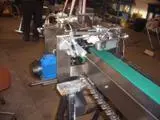
After over 25 years in the fish processing machine business Mr Groenqvist says that he still notices that there are two main problems for having efficient worldwide production of sardines, either for fillets or for canning:
1. How the fish is fished and stored onboard fishing boats, the reception of the fish at the harbour, and the transport of the fish to the processing factory/cannery
2. How the fish is pre-sorted/graded/classified before production in any of the world’s different fish processing machines
There are a number of different types/manufacturers of processing machines for the sardine canning industry today. Here are the five main suppliers:
• AB SEAC – completely renovated/rebuilt mechanical nobbing machines (and, from 2005, brand new machines with either mechanical or vacuum gutting)
• Baader – different types of nobbing machines
• Cabinplant – vacuum nobbing machines
• Hermasa – vacuum unit machines
• VMK Fish Machinery AB – vacuum unit nobbing machines
All of these machines are very similar and all of them are dependent on the quality of fish landed, as well as the pre-sorting of fish, to have the highest possible yield, resulting in more profit for the canneries.
All machines, even if they were designed during the 1950’s and 1960’s, work in almost the same way, with the difference being either vacuum or mechanical gutting operations. The vacuum unit machines are the latest designed, but there are advantages to both types:
Mechanical gutting operation
With mechanical gutting, the machines are working ‘as close to hand gutting’ as possible. The machines work on the technical principal that the fish has its entrails fixed at the head (top) of the fish and when the machine is cracking/gripping the fish head the entrails are following with the fish into the offal chute. Even remaining entrails are taken away by two gutting rollers.
Such machines have also proven to be more reliable during the H&G of softer fish such as blue whiting and saury where the belly is so soft that, during vacuum operation, it cracks and then it is impossible to get cleaned bellies. Also for softer defrosted fish there have been certain advantages with mechanical gutting. The mechanical gutting operation also leaves the roe/milt inside the belly which gives higher canning results.
Vacuum gutting operation
The biggest advantages are, of course, that less water is needed during operation and that the entrails go into a vacuum tank – not into the offal chutes. However, the disadvantages are that the price is often are much higher than the mechanical gutting machines due to the extra vacuum unit – motor and tank. The roe and milt is also lost into the offal and there may be some problems when working with very soft fish due to belly cracking.
Today both types of machines can work with fish of certain size variations – but the less pre-sorted fish, the less yield the producer gets. The machines are always adjusted for one size and all sizes just under and over this size are cut very efficiently and with higher yield. However, far from this adjusted size the user will get less yield and more rejected fish during operation.
Normally, a wide range from 6-12 or 13-25 in each machine can be produced, but the user still faces problems with the yield – it always depends on the pocket size but here the size and length of the head pockets are also very important.
AB SEAC installed six mechanical nobbing machines in the Far East some years ago and they work at a speed of up to 325 fish/min which means that the machine does what 15-16 operators do manually with all savings included, plus the increased hygienic standard. Yield on sardines has been between 65-72% and on small mackerel 56-60%
Still, if there was be an efficient sorting/grading machine on the market – able to pre-sort a minimum of 10t per hour into 3-4 grades – the efficiency and yield would be higher and each cannery would earn more money, says Mr Groenqvist.
Related Articles
 PROCESSING & REFRIGERATION
 SEAFOOD
 SEAFOOD