




Eels caught in illegal French trade
A British eel expert has said that hundreds of millions of young eels are at the heart of an illegal and growing French export trade.
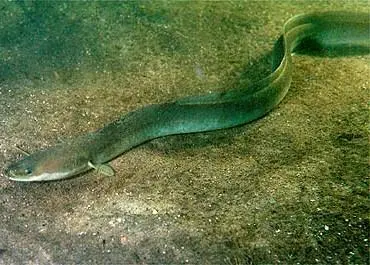
They are carried about 3,500 miles every year on Atlantic currents to Europe, then flown 5,400 miles further on to China, where they are a delicacy on a par with shark fins. They are just now starting to reach the French coast on the Bay of Biscay at the end of a two-year journey floating over from their breeding grounds in the Sargasso Sea south of Bermuda.
Andrew Kerr, chairman of the European Sustainable Eel Group said trawlers are waiting to scoop up the three-inch-long eels, known as elvers, as they seek to swim into the Adour, Gironde, Loire and other rivers to spend the next ten years there growing into adult eels, before beginning the long swim back from Europe to their Atlantic breeding grounds to begin again.
Mr Kerr said the illegal trade was thriving because the annual French quota for the tiny eels was set twice as high as the 30 tons the EU market needed. The 2015/2016 quota was 57 tons.
“This needless oversupply of elvers enables the illegal trade,” Mr Kerr told experts in eel conservation from 12 European countries at an Institute of Fisheries Management (IFM) symposium in Peterborough.
The trawling would go on from November until French regulators assessed this year’s quota had been caught. This could take until April 2016 but probably sooner.
Of the 30 tons of elvers used in the EU roughly half went to restocking waterways and half to human consumption.
International eel trading from EU countries is prohibited under the Convention on International Trade in Endangered Species (CITES), which lists eels as endangered.
“The fish illegally traded with China go to fish farms to grow for human consumption but never breed. If they remained in Europe we would have another 100 million eels each year for release into our waterways which would help boost the recovery programme.”
French police were making great efforts, Mr Kerr added, and finding it “very difficult” to identify and prosecute organisations and individuals engaged in the trade with China.
Related Articles
 FISHERIES
 FISHERIES
 WORLD FISHING EVENTS