


Eco-friendly EPS handling turns waste into money
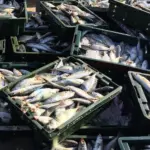
On a good day as many as 1,000 boxes of salmon are fed into the production department at Danish smoked fish giant Norlax A/S. The huge quantity of expanded polystyrene (EPS) boxes used to fill four truckloads per day, which commuted constantly between the companys premises and a waste handling company 30km away. But nowadays, the boxes are compacted into blocks in a RUNI SK370.
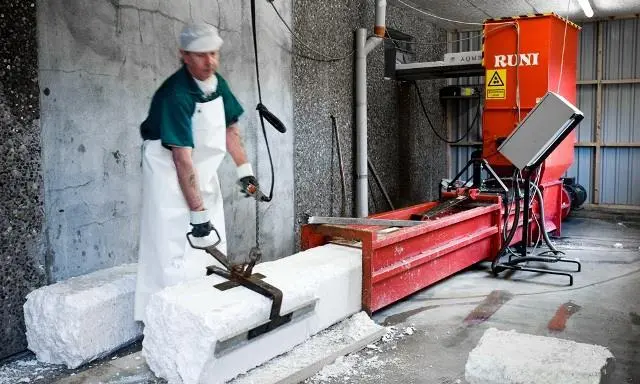
The blocks are collected every two weeks, when there is a total of 10 pallets, representing a total of around 5.5 tonnes.
“The RUNI SK370 is highly durable and easy to operate. We have to adjust it a little from time to time because there is a difference between the various EPS types in the boxes we receive. Nine blocks on a pallet typically weigh 550kg, but we have also been right up to 800kg,” said factory manager Carsten Krarup.
The compactor is located in an outbuilding added on to the production building. In the main building, empty boxes are pushed on a slide and directed into the machine once they are empty. They are turned upside down to empty ice and water out before being compacted.
“It’s more environmentally friendly to sell EPS for recycling instead of disposing of it as waste, and it becomes a source of income instead of a cost. EPS boxes used to be very expensive to dispose of,” said Krarup.
The compacted EPS blocks bring in about DKK 1,600 (€215/$280) per tonne, and apart from the waste charge, four daily truck runs are saved, including labour and truck hire.
“Overall, the machine has more than paid for itself, even with the building we put up to house it. We got a return on investment within a maximum of two years,” said Krarup.
Related Articles
 FISHING TECHNOLOGY
 FISHING TECHNOLOGY
 NEW VESSELS