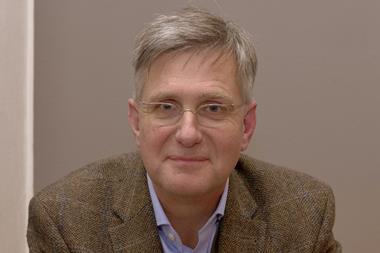




Joe Borg, European Commissioner for Fisheries and Maritime affairs, welcomed the "frank and open discussion" held in the Ministers for Fisheries meeting in Council in Brussels recently, which demonstrated the support of the Council to take courageous steps to have a real and meaningful reform of the Common Fisheries Policy and also a new approach to the phasing out of discards.
On the CFP, Ministers accepted to further stimulate the debate with direct and indirect stakeholders in their country as well as with the public in general.
Commissioner Borg also presented a new approach to the phasing out of discards. The practice of discarding marine organisms, including marketable fish, is one of the biggest problems facing European fisheries. The problem of discards is very complex, since discards take place for a variety of reasons. The different elements to resolve this problem require a step by step approach. The Commission says that this stepwise approach will focus in the short term on the most pressing issues and address regulated and other major commercial species.
Several measures can be taken in the short term under the current CFP rules, including:
• Enlarging the high-grading ban currently in place in the North Sea and Skagerrak for all TAC-regulated species as of 2010, so that it would cover all other Community waters
• Licensing vessels according to likely catches, in a way that ensures that only vessels having appropriate quotas have the opportunity to fish for regulated species
• The fishing industry needs to persevere with ongoing efforts on improving the selectivity of fishing gear, by increasing mesh sizes, introducing square mesh panels or adopting new gear designs such as the eliminator trawl
• Making more use of instruments such as real-time closures and the obligation to move fishing ground when a percentage of undersize catch is reached
• Pilot projects are important, as more information can be gained on the size of the discard problem in various fisheries. One example is the project of fully documenting a fishery by electronic monitoring, being run in Denmark
• Finally, reducing the overall fishing effort will also decrease discards
The Commissioner presented these measures to the Council of Ministers which will be reflected in upcoming proposals of the Commission starting this year.
"These are all contributions to resolving the discard problem that we can apply today. We cannot keep delaying the use of these instruments, there is no excuse," said Commissioner Borg.
"However, while much of what is necessary can and should be done immediately, other changes can only be effected as part of a major policy reform, which we have just launched with our Greenpaper," he continued.
"The question of how to implement these measures is crucial. The Commission wishes to simplify and reduce the costs of control of the CFP. On the other hand, controlling the necessary steps to eliminate discards does not necessarily come cheap. We therefore need to develop more creative ways of ensuring adequate implementation, for example through incentives. Here, the industry and its organisations must play a key role. The commitment to contribute to this objective will be a test of fishermen's commitment to the principles of long-term sustainability of fishing activity, which is enshrined as the fundamental objective of the CFP," said Commissioner Borg.