




DFG using state-of-the-art technology to tag and track salmon
Californias Department of Fish and Game (DFG) is employing new computerised technology to track 8 million baby fall-run Chinook salmon raised in Central Valley hatcheries.
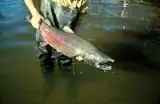
Information from coded wire tags implanted in the young fish will help fisheries managers make decisions regarding California’s multi-million dollar commercial and sport salmon fishery. This marking and tagging process is currently underway at the Nimbus Salmon Hatchery in Rancho Cordova.
“We are pleased to see this important project is under way to produce strategic information on Central Valley salmon,” said DFG State Fisheries Manager, Neil Manji. “This collaborative project will yield critical data for improving the long-term management of fall-run Chinook salmon in the Central Valley.”
Information on salmon survival and return is critical to salmon managers as they seek to stop the depletion of Central Valley fall-run Chinook salmon stocks. This year’s salmon fishing closures on Central Valley salmon stocks will cost California an estimated $279 million in lost revenue and 2,690 jobs.
This year, DFG is using four state-of-the-art AutoFish System processing trailers that can mark and tag up to 350,000 young salmon in a day. The cooperative program is spearheaded by DFG and includes the US Fish and Wildlife Service and the Pacific States Marine Fisheries Commission. The CALFED Ecosystem Restoration Program provided more than $6.7 million for initial equipment purchases and the first two years of project operations in 2007 and 2008. Beginning this year, operational costs of the program are funded by the hatchery mitigation agencies: The US Bureau of Reclamation, the California Department of Water Resources and the East Bay Municipal Utilities District.
The new tagging program provides a consistent rate of marking and tagging for Central Valley hatcheries, thus helping biologists track harvest rates in the ocean and inland fisheries. The data collected are used to calculate the proportion of spawning hatchery and natural fish returning to the Central Valley, which affects season setting and harvest quotas in California’s multimillion dollar commercial and sport salmon fishery.
Related Articles
 FISHERIES
 FISHERIES
 WORLD FISHING EVENTS