




Decline in oysters leads to ban
UK fishermen have been left reeling after plummeting numbers of oysters in the Solent led to a ban during their peak season.
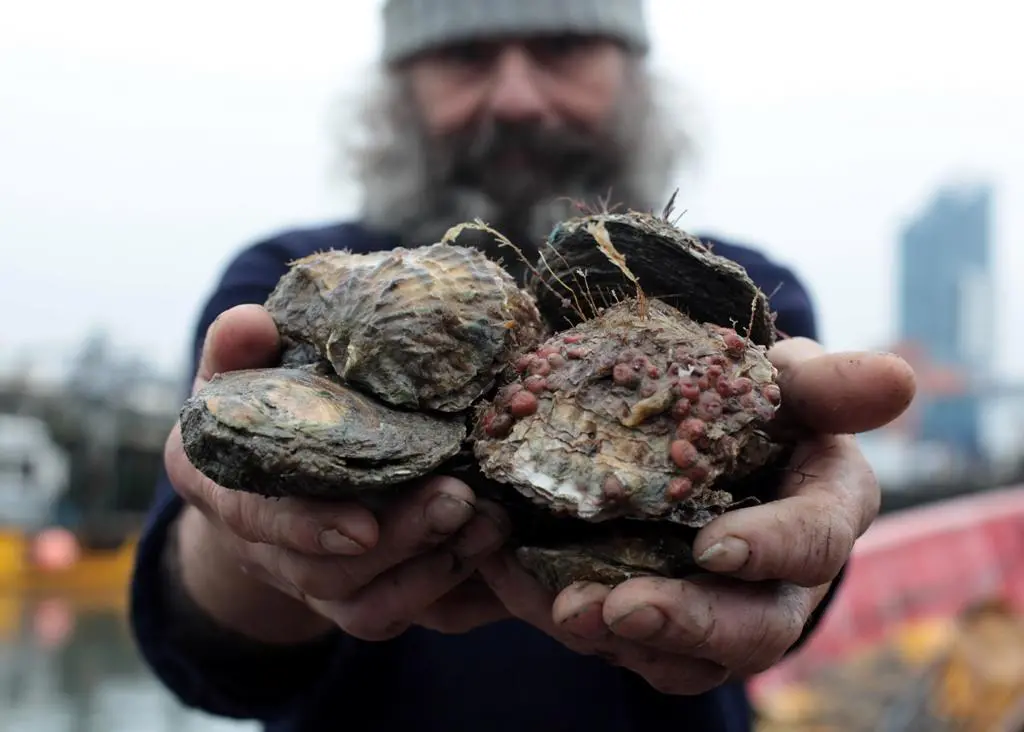
The Inshore Fisheries and Conservation Authority (IFCA) said oysters were “failing to reproduce” between the Hampshire coastline and the Isle of Wight, with the harvest dropping from 200 to 20 tonnes in the last five years.
The cause is believed to be down to overfishing and poor water quality.
Fishermen have been banned from fishing on the seabed during the four month oyster season between October and January, but harvesting had been allowed in a small section of Langstone Harbour, Hants, for four weeks ending on 1 December. The ban is due to a decline in number of spat, an oyster spawn, on the seabed.
Fisherman Moses Scott, 66, who has been fishing in his hometown of Portsmouth, Hants, for 50 years, said: “There has been a decline in the west end of the Solent about 10 years ago but the east end has held up until about three years ago.
“There is no spatful. Oysters create thousands of spat but no one can quite put their finger on why there is a decline.
“I doubt I will oyster fish again. I think after this season very few fishermen will do it. In the 1970s there were more than 200 oyster fishermen in the Solent – now there are no more than 10.
“The price of oysters has rocketed because of the demand for it – it’s now £100 pounds a bag. But because there are so little oysters around I have had to turn my hand to other fish now.”
Experts say the number of oysters available is believed to be just 10% of what it was five years ago.
The IFCA’s Rob Clark said the molluscs were “failing to reproduce and water quality and other invasive species have played their part, as has overfishing.
“We need to do something and we have to have some ambition how we can come together and restock this important fishery.”
Plans include breeding oyster larvae and returning them to the beds, as well as examining the experiences of similar environments around the world.
Dr Simon Boxhall, lecturer in Ocean and Earth Science at the University of Southampton, Hants, said: “These used to be the largest self-sustaining natural fishery for native oysters in Europe.
“In terms of sewage, the water quality in the Solent has improved dramatically over the past 20 years, so it’s very tricky to see what’s causing this sudden loss.
“There is a lot of work to be done in trying to work out what the problem is.”
Related Articles
 FISHERIES
 FISHERIES
 WORLD FISHING EVENTS