






CTI withdraws application
The China Tuna Industry Group (CTI) Holding Limited has officially withdrawn its IPO application from the Hong Kong Stock Exchange.
In September, Greenpeace found that CTI had understated the environmental and sustainability risks of the company’s operations, and provided outdated information to the investment community in its application proof version of prospectus.
Greenpeace alerted the Hong Kong Stock Exchange and China’s Bureau of Fisheries and the Stock Exchange suspended the IPO immediately, but it has taken the company several months to act.
“Unsustainable business-as-usual won’t work,” says Elsa Lee, Senior Business Advisor at Greenpeace East Asia, “The withdrawal of CTI’s IPO proves that unsustainable fishing is highly risky, and will not get through the scrutiny of financial market regulation, nor attract responsible investors.”
The IPO’s sole sponsor, Deutsche Bank, has never responded directly to this scandal, “Deutsche Bank learned their lesson the hard way, putting all that work in sponsoring an unsustainable and unethical company’s IPO, and getting nothing but a bad reputation in return,” added Ms Lee.
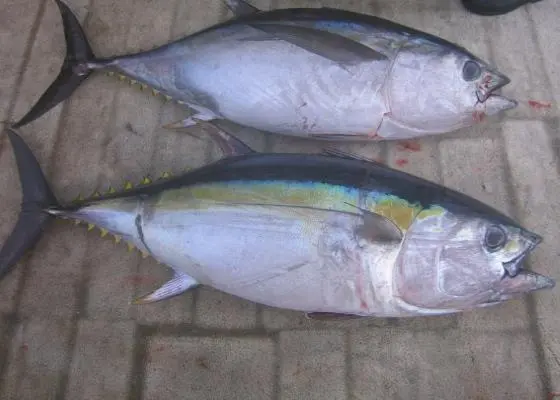
Greenpeace says that the draft prospectus included a major material omission, ignoring the most recent scientific assessment which showed bigeye tuna in the pacific is now overfished, a situation that seriously affects the viability of CTI’s business. The scientific committee of the Western and Central Pacific Fisheries Commission (WCPFC) has recently established that bigeye tuna stock is now at a dangerously low level and needs immediate conservation measures. China’s Bureau of Fisheries has confirmed it is conducting an investigation into CTI. The Bureau of Fisheries stated that, “The (draft) prospectus has gravely misled investors and the international community, and caused a tremendous negative impact.”
Related Articles
 FISHERIES
 FISHERIES
 WORLD FISHING EVENTS