





CSIRO conducts orange roughy research
Commonwealth Scientific and Industrial Research Organisation (CSIRO) scientists have been conducting research off eastern Tasmania to measure the amount of orange roughy stock, to ensure that sustainable commercial catch limits continue to be set for the stock.
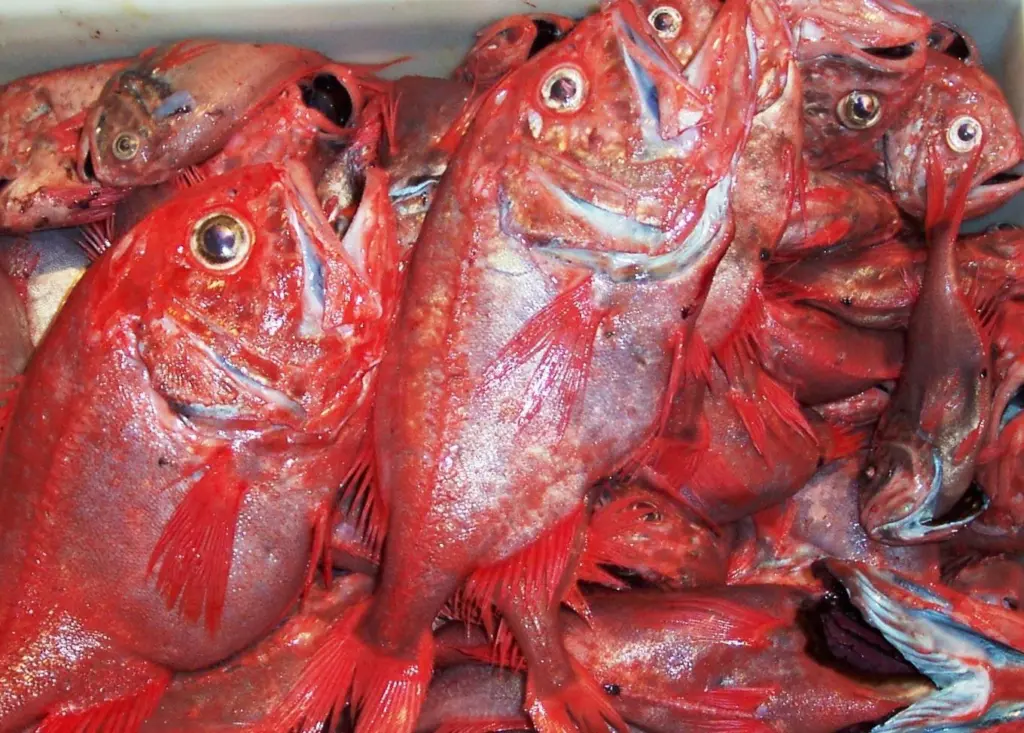
Orange roughy were heavily harvested during the 1980s and early 1990s to the point where catches had to be reduced. The commercial fishery off eastern Tasmania was eventually closed in 2006 and the species placed under a recovery program.
Since 2010 a number of orange roughy surveys have been conducted off the east coast of Tasmania which showed the stock has been steadily rebuilding. In 2015 the commercial fishery re-opened under a conservative catch limit of 500 tonnes. This level of commercial harvest was set to enable the stock to keep rebuilding.
The survey onboard the FV Empress Pearl uses sophisticated echo sounders mounted on a trawl net to measure the density of orange roughy in the schools. This information allows the biomass in the survey area to be estimated. Cameras mounted alongside the echo sounder capture images of fish in front of the net to confirm the species of the fish being scanned by the echo sounder.
Once the survey is completed, the data will be analysed to estimate the total stock size and enable the independent Australian Fisheries Management Authority (AFMA) Commission to continue to set sustainable catch limits. In doing so, the Commission will take advice from advisory groups made up of fishing operators, scientists and researchers, state and territory governments, conservation groups, recreational fishers and AFMA.
The Empress Pearl is expected to finish its at-sea work around 25 July.
Related Articles
 FISHERIES
 FISHERIES
 WORLD FISHING EVENTS