




Coral triangle set to gain from certifying key canned tuna fishery
Eight Pacific nations have announced they would seek sustainable seafood certification for up to 40 per cent of their skipjack tuna fishery.
The announcement that Marine Stewardship Council Certification would be sought for the fishery exploiting free swimming schools of skipjack came from the first Presidential Summit of Parties to the Nauru Agreement, a joint fisheries agreement between Papua New Guinea, Solomon Islands and the Federated States of Micronesia, Kiribati, Marshall Islands, Palau, Nauru and Tuvalu.
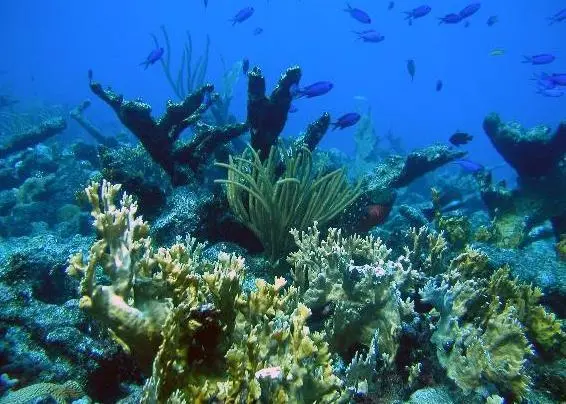
The size of the potentially certifiable skipjack catch is about 330,000 tonnes. With much of the fishery overlapping with the ecologically significant Coral Triangle area, WWF expects to be significantly involved with the assessment.
“This step by the ministers of PNA countries to improve their skipjack tuna fisheries and promote responsible fishing through MSC is an important development for the conservation and responsible management of tuna stocks in the Coral Triangle region,” said Dr Jose Ingles, leader of WWF’s Coral Triangle Tuna Initiative.
Certification is not being sought for any fishing involving the use of fish aggregating devices (FADs).
The MSC evaluation will only assess skipjack tuna caught in purse seine fisheries in unassociated sets, a fishing technique with the lowest likelihood of catching other overfished species such as juvenile yellowfin and bigeye tunas. This distinct section of the fishery catches approximately 364,000 tons of skipjack tuna per year in the Western and Central Pacific.
“If successful, this certification also brings new hope for heavily exploited juvenile yellowfin and bigeye tuna in the Coral Triangle, which are mostly caught in skipjack tuna fisheries and hopefully encourage other fisheries, not only tuna, to shift to unassociated sets or perhaps find better solutions to address the juvenile bycatch issue,” Dr Ingles added.
Related Articles
 FISHERIES
 FISHERIES
 WORLD FISHING EVENTS