





Conviction for killing sawfish
Florida fisherman Chad Ponce is facing two years probation, 80 hours of community service and a $2000 fine after being found guilty of killing an endangered smalltooth sawfish that was caught in his shrimp trawl.
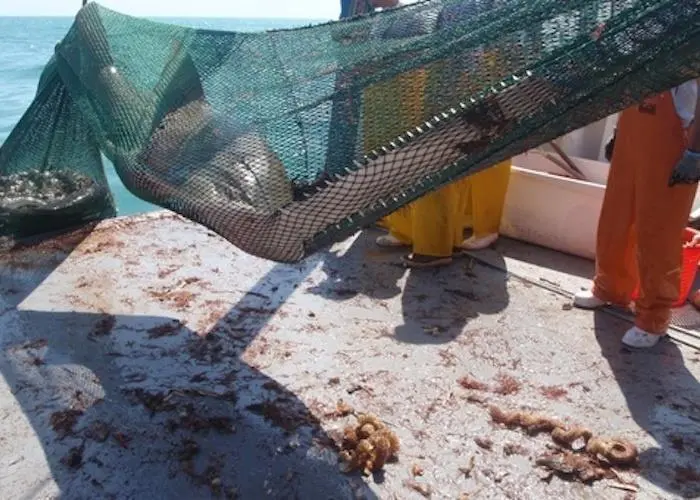
A judge handed down the sentence in December following a joint investigation by NOAA Fisheries and the Florida Fish and Wildlife Conservation Commission (FWC), which confirmed that a power saw had been used to cut the rostrum (saw or bill) off of the live fish before its body had been discarded. The sawfish was incidentally caught in one of Triton II’s shrimp trawls earlier that day.
Chad Ponce had at first attempted to use a hacksaw on the rostrum, but witnesses report he tossed that saw into the ocean when it didn’t work. He then used a power saw to cut the rostrum off the live animal. A fisherman in a nearby vessel witnessed the incident and reported it to FWC’s Report Sawfish for Science Hotline.
This hotline is typically used to document sightings and incidental captures by recreational anglers of sawfish for the purpose of monitoring the population. The report was passed on to NOAA, which oversees the conservation of species listed under the Endangered Species Act.
NOAA and FWC opened an investigation and FWC sent an officer offshore to Triton II on the day of the report. DNA evidence connecting Chad Ponce to the crime was gathered in the course of the investigation.
He initially denied the wrong-doing but then pleaded guilty to the charges of killing an endangered species on Friday, 1st November 2019. The maximum penalty for killing an endangered species is one year in prison and a $50,000 fine.
Sawfish primarily use their rostrum for sensing and hunting prey. Not having a rostrum forces them to scavenge for opportunistic food sources instead, generally resulting in starvation.
The smalltooth sawfish is one of five sawfish species worldwide and the only one still found in U.S. waters. All five species of sawfishes are in danger of extinction and listed as endangered under the Endangered Species Act, as well as some international authorities. The smalltooth sawfish was once found in coastal waters from North Carolina to Texas, though it is now generally only found in the southern half of Florida.
Two primary threats led to the decline of sawfish in the United States; bycatch mortality in fisheries (especially net fisheries such as trawls and gillnets) and habitat loss. While conservation measures are in place to protect them, smalltooth sawfish are still adversely affected by human activities.
Related Articles
 FISHERIES
 FISHERIES
 WORLD FISHING EVENTS