

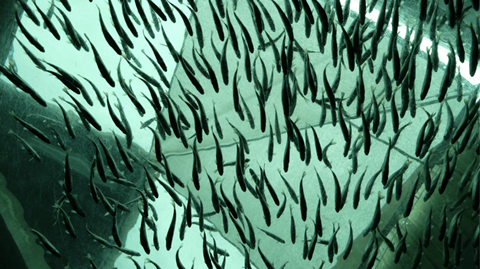
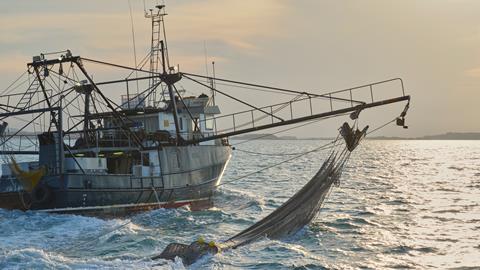
Michael M. Rozenshtein and Konstantin. V. Sokolov of the Kaliningrad State Technical University look at the advantages of computer-aided trawl systems - Does your trawl design suit the object of fishing, its behaviour and space distribution? This is the key question in evaluation of its performance. However, trawl''s catchability, unlike technical parameters (material strength, required rigging, etc), can not be calculated at the design stage.
Thus, we can not ensure high efficiency of the trawl system operation without accounting for the object of fishing. One of the solutions to this problem was proposed by the Chair of Commercial Fisheries of the Kaliningrad State Technical University. It is the method of trawl design according to the prototype, developed under the leadership of Professor A.L. Fridman.
It is obvious, that it is expedient to design a new trawl on the basis of the already existing one with proven high catchability. A relatively simple and precise mathematical method based on the theory of similarity allows to calculate new design parameters on the basis of a prototype, accounting for new operational conditions (vessel towing power, new construction materials, new requirements for material strength, etc) and, as well, the latest data on fish behaviour.
With the computer-aided design we have not only improved the existing method but developed new possibilities, such as for example putting together a whole trawl system with a high level of matching of its parts parameters. This project was carried out by the Laboratory of CAD for Fishing Technology created at the Chair of Commercial Fisheries.
The first two program packages "Substantiation and Optimisation of Trawl Design Parameters" and "Trawl Otter Boards Balancing" were demonstrated at the World Fisheries Exhibition in Copenhagen (1995) and at the International Fisheries Exhibition in St.Petersburg (1996). A number of representatives of the leading European fishing gear and rigging producers, as well as fishing companies, showed great interest in these programs.
The first package provides calculations of basic trawl parameters (vertical and horizontal mouth opening, speed of trawling, overall resistance, mesh size, twine and cable diameter in bellies), which on the one hand, account for fish behaviour and space distribution (size of the school of fish, distance of the reaction to the gear parts), on the other hand they match it with the available tractive force of the trawler. The programs existing before did not include fish behaviour factor into designing process, and this is the key difference between them and our software packages.
Calculation of the mentioned above parameters is carried out on the basis of a prototype trawl data, which guaranteed high precision an reliability of the obtained results.
The described package includes 7 main programs. The first one The first one identifies the required values of the vertical and horizontal mouth openings on the basis of data on typical sizes of fish schools and their mobility, which will provide superposition of the trawl mouth with the area of the school vertical cross-section with the pre-set probability. The obtained dimensions of the trawl mouth will thus provide the necessary condition for catching the school of fish.
The second program calculates possible combinations of values of trawl linear dimensions, towing speed, overall resistance, twine and cable diameters (accounting for strength), which would match the available tractive force of a trawler within the range of trawling speeds or, alternatively, linear dimensions of the gear.
The third program will find the optimal combination of values out of all those produced by the second program. This will be the option providing the maximum catch per unit of time.
The forth program evaluates basic parameters of a mid-water trawl, aimed for operation with a vessel of a lower power than that of a prototype trawl vessel. The program calculates the combination of values of the linear trawl dimensions and the trawling speed which will provide catchability no lower than that of a prototype trawl.
The fifth program identifies the parameters of a deep-water trawl. It calculates possible values for resistance forces of nets and cables, trawl rigging and otter boards, the weight of the latter in water, which would provide the pre-set depth of trawling within the limited warp length.
The sixth program calculates and visualises the shape of a warp which is used to tow the trawl with the pre-set parameters; identifies the level of trawl motion, which would correspond to the pre-set length of warps, or, alternatively, the length of warps which will provide the pre-set level of trawl motion; calculates the horizontal opening of the gear.
Trawl system
And the seventh program of the package identifies geometrical and physical parameters of a trawl system as a whole. It calculates and visualises the levels of the trawl and trawl otter boards motion, horizontal opening between the otter boards, resistance of a trawl system and its parts: warp, otter boards, nets and cables with rigging.
The package includes two databases:
* available tractive forces of trawlers;
* technical parameters and cutting designs of the existing trawls.
Geometrical parameters of a trawl are visualised in the form of a technical drawing which can be edited by the user.
The second program package calculates the balance position of an otter board, its resistance, spreading, deepening and lifting forces on the basis of the pre-set geometrical and hydrodynamic parameters. This will allow to identify the spatial position of any type of an otter board in water, i.e. its attack angle, heel and different for the pre-set values of co-ordinates of the connection points of warp and trawl cables. The task can be reversed: the values of co-ordinates of the connection points of warp and trawl cables can be calculated for specific values of the attack angle, heel and different. As a result of calculations we also obtain the data on the static stability of trawl otter boards according to the attack angle, heel and different, moments of forces acting on all the three co-ordinate axes and the values of forces affecting an otter board.
One of the specific features of the present package is accounting for the real interaction of a bottom trawl board with the ground. It identifies the position of a board calculating the depth of its deepening into the ground, which depends on the bearing capacity of the ground, the weight of a board in water and its keel geometrical parameters.
For the user's convenience the process of data entry is accompanied by the reflection of the otter board view in three projections. The results of calculations, besides the table presentation, are visualised in the form of schemes and graphs, which facilitates the analysis for the user.warp and trawl cables can be calculated for specific values of the attack angle, heel and different. As a result of calculations we also obtain the data on the static stability of trawl otter boards according to the attack angle, heel and different, moments of forces acting on all the three co-ordinate axes and the values of forces affecting an otter board.
One of the specific features of the present package is accounting for the real interaction of a bottom trawl board with the ground. It identifies the position of a board calculating the depth of its deepening into the ground, which depends on the bearing capacity of the ground, the weight of a board in water and its keel geometrical parameters.
For the user's convenience the process of data entry is accompanied by the reflection of the otter board view in three projections. The results of calculations, besides the table presentation, are visualised in the form of schemes and graphs, which facilitates the analysis for the user.