




Climatic cycle drives stocks of critical fish
The challenges of setting catch limits has in part been overcome by a new study shedding light on the breeding patterns of Atlantic menhaden, a tiny but critical fish.
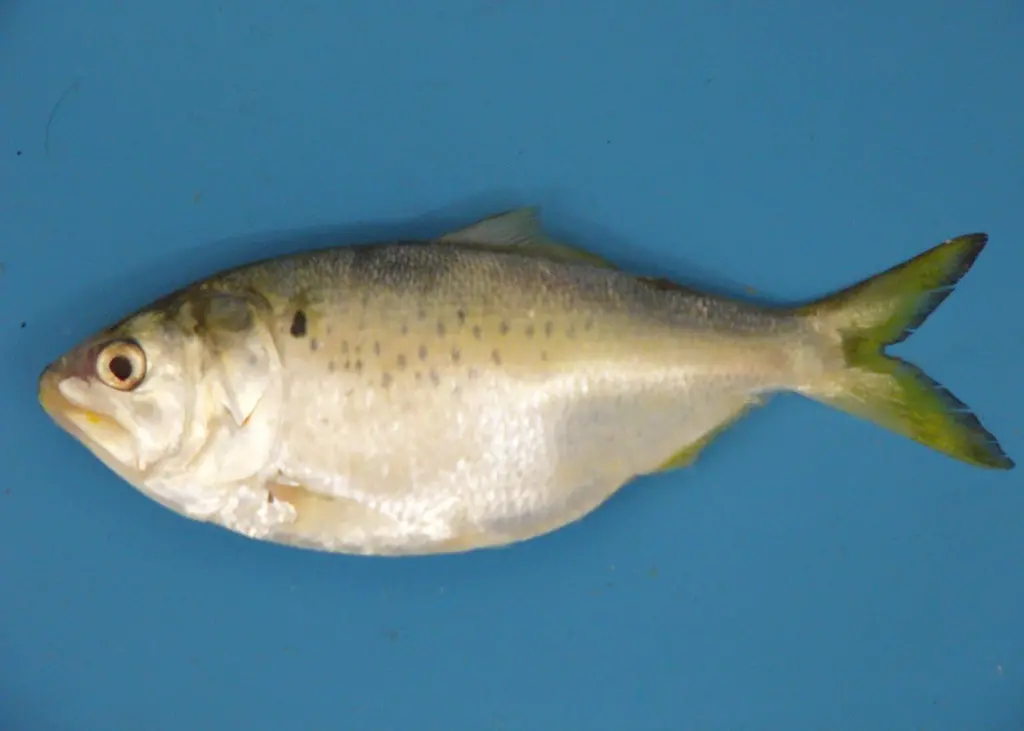
According to the study, published in the ICES Journal of Marine Science and supported by the Lenfest Ocean Programme, the menhaden owes its reproductive success to an oceanic climate cycle known as the Atlantic Multidecadal Oscillation (AMO).
Menhaden is a small, oily fish that provides food for striped bass, bluefish and others, as well as bait for fisherman. It is the target of the largest fishery on the US’s east coast which catches the fish for use in nutritional supplements, animal feed and fertiliser.
Understanding what drives recruitment – the technical term for how many young fish are produced – is critical in enabling sustainable fishing limits to be set.
“Predicting recruitment for menhaden is like shooting fish in a barrel, but the barrel turns out to be very far away and you have to close your eyes before firing,” explained Tom Miller of the University of Maryland, an author of the study.
To address this, the researchers devised a statistical model considering 16 factors that might be driving stocks, such as climatic cycles, intensity of fishing, temperature, salinity and predator abundance.
They found that the most important driver of recruitment is the AMO. In this natural cycle, average sea surface temperature shifts by about 1°F every 20 to 40 years across most of the north Atlantic.
The effect of the AMO is different in different places. South of Cape May in New Jersey the warm phase is generally associated with lower recruitment than average. North of this area, the opposite effect is seen. More research is needed to determine why this is the case.
This finding suggests that current management, which does not consider environmental drivers, might result in too lax catch limits one year, and too stringent in others.
“This is a surprisingly clear climatic effect,” explained Andre Buckheister, the study’s lead author and a fisheries biologist at Humboldt State University in California.
“We see a number of ways to incorporate this into the process for setting catch limits that match the rate at which the stock can replace itself. For example, the AMO could simply be used as an indicator for when to reduce target fishing mortality,” he added.
Related Articles
 FISHERIES
 FISHERIES
 WORLD FISHING EVENTS