




CFOOD initiative
International experts in fisheries management have come together as part of a new initiative, called Collaborative for Food from Our Oceans Data (CFOOD).
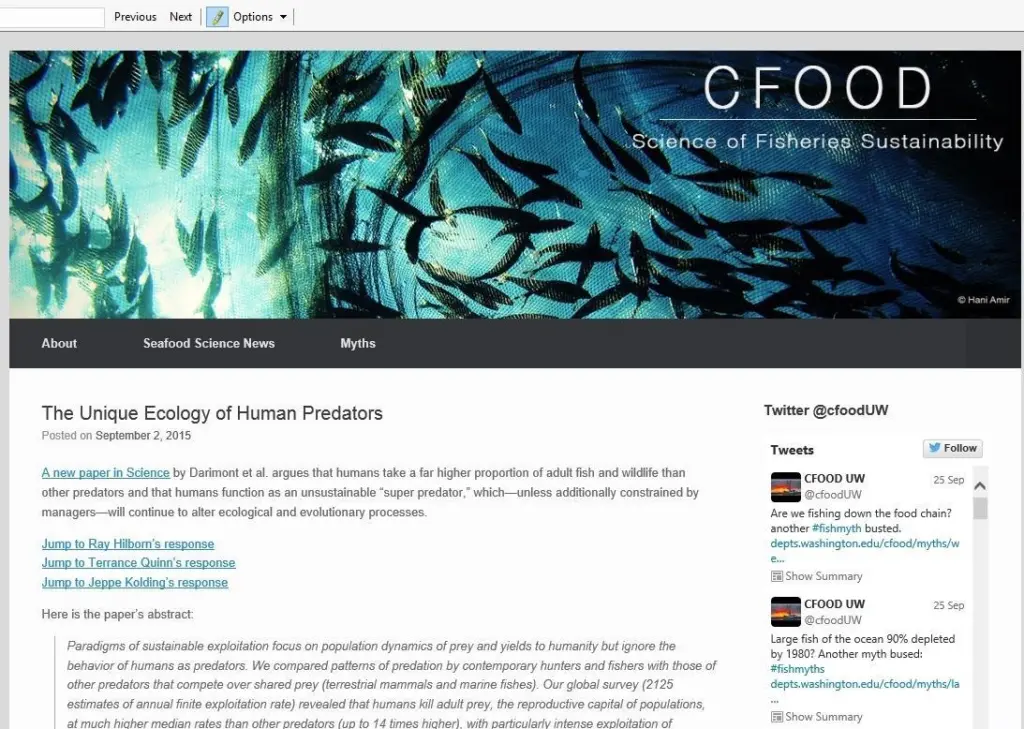
The coalition will gather data from around the world and maintain fisheries databases while ensuring seafood sustainability discussions in the media reflect ground-truth science.
“The CFOOD website allows us to offer independent scientific commentary to debunk false claims, support responsible science, or introduce new issues based on recent research,” said Dr Ray Hilborn, Professor at University of Washington’s SAFS and founder of the CFOOD initiative.
He added that while sustainability challenges exist, particularly in areas lacking sufficient fishery management infrastructure, many fisheries around the world are well-managed and sustainable. The message doesn’t always seem to resonate with consumers because of misinformation they continue to hear in the media.
The CFOOD project, headquartered at the Seattle based University of Washington’s School of Aquatic and Fishery Sciences (SAFS) in the US, is made up of a network of scientists whose mission stemmed from a frustration with erroneous and agenda-driven stories about fisheries sustainability in the media.
It will maintain a website and social media channels that provide a forum for immediate feedback on new seafood sustainability reports and studies.
Other scientists on the editorial board for CFOOD include Robert Arlinghaus, Leibniz-Institute of Freshwater Ecology and Inland Fisheries and Humboldt at Universität zu Berlin; Kevern Cochrane, FAO Retired, Cape Town, South Africa; Stephen Hall, World Fish Center, Penang, Malaysia; Olaf Jensen, Rutgers University; Michel Kaiser, Bangor University, UK; Ana Parma, CONICET Puerto Madryn, Argentina; Tony Smith, Hobart, Australia; Nobuyuki Yagi, Tokyo University.
Related Articles
 FISHERIES
 FISHERIES
 WORLD FISHING EVENTS