






Canada’s first redfish fishery achieves MSC certification
Canada’s first redfish fishery has met the MSC Fishery Standard, allowing the breed to be sold by companies with MSC Chain of Custody certificates.
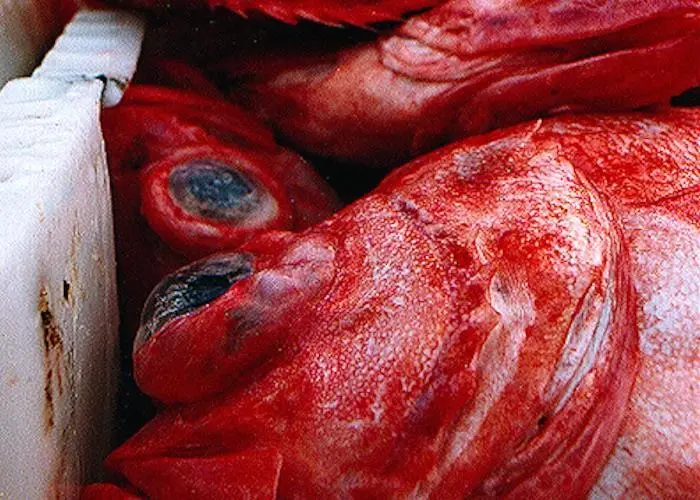
The ruling, announced by the Marine Stewardship Council (MSC) and the Groundfish Enterprise Allocation Council (GEAC), applies to Acadian redfish, (Sebastes fasciatus), also known as Atlantic redfish or ocean perch, caught in Northwest Atlantic Fisheries Organization (NAFO) Division 3LN.
“This certificate is a demonstration of the rigour applied to the management of the Canadian redfish fishery in 3LN,” said Bruce Chapman, president of GEAC, the industry association representing the fishery client group. “We continue to work towards all of our fisheries being able to bear the MSC label.”
MSC certification is seen as a commitment to sustainable redfish stock management and to achieve the standard, the 3LN redfish fishery underwent a 24-month assessment to demonstrate it meets all three MSC Principles through a healthy target stock, very low by-catch and high unlikelihood of disrupting ecosystem structure and function, and effective management.
Beyond TAC and individual country quotas, other conservation measures for redfish include gear specifications, restrictions on areas and times of fishing and protection of sensitive areas.
Straddling Canadian and international waters, 3LN redfish underwent a period of overfishing in the 1980s resulting in a moratorium being declared on directed fishing in 1998. The fishery was re-opened in 2010 and is managed by the Northwest Atlantic Fisheries Organization (NAFO), which oversees a cautious Total Allowable Catch (TAC) to ensure continuing stock growth and long-term sustainability.
Canada currently holds a 42.6% share of the TAC, the majority of which is caught by Ocean Choice International vessels fishing on the Grand Banks of Newfoundland.
Jay Lugar, programme director for MSC in Canada, commented: “The combined efforts of all actors to follow globally accepted best fishery management practices for 3LN redfish is a clear signal to world markets of a long-term commitment to maintaining the stock at sustainable levels. It is also proof that fish stocks can recover and robust fisheries management works. The MSC is proud be a vehicle that the Canadian fishing industry employs to demonstrate this.”
Related Articles
 FISHERIES
 FISHERIES
 WORLD FISHING EVENTS