


Breakthrough in lobster farming
Researchers from Norsk Hummer AS and SINTEF have recently succeeded in doubling survival rates among lobster larvae under farmed conditions.
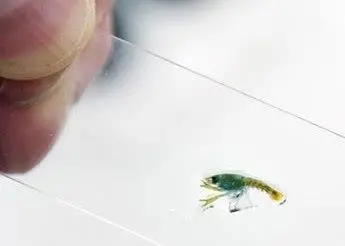
The animals come from Norsk Hummer AS’ facility at Tjeldbergodden. The company has been working for many years, together with SINTEF among others, to find the best system of farming this unique species.
SINTEF researcher Jan Ove Evjemo attributes the low production along the Norwegian coast to low water temperatures and high predation rates by other crustaceans and fish.
At Norsk Hummer AS’ facility at Tjeldbergodden, surplus heat from the methanol plant is used to create optimal conditions for these fastidious creatures.
Lobsters tend to be picky about their food, and eat each other if food supplies are low, so the researcher’s goal was to find the optimal first feed – and say they are now on the point of a breakthrough which could result in major increases in larval production.
“Firstly, we have reduced the cannibalism problem by means of experiments with new feed”, says Mr Evjemo. “At the same time we keep the lobster larvae in a bath supplied with air bubbles and this prevents them from getting too close to each other”, he says.
Researchers conducted an experiment involving separating 600 newly-hatched lobster larvae into three groups. Each group then received its unique first feed and plenty of space. Two groups were either given the traditional live feed organism Artemia, or a wet feed. The third group was given live copepods (Acartia tonsa). This is a small crustacean which SINTEF has previously tested as a first feed for problematic farmed species and rare aquarium fish species.
After 11 days major differences were observed. Lobster larvae fed with live copepods exhibited survival rates ranging from 20-40% better than their peer ‘competitors’ and their development was also more advanced.
SINTEF says its experience using copepods as first feed is encouraging enough to start planning the production of live feed species on an industrial scale.
“We believe that this could become an important supplement for the marine aquaculture industry which currently uses copepods as first feed for species such as wrasse”, says Mr Evjemo.
Related Articles
 FISHERIES
 FISHERIES
 WORLD FISHING EVENTS