




Brazilian fish farmers complain about EU ban
Once hopeful about President Jair Bolsonaro’s administration and the promise of long-awaited changes in the aquaculture legislation, Brazilian producers are now increasingly impatient with the government’s failure to push for a reopening of the European market for Brazil’s farmed fish, after three years of a ban, reports Eduardo Campos Lima.
Since 2018, when the EU closed the bloc to Brazilian fish after identifying problems in the industry, tilapia and shrimp producers have been penalised for something they didn’t do, said Francisco Medeiros, President of the Brazilian Pisciculture Association (Peixe BR).
“Our segment has been growing every year, but we could have been growing much more if we were able to export to the European Union,” he said, adding that many other countries, including major tilapia consumers like Israel, follow the EU protocols and are equally inaccessible to Brazilian fish farmers’ production.
“We have been asking the Ministry of Agriculture to assume a stronger attitude and take the Brazilian aquaculture segment’s demands ahead with the EU. But no concrete measures have yet been taken,” Francisco Medeiros said.
Brazilian aquaculture grew by 5.9% in 2020, with a production of 802,930 tonnes. Tilapia was the most important part of this volume, with 486,155 tonnes and a growth of 12.5%. Brazil is currently the world’s fourth biggest tilapia producer, with exports to the United States, Chile, China, and Japan.
The fish farmers recognise that a significant change took place at the end of 2020. The Brazilian government approved in December a much-needed law concerning the use of national waters for aquaculture, making much easier a procedure that previously could take as long as ten years.
“The use of the State’s water reservoirs by fish farmers entailed a highly bureaucratic process. It was based on a 2003 law that we had been criticising for years,” FransiscoMedeiros said.
With the new law, such reservoirs are almost automatically designated for aquaculture. Producers just have to present their projects digitally and wait for a rapid analysis to be carried out. Under the new procedure, producers who had been waiting for several years to have projects approved were recently granted the right to implement them. This was the case of Camilo Diógenes, owner of tilapia producer Rede do Peixe.
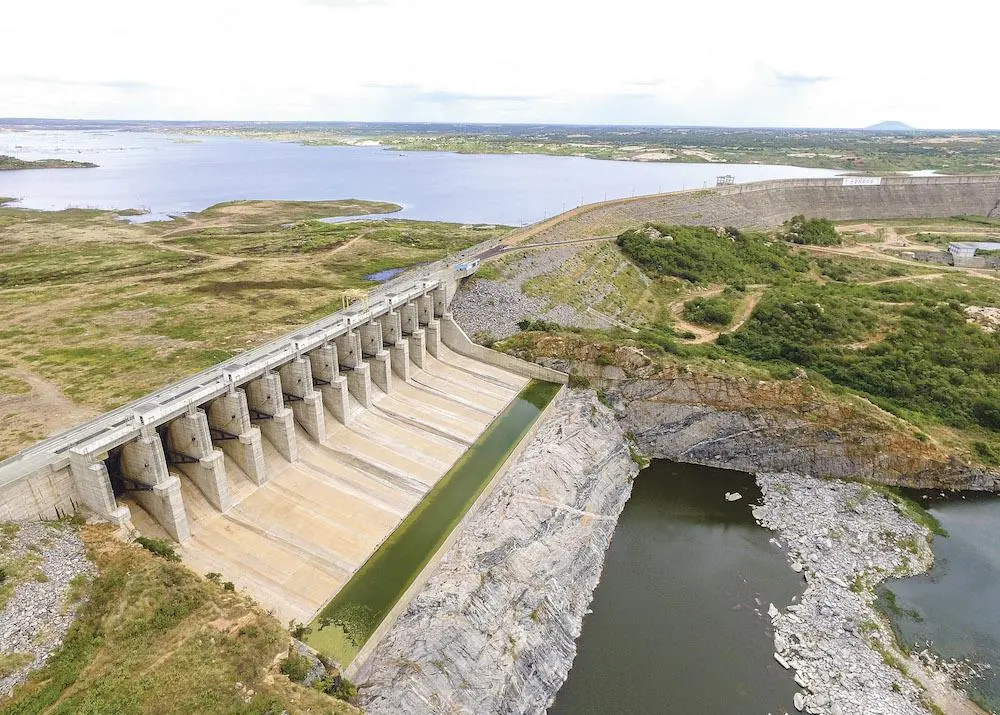
“Our production is in Castanhão Dam, in Ceará State, but it has been suffering with extended droughts for years. So, we initially presented a project to the government in 2010 in order to launch an operation in a reservoir in neighbouring Piauí State,” he explained, adding that the complexity of the process, with each phase taking months, was a huge disappointment.
“The Federal Government’s environmental agency took six months just to send the process to Piauí State’s environmental agency, which was the competent authority to analyse our project,” he said.
As the authorisation was taking too long, Camilo Diógenes began to sporadic production, something that most fish farmers in the country are obliged to do due to the disproportional legal requirements.
“However, this way we could not submit a project to get a loan from a bank, for instance. That is extremely negative for Brazilian aquaculture,” he added.
With the new system, at the beginning of 2021 Rede do Peixe’s request was finally approved within 10 days.
“Now we are waiting for the approval of a processing plant license. We hope to be able to begin to export soon,” he said.
Peixe BR has welcomed the new legislation and estimates that the measure could quintuple Brazilian production within a decade.
Brazil’s fish farmers have reasons to celebrate: fish consumption in Brazil has grown since the beginning of the pandemic and the Brazilian Real is devalued now, which favours exports.
“But we need the European market to be open for us,” Fransisco Medeiros concluded.
Related Articles
 AQUACULTURE
 AQUACULTURE
 AQUACULTURE