
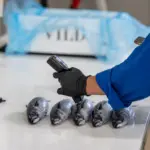

Boosting EU fish breeding
European aquaculture is being taken to the next level through technological advances in breeding of six species in Europe.?
The EU Fishboost project started in 2014 with the goal of improving European aquaculture for six species of farmed fish; Atlantic salmon, common carp, European seabass, gilthead seabream, rainbow trout and turbot. This Nofima-led project concluded in January this year. Scientists from fourteen research institutions, eleven companies and one NGO have studied a wide range of traits and developed tools and technologies to contribute to more balanced, sustainable and longterm profitable breeding programmes.
“Fishboost has contributed to increased awareness in Europe that breeding is an important part of fish farming,” said Anna Sonesson, project coordinator for the EU project.
For example, Fishboost’s industry forum at the Aquaculture Europe conference in 2018 was packed out, and Fishboost has held several highly attended workshops.
Fishboost is one of the last projects granted funding under EU’s seventh framework programme. High requirements were set for dissemination of findings and large geographical spread in the project. The partners in the project have agreed that only the parties that find a result or innovation own it, but that knowledge about the result must be shared.
The partners in the project have agreed with EU that only the parties that find a result or innovation own it, but that knowledge about the result must be shared.
“This means that no one else in the consortium is allowed to exploit your findings,” Anna Sonesson explained.
Impacts and results
The goal of Fishboost has been to increase the efficiency and profitability of European aquaculture by enhancing all six species through advanced breeding methods.
Many breeding programmes in Europe have only selected for growth and other traits related to production efficiency. Fishboost has demonstrated the potential of also selecting for better disease resistance. For example, the partners have estimated the heritability of the main diseases for the species and mapped the genes behind them.
Fishboost has developed important tools such as gene maps and thousands of genomic markers, which show where on the DNA there is variation between animals. For example, genomic markers are used in genomic selection, which is more accurate than traditional breeding. In the Fishboost populations, accuracy using genomic selection was up to 22% higher. But the method is expensive. The partners in Fishboost have developed ways to reduce the cost of using this method with the aim to increase the use of genomic selection in European breeding programmes.
Fishboost has also developed better selection and phenotyping methods to increase production efficiency. The Norwegian industrial partner Salmobreed sees a potential for knowledge transfer between species:
“Much has been done to develop indirect methods for measuring feed utilisation and production efficiency on several of the species in Fishboost. The research done on rainbow trout has a particularly high transfer value to salmon,” said Haavard Bakke, project manager at Salmobreed.
Partners in Fishboost have worked to optimize the design and profitability of the breeding programme when new traits are included in the breeding objective, taking into account different technological levels, reproduction and biology in the species.
The way forward for breeding in aquaculture
“I hope and believe that the industry will make use of this knowledge and that it will contribute to higher quality in existing breeding programmes and stimulate the creation of new ones,” Anna Sonesson said, commenting that Nofima and other research partners have written new applications to continue their work, and Nofima has already been awarded two new EU projects in this field.
The partners who took part in FishBoost are Ifremer, IMARES, INIA, INRA, Luke, the University of Edinburgh, the Norwegian University of Life Sciences (NMBU), the University of Padova, the University of South Bohemia, Wageningen University, Andromeda Group, FMD, FEAP, BMR Genomics, CETGA, Milin Nevez, Geneaqua, Klatryb, LABOGENA, Salmobreed, SYSAAF, VRI and Les Poissons du Soleil.
Related Articles
 SEAFOOD
 AQUACULTURE
 SEAFOOD