


The European Commission’s Horizon 2020 funding programme is supporting the largest and most ambitious assessment of deep-sea Atlantic ecosystems ever undertaken through a €9m project.
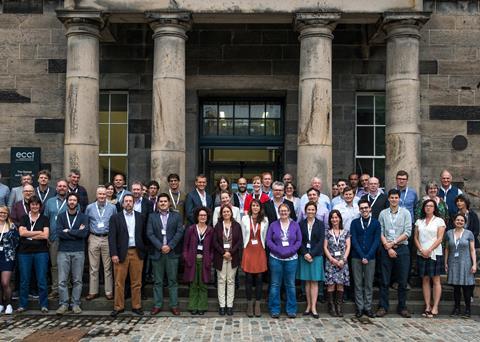
Known as ATLAS, the trans-Atlantic assessment and deep-sea ecosystem-based spatial management plan for Europe was launched in Edinburgh, Scotland on 13-15 June 2016.
ATLAS project coordinator Professor J Murray Roberts, from Heriot-Watt University, said: “The north Atlantic was the birthplace of deep-sea biology and the cradle of oceanography.”
“It’s the place we should know best, but it’s only over the last 20 years that we’ve uncovered just how varied and vulnerable the Atlantic’s deep-sea habitats really are,” he added.
The launch of ATLAS marks the beginning of a series of expeditions involving at least 25 research cruises and hundreds of scientists from 10 European countries, the USA and Canada.
ATLAS aims to improve understanding of the complexity of deep-sea ecosystems and to predict future shifts and vulnerabilities of these ecosystems and their associated species.
Using such techniques as environmental DNA (eDNA) sequencing, ATLAS scientists will search water and sediment samples for known and undiscovered deep-sea species.
A major goal of ATLAS is to develop a scientific knowledge base that can inform the development of appropriate international policies to ensure deep-sea Atlantic resources are managed effectively. This will contribute to the European Commission’s long-term 'Blue Growth' strategy to support sustainable growth in the marine and maritime sectors as a whole.
ATLAS also intends to carry out outreach activities to raise awareness of the importance and vulnerability of the Atlantic ecosystem and the impact humans are having on the ocean environment.
ATLAS is an EU-funded research and innovation action aiming to run for four years. The 25-strong consortium comprises 12 universities, four national research institutes, five small and medium sized enterprises and four government agencies, spanning ten European countries, the USA and Canada. The project is coordinated by Heriot-Watt University in the UK.