




Better cod handling for profit
Major injuries from cod catches is costing the fishing industry, but profits could increase by hundreds of millions every year if cod was handled better, says Nofima scientists.
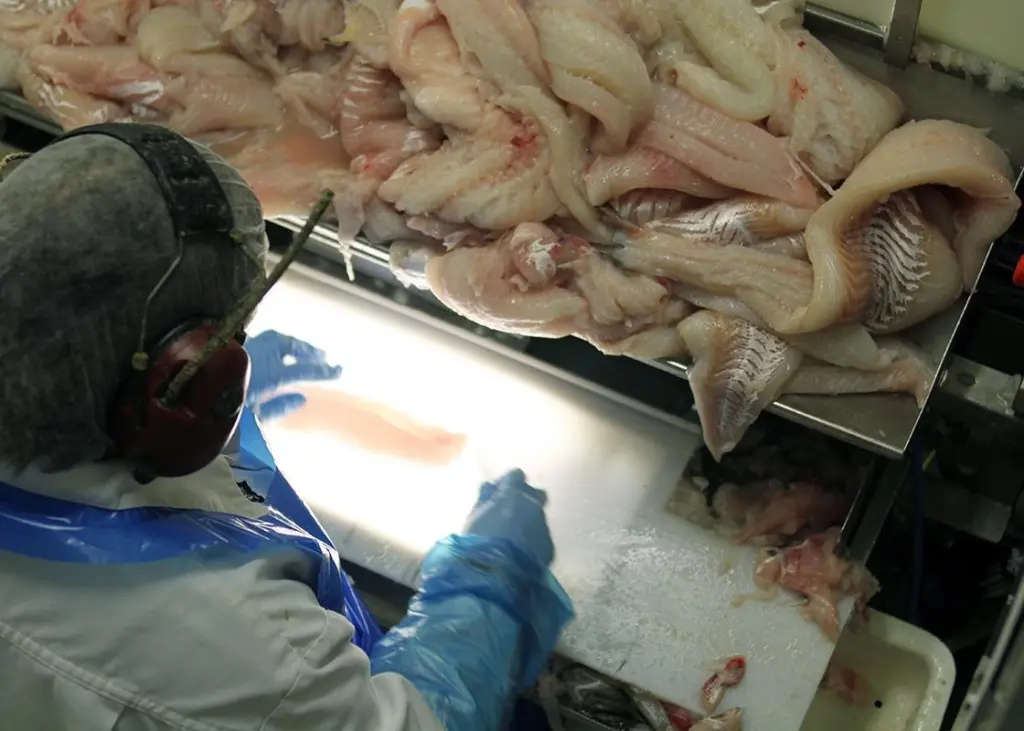
Nofima scientists looked at the export value of cod as if everything had optimum quality, under direction from the Norwegian Seafood Research Fund. By deducting the actual value, the loss in sales value has been found. The estimates were made for the filleting industry, salted fish, dried fish and fresh fish products.
According to the research, the filleting industry is the biggest loser with a loss ratio of 13%, which corresponds to around NOK 100 million (US$13.3m), based on export value in 2013.
“We must emphasize that it is extremely difficult to estimate the financial consequences of poor quality,” said Marianne Svorken, researcher. “However, our analyses show that it is possible to extract greater value from cod by ensuring that the raw material has a consistently high quality.”
Despite the fact that the authorities, organisations and research have had a strong focus on quality in recent years, Nofima’s research reveals that a relatively large share of cod catches in 2014 arrived at shore with reduced quality. A report in December said the share of fish with poor quality is at the same level or worse, compared to catches in 2004.
Line and jig caught cod are best, and the share of fish in the categories “good”, “reduced” and “poor” has remained stable since 2004. Trawl and seine caught cod result in the highest share of poor fish, and the trend is negative for seine net.
“The main problem is that the catches are too large, not the type of gear used,” explained Sjurdur Joensen, researcher. “We have seen that seine net is best suited for the storage of live cod, which proves that we can obtain very high quality from seine nets.”
As a result, his advice is to “keep the catches smaller and preserve quality”.
The quality of cod can be degraded at several stages, both during catching, handling on board, slaughter and bleeding, during further processing on land, through storage and during transport. The researchers call for more comprehensive understanding and responsibility for quality throughout the value chain.
Dried and salted fish producers also export variable quality. According to the research, the combined loss of value for these two categories is estimated to comprise around NOK 50 million (US$6.5m).
However, some of the loss in quality is not evident until the fish has been soaked and desalted so the estimate losses in sales value for this is difficult. But, the researchers believe it is reasonable to assume that if the quality was predictable and at a stable high level, it would also be possible to increase prices.
Nofima says more market research is need in the area in order to gain a better understanding.
Related Articles
 FISHERIES
 FISHERIES
 WORLD FISHING EVENTS