



Barcode pinpoints fish stocks
Tasmanian-based Dive Works has integrated three complimentary technologies, including barcode technology, into a comprehensive solution that will reduce the of fish farming cages coming adrift.
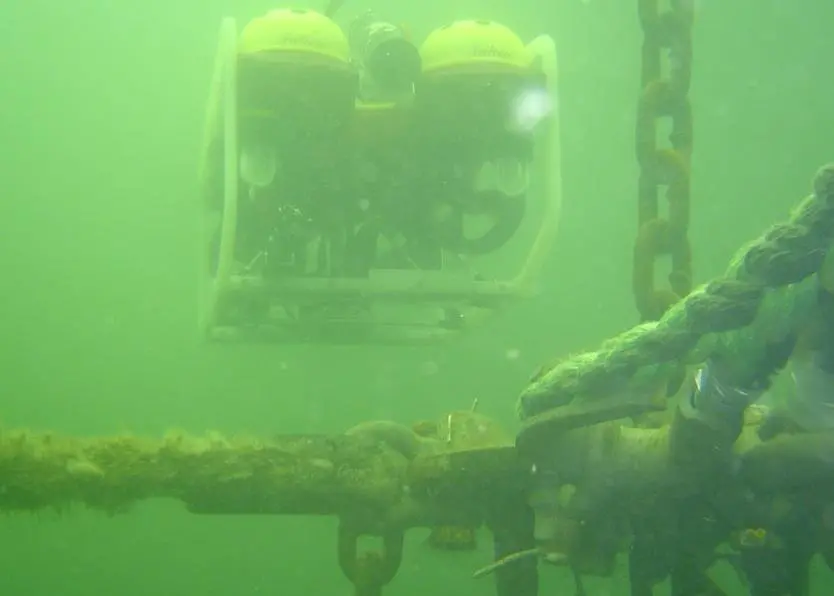
The three systems include verification of anchorage, mapping to monitor a shift in location; and a check on the integrity of links and shackles.
When setting the anchor points, Dive Works use a Saab Seaeye Falcon ROV to observe the procedure and ensure the correct positioning and soundness of the anchorage.
Next the latitude and longitude of each anchor point is recorded into a mapping system. A reflector with a barcode is located at each anchor point so that the ROV can roam around making routine checks and alert the operator to any shift in a location.
The Falcon ROV is used to check the thickness of chains and shackles using ultrasonic thickness technology, ready to replace those at risk before they break. The UT probe fitted to the ROV does not need to touch the metal part to capture a reading and transfer the data topside, where time, date and thickness is displayed and logged.
Dive Works chose the Falcon for its power to hold steady in strong cross currents whilst undertaking delicate tasks or filming, yet is small enough to be manhandled. It is also packed with technological innovations, such as intelligent ‘plug-and-go’ electronics that enable different tooling to be added and changed as needed.
With fish farming a growing industry across the world and yields of 90 million tonnes a year, Dive Works’ MD Andrew Ford sees the Net Secure System as having a global appeal.
No other integrated system of its type exists, and is born from Mr Ford’s long experience in using ROVs in the fish farming industry.
Related Articles
 FISHERIES
 FISHERIES
 WORLD FISHING EVENTS