



Baader is a full systems supplier
“Fish processors can get everything they need from us,” says Regina Dedow from the marketing department of Baader, the international manufacturer of fish processing equipment headquartered in Germany.
“We will install a complete processing line. Processors just have to deal with the one source rather than with different equipment suppliers.”
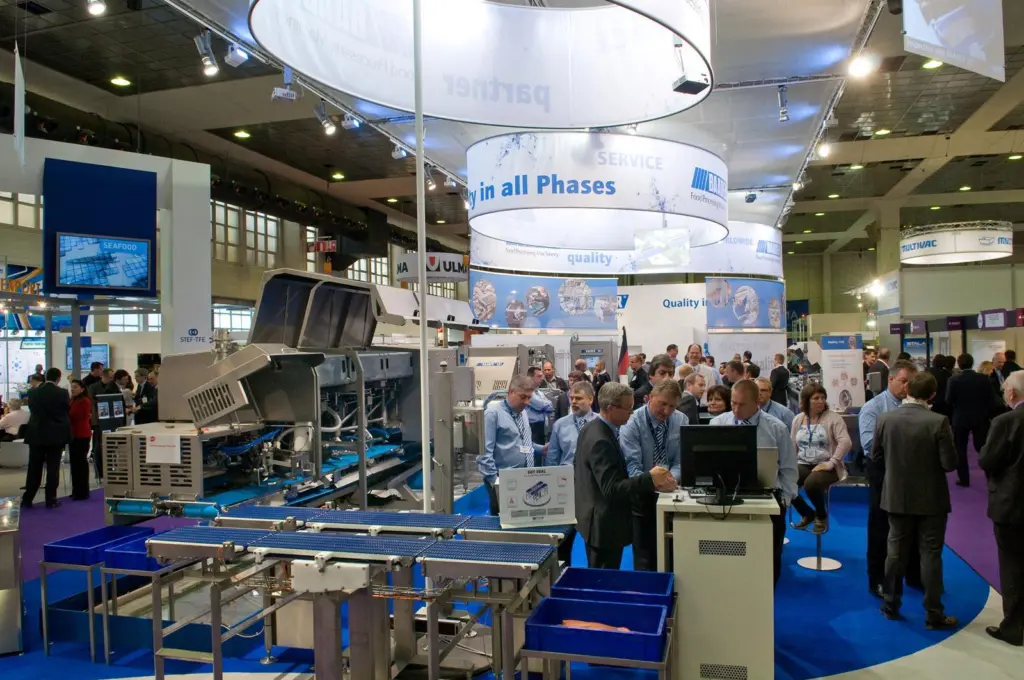
Baader’s new salmon processing line, part of which was being demonstrated on the company’s stand at Seafood processing Europe (SPE) in Brussels earlier this year, is a good example of that philosophy. It covers all operations from gutting the fish – “precise gutting is very important for the filleting machine” – to grading and packaging the type of fillet portions that the customer wants.
The new Baader 581 high speed filleting machine included in the line is a good example of how Baader says it is trying to ensure that processors “get more and better out of their raw material”. The company claims that the quality of the fillet produced “is probably the best ever in the world, at the highest capacity”.
A Danish customer, Skagerak Salmon A/S, who replaced an existing Baader 200 filleting machine with a Baader 581, said that the new filleting machine increased capacity by 20% and provided a better quality fillet. This meant “more money” for the company.
“There is quite a big market for the salmon processing line,” Ms Dedow says, “but we are also looking at whitefish where we are putting together a complete new processing line. Whitefish is an important species category for us, as is pelagics.
“For example we are looking at the vacuum nobbing of sardines – we can already do this for herring – for packing in tins.” The new Baader 218 heading, nobbing and defined piece cutting machine for small herring, sardines and sardinella was introduced at SPE in May.
The machine is said to be suitable for both vacuum and mechanical nobbing of small pelagic species.
Baader has developed management software which, it claims, will monitor and optimise the overall production performance of a whole processing line for full traceability. “This is very important,” Ms Dedow says. “Using this software, a production manager can control the production processes and eventually achieve overall business goals. It enables him to get more and better out of his raw material.”
Although whitefish, salmon and pelagics constitute its core business, Baader is also looking at the processing of farmed freshwater species such as pangasius which are becoming cheaper alternatives to traditional wild caught whitefish.
The fish are processed mainly by hand in Vietnam, the major producer, but Baader has done some work in conjunction with a Vietnamese processor, and the company has since installed a pangasius processing line in a factory in India.
Says Marc Schlichte, areas sales manager for China and the Asia Pacific region: “We are aiming for less cross contamination, to increase the speed from which the fish are moved on from the bleeding tanks to the heading and gutting machines.
“We have also supplied filleting and skinning equipment and online trimming tables, and are looking at finished product grading next.”
Meanwhile Ms Dedow says that Baader will continue to improve its salmon lines and will carry out more developments on whitefish processing.