


At-sea trials a success for new krill oil extraction process
Tharos, a Chile-based krill utilisation consultancy, has finished the onboard trialling of its novel process for extracting oils from krill caught in the South Antarctic Ocean.
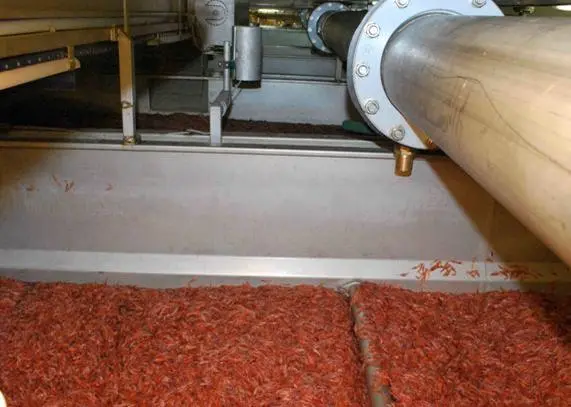
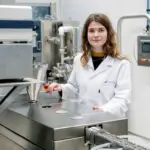
“We have successfully finished our at-sea pilot stage,” says general manager Dimitri Sclabos, who is one of the inventors of the technique.
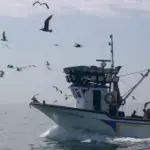
“Our programme consisted of running the entire process using small scale equipment which mimics the commercial sized layout. We made crucial progress from what was tested on land. We then operated the system onboard a factory trawler in South Atlantic waters dealing with real sea and resource conditions.
“We are now ready to move to commercial scale. We are very excited with the outcome of what we started several years ago.”
Unlike other methods currently used to extract oil from krill, the tiny crustacean found in huge quantities in Antarctic waters, the Tharos non-solvent extraction principle leaves no residue in the final product which is aimed at the human pharmaceutical and health supplement market.
The company is extracting both the higher value phospholipids rich and the lesser rated triglycerides rich oils.
“We believe this to be a twice revolutionary concept because all current processes used to extract phospholipids rich krill oil are carried out on shore, either from a protein/lipid complex (semi dried pellet), dried krill meal or whole frozen krill, and all of them use solvents” Mr Sclabos says. “Tharos’ krill oils will be entirely manufactured at sea and the process used is chemical free.”
Mr Sclabos admits that pharma-grade krill oils can be extracted using solvents, but says some residues may remain in the final product. “Such residues might be well within market regulation,” he says, “but we think that a no-residue process is a much more valuable proposition to the end user. Our method eliminates the solvent application to get a quality krill oil with no residues at all and with a pharma-quality grade.”
The traditional onboard krill oil extraction process uses cookers, decanters (or tricanters) and centrifuges to produce krill oil. “But these processes only generate lower priced triglycerides enriched krill oils,” says Mr Sclabos. Phospholipids are a significant component of cell membranes and thus play a major role in human health; triglycerides are generally considered to be less beneficial.
Tharos filed for a patent under PCT (Patent Cooperation Treaty) protocol in 2009. So far it has been granted in several countries including the USA, China and Ukraine out of the more than 15 national applications. “Our acquisition of intellectual property for the technique is following the normal national phases road,” Mr Sclabos says. “We are still being reviewed in other countries as part of the normal grant process.”
Tharos claims that its patented extraction process will significantly reduce the costs of producing krill oil at sea. “Also, the quality will surpass that of krill oils produced by existing methods as it is processed immediately onboard the fishing trawler preventing deterioration, cross contamination, and preserving freshness and keeping krill’s natural compounds readily available for human consumption.
“This invention will also protect the resource as fishing will not be focused on the period when the oil content of krill is higher than it is at other times of the year.”
Related Articles
 PROCESSING & REFRIGERATION
 SEAFOOD
 SEAFOOD