





Asian shore crab alert
There have been two sightings of the non-native Asian shore crab for the first time in Great Britain and now scientists are asking people to come forward with further evidence.
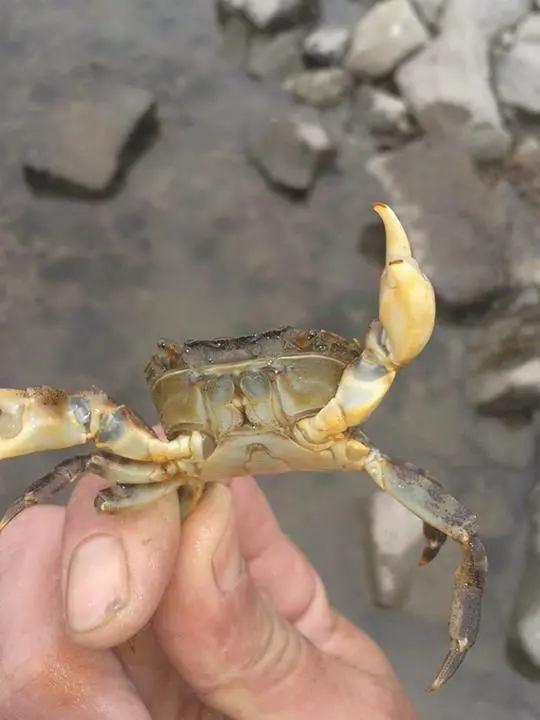
Photographs of the unusual crab were confirmed by the Marine Biological Association as being the Asian shore crab (Hemigrapsus sanguineus), just a few days before a scientific paper was published predicting it as the most likely species to arrive in British waters.
The Asian shore crab and its close relative the brush-clawed crab (Hemigrapsus takanoi) were both identified as high risk species in the consensus based paper, due to the high likelihood of arrival and establishment and potential threat to the environment.
The first sighting was made by an angler in Glamorgan on 3 May and then on 14 May, a second specimen was reported in Herne Bay, Kent.
Native to the Northwest Pacific, this small crab (up to 4.5 cm across) has a distinctive square shaped shell (carapace) with three teeth on each side and distinctively banded legs. Females can produce around 50,000 eggs per clutch with three to four clutches per year. It was first recorded in Europe in 1999, scientists thinking it arrived in ballast water.
It’s a voracious and opportunistic species with a broad diet and may therefore significantly affect native crab, fish and shellfish populations by disrupting the food chain.
Scientists are asking anyone finding this crab to take clear photographs of the crab and report the find at www.mba.ac.uk/recording
Related Articles
 FISHERIES
 FISHERIES
 WORLD FISHING EVENTS