




Are untraditional species profitable?
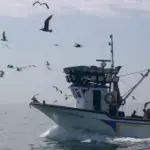
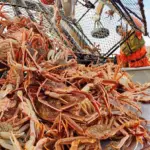
Norwegian fishermen do not want to fish or produce untraditional marine species, despite the fact that an overwhelming number of reports indicate that the species have great potential, reports Nofima.
Nofima has looked into what has been done concerning research and development for under-exploited marine resources over the past 10-15 years. Since the year 2000, more than 60 reports have been written, and the majority of the conclusions regarding utilisation potential have been positive. However, the results are not in keeping with the conclusions.
Scientists Oddrun Bjørklund and Edgar Henriksen from Nofima were commissioned by the Fishery and Aquaculture Industry Research Fund (FHF) to look at the reasons for the results and propose strategies for future efforts regarding little utilised marine resources.
The scientists point to two explanations for Norwegian fishermen not wanting to concentrate on less popular marine resources.
- There is little available capacity after structuring of the fishing fleet, i.e. the need for alternative work in the coastal fleet has virtually gone.
- The most important fish stocks are in an extremely good state and the quotas are large. There is a lack of interest in the coastal fleet to catch the allocated quotas for important species such as saithe and haddock. Given this situation, the fishermen will demand that the little utilised marine resources could be harvested with the same profitability as the traditional species.
The path towards profitable fishing and production of under-exploited marine resources creates a host of challenges along the entire value chain. Even though in many cases the resource base exists, and high prices may be observed in the market, it has proven to be difficult to obtain profitability in fishing, production and distribution at the same time. Small catch quantities and a lack of predictability in supply often create large challenges. For some species, there are also significant challenges relating to food safety.
“We would therefore conclude that any future efforts on resource-based business development are concentrated on the species/categories that are believed to have the greatest business potential. We are thinking in particular about the green sea urchin and different flounder species,” the scientists say.
For the jellyfish and sea urchins, there may also be economic rewards in decimation, with a view to reducing the abundance of a species. However, any decimation must be founded on well-documented positive effects on the ecosystem in general and/or commercially important food chains in particular.
“However, such documentation is not available. We recommend that research is carried out to clarify whether this is possible in practice and economically viable,” conclude Henriksen and Bjørklund.
Related Articles
 FISHERIES
 FISHERIES
 WORLD FISHING EVENTS