



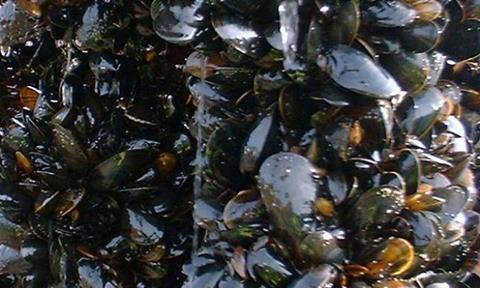
Scottish shellfish farmers produced 11,690 tonnes of common mussels for the market last year, a 13% rise on 2023’s volume and representing the highest level of production recorded, confirmed the newly-published Scottish Shellfish Farm Production Survey 2024.
However, the analysis also found that Pacific oyster production decreased by 38% year-on-year, with one of the main producers in the Highland region ceasing production.
Just 2.4 million Pacific oyster shells were produced for the market last year, versus almost 3.9 million previously
According to the analysis, there was a 53% increase in the production of native oyster from 111,000 to 170,000 shells in 2024, while king scallop production decreased by 4% – from 24,000 to 23,000 shells.
Queen scallop production cannot be reported due to low levels of production and producers.
In value terms, Scottish shellfish farming sector was estimated to be worth approximately GBP 14 million at first-sale value, a decrease of 1% on the 2023 value. Of this, common mussel production was valued at GBP 12.3 million, Pacific oysters GBP 1.5 million, and native oysters and king scallops both GBP 100,000.
The survey noted that prices of farmed shellfish fluctuated throughout 2024 and varied with demand, level of production and geographical area of origin. The average price of Pacific oysters was GBP 0.60 per shell; native oyster, GBP 0.75 per shell; king scallops, GBP 2.44 per shell; and common mussels GBP 1,048 per tonne.
There were 100 authorised and active shellfish farming businesses in 2024, with the analysis noting that this number has steadily declined in the last 10 years – from 144 in 2015.
Many sites held stock not yet ready for market, others were fallow, and some were located in remote areas where cost-effective production and marketing of shellfish proved difficult. In 2024, some 178 sites produced shellfish for sale, an increase of 5% from 2023 (169), with 60% of these located in Shetland.
There were 11 businesses producing more than 200 tonnes of common mussels, this was one less than in 2023. These firms produced 88% (10,301 tonnes) of the total common mussel production in Scotland. Meanwhile, two businesses produced more than 300,000 Pacific oysters. The production from these companies accounted for 42% (1,015,000 shells) of the Scottish Pacific oyster total.
For king scallops, one business produced 0-10,000 shells and one produced 10,000-20,000 shells, while for native oyster, four businesses produced 0-10,000 shells and one produced 100,000-200,000 shells.
Scotland’s shellfish farming sector employed 114 full-time and 127 part-time and casual workers during 2024.
Meanwhile, a risk-based surveillance programme targeting 120 shellfish site inspections was undertaken during 2024. On these visits, facilities, stock health, bio-security measures plans, movement records and details required for authorisation were checked. Records were checked remotely for a further 41 sites.
Most reported mortalities during 2024 were attributed to: predation from wild ducks, starfish, crabs, urchins and oystercatchers; fouling by sea squirts; adverse weather conditions including storms and temperature extremes; damage due to grading and handling and from natural causes.