




Alaska halibut fishermen gear up for March 24th season opener
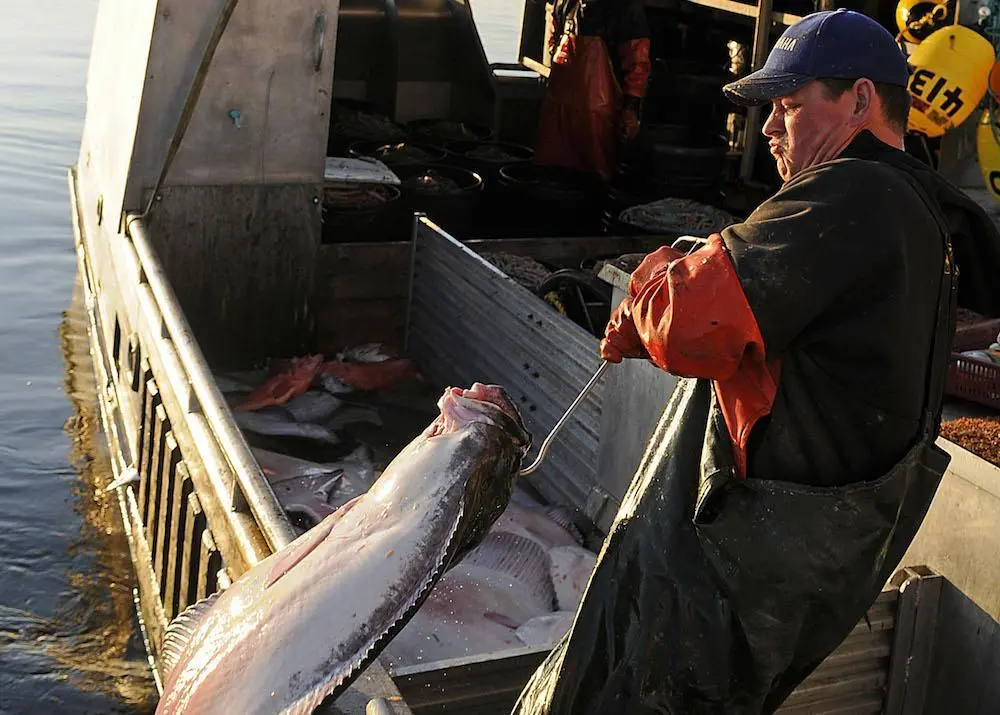
From Southeast Alaska to the Bering Sea, Alaska halibut fishermen are gearing up to head out to sea as the 2018 halibut season opens at noon on 24th March. It’s an annual ritual for both commercial fishermen and charter operators seeking to make their living through the pursuit of this popular flatfish.
Out of concern for the health of the halibut stock, the 2018 Pacific halibut catch limits are lower and charter management measures are tighter compared to last year.
For the second time in 94 years, the United States and Canada did not reach consensus on Pacific halibut catch limits at this year’s annual International Pacific Halibut Commission meeting, held in Portland , 22-26th January this year.
The US then went forward with setting catch limits through its domestic regulatory process.
Through an Interim Final Rule developed by NOAA Fisheries, the US is implementing catch limits and additional charter management measures for waters off Alaska that are consistent with the proposed limits and measures proposed by the US Commissioners at the IPHC meeting.
Those limits are lower than 2017 levels and consistent with the best scientific information available on the abundance of harvestable halibut in each area.
These lower limits are needed for the long-term sustainability of the halibut resource.
NOAA Fisheries announced this Interim Final Rule to ensure that halibut catch limits, charter halibut fishery management measures, and Catch Sharing Plan allocations are in place at the start of the commercial halibut fishery at noon on 24th March 2018. The season runs through noon on 7th November 2018.
The Interim Final Rule establishes 2018 Commercial Fishery Catch Limits and Charter Management Measures for the Pacific Halibut Fishery off Alaska and applies to the following International Pacific Halibut Management Areas off Alaska: Area 2C (southeast Alaska); Area 3A (southcentral Alaska); Area 3B (southwestern Alaska); and Areas 4A though 4E (Bering Sea and Aleutian Islands). The catch limit for Area 2A is being addressed in a separate rule.
Related Articles
 FISHERIES
 FISHERIES
 WORLD FISHING EVENTS