




Akua-Group wants to up tuna production
The craze for bluefin tuna in Japan is spawning a lucrative fish farming andfattening industry in the Mediterranean, one that the Akua-Group wants to take advantage of more in the future.
The Istanbul based Akua-Group incorporates Akua Dem, Akua Kocaman and Akua Uluslararası. It has two fish farm sites in Izmir, each has 800 tonnes of production capacity.
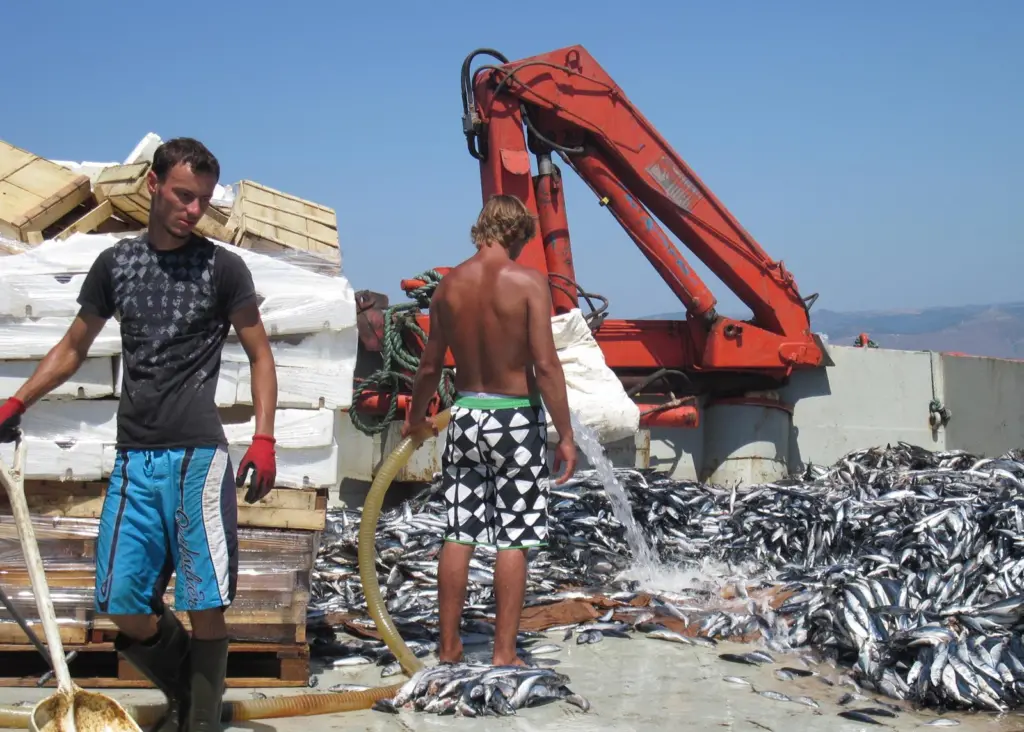
The bluefin tuna cages are impressive – they measure 50m and 66m in diameter and hold around 75 and 125 tonnes of fish. They need to be large because the tuna can range from 40kg up to 400kg in weight (this is key because fish below 30kg can’t be caught by law). It takes about 3½ years for the fish to reach maturity – they are usually held in the cages from May to January the next year. During this time, they feed on pelagic fish such as sardines and mackerel and they need 10-15 tonnes per day.
Imported
This presents its own problems because between May and August, there are not enough of these species for human consumption, let alone for fish feed, so a large bulk has to be imported from the Atlantic countries. When the tuna is fattened enough, they are harvested and packed off onto Japanese reefer ships bound for the fish markets of Tokyo.
Bluefin tuna is a lucrative business, each fish fetches between €5 to €8, depending on its size. Despite this, tuna is still a small part of the Akua-Group’s production. This is because, as Mr Nedim Anbar, shareholder in Akua- Group, tells World Fishing & Aquaculture, tuna farming in Turkey has its limitations. The total Turkish catch quota for bluefin tuna is 512 tonnes in total (2011), of which five companies share the quota with the catch boats, which are tightly moderated – just 11 were allowed to fish for tuna in 2012.
Staffed halved
Five years ago the quota was around 1,500 tonnes per year and this has a knock on effect to farming – the company has had to half its staff over the last few years.
The International Commission for the Conservation of Atlantic Tunas (ICCAT) manages the catch quota, which Mr Anbar believes is currently based on inaccurate data. “The data is not sufficient. Three years ago the stock in the Med were very low, but new research needs to be done now because I believe the stock is now more than double what it was”, he said.
This year the quota was fulfilled in just 14 days as opposed to the usual month – ICCAT regulations state that bluefin tuna can only be caught between 15 May and 15 June. Therefore it appears that ICCAT may have taken a somewhat precautionary approach with the quota, Mr Anbar says because of the green organisations in Turkey. But this is difficult to square with companies who want to maximise sustainable yield from the sea, without, they believe, destroying the population.
The frustration is understandable, especially when one considers that the Akua-Group actually has the capacity to produce 1,600 tonnes of fish in all. Nonetheless, the Akua-Group is optimistic for the future. Mr Anbar says that despite its pitfalls, the ICCAT regulations have helped to improve stocks and he is certain that with proper scientific evaluation, quotas could be readjusted in future – in fact a stock assessment is due later this year.
Related Articles
 AQUACULTURE
 AQUACULTURE
 AQUACULTURE