



2019 quotas agreed at December Council
Ministers meeting in Brussels announced their conclusions for 2019 TACs and quotas early this morning after intense negotiations that have been overshadowed by Brexit and the full implementation of the Landing Obligation on 1st January.
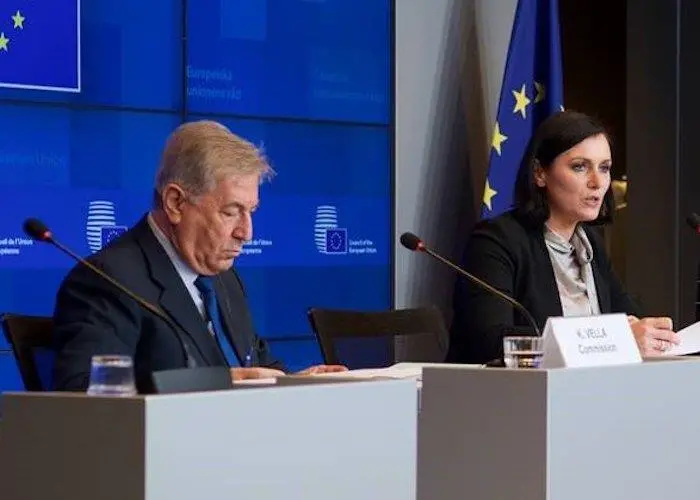
“As of 1st January 2019 we finally say goodbye to the wasteful practice of discarding fish. This is a milestone for the reformed Common Fisheries Policy, but also a challenge for our fishermen in basins like the Atlantic and North Sea,” said Elisabeth Köstinger, Austrian Federal Minister for Sustainability and Tourism and President of the Council.
“I am glad to say that today’s agreement takes this challenge fully into account and provides good solutions which address the socio-economic and environmental sustainability of EU fisheries.”
“I can say that today is a good day for European fishermen and for fish alike,” added Commissioner Karmenu Vella.
“Today, we have agreed on fishing opportunities for European fishermen worth more than five billion euros, and benefitting more than 50,000 fishermen. The catches agreed today will continue to make the European fishing industry highly profitable also in 2019.”
“We have also taken important decisions to help implement the ban on the wasteful practice of discards. The landing obligation will enter into force in two weeks time. Today, we have agreed on a number of practical ways to limit possible choke situations. This should give business certainty for our fishermen for next year.”
The EU Commission’s initial proposals have been broadly accepted, for an increase or no change to 62 stocks, reductions for 22 and new by-catch quotas at low level for eight stocks so as to reduce the fishing pressure.
The Council decided to increase catches for a number of stocks, including plaice in Skagerrak/Kattegat, the southern hake stock, western and southern horse mackerel, cod, sole and plaice in the Irish Sea, and sole and megrim in the Bay of Biscay.
The issue of choke species in mixed fisheries was addressed through enhanced inter-area and inter-species flexibility. Moreover a new quota exchange mechanism was created for member states without a quota for by-catches in five fisheries: cod in the Celtic sea and west of Scotland, whiting in the Irish sea and west of Scotland, and plaice in the south-western part of area 7.
“The decisions adopted today allow us to make further progress in ensuring sustainable fisheries in the EU. Our first assessment suggests that 59 stocks, managed by the EU or by the EU and Norway together, and for which MSY advice was available, will be managed at sustainable levels in 2019,” Karmenu Vella commented.
“Of the 57 stocks managed by the EU only, for which MSY advice was available, we have set limits at sustainable levels for 50 stocks. Most importantly, if we look at the expected landings next year, we can say that almost 99% of landings in the Baltic, North Sea and the Atlantic, managed exclusively by the EU, will be fished at sustainable levels.”
While the Commissioner was upbeat about the prospects for 2019, and Scottish Fishermen’s Federation chief executive Bertie Armstrong described the outcome as “challenging but acceptable for the fishing fleet.”
”“The talks have been difficult, as they always are, with the additional element this year of politics related to Brexit. For the Scottish industry, the central issue has been the inclusion of measures to limit the risk of ‘chokes’ by swapping between member states. The Scottish delegation worked long and hard along with their UK colleagues to give the best chance of avoiding fleet shutdown during 2019,” he said.
Related Articles
 FISHERIES
 FISHERIES
 WORLD FISHING EVENTS