



Mr Ihsan Bozan is chief operating officer at the Kiliç Group but he’s also the chairman of the Mugla Fish Farmer’s Association.
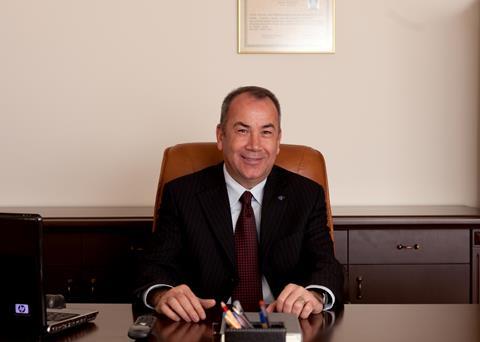
Mr Bozan is understandably proud of how far Kılıç has come as a company since 1993 and he told World Fishing & Aquaculture about his vision for it to become “a global company”.
Despite this, he said that he still sees potential at home in Turkey. He said: “We need to move to the Mediterranean though from the south Aegean because there is more room there. The water quality and depth is also better.”
He told World Fishing & Aquaculture that this is where Kılıç would look at moving to next. The company will also be looking towards new species of bluefin tuna and seriola (longfin yellowtail) in its hatcheries with trials taking place imminently. The company will also continue to trial new species in future (it has tried 10 species since inception, some successful, some not), but bringing them to the commercial market will depend upon market demand.
With regards to Kılıç’s future strategy, he said: “The Tunisia, Morocco and Panama projects are all about being closer to the main markets of Spain and the USA. The aquaculture industry is 20 years behind Turkey so we can take our expertise there and share it. We want to make big steps as a company, Kılıç doesn’t want to just be a Turkish company.”
The Muğla Fish Farmers’ Association is a mouthpiece for 65% of aquaculture companies based in the area – it is both an association and a union.
It was formed in 2001 by a number of local aquaculture companies – including Kılıç, whose founder, Mr Orhan Kılıç, became the leader of the association in its early days. The time of its inception was important because this was around the time that the Turkish government introduced the legislation to take fish farms offshore and many smaller companies were absorbed by larger concerns at this time. Kılıç helped by lending financial support to the association to get it off the ground.
Mr Bozan took over as chairman in 2004. He said: “It is the most effective association in Turkey because over the years it has implemented various actions and provided necessary finance to smaller companies, especially during difficult times.”
And the association had its work cut out again in 2008 when consolidation went through the roof. Mr Bozan says that although these were difficult times for the industry, it has now worked out well for both sides – it has moved the industry on in terms of quality and safety and the sector has grown immeasurably.
Presently, the association’s members biggest issue, according to Mr Bozan, is adapting to EU laws, because small things are changing every day. “It is a big challenge for the sector, especially in terms of the EU’s traceability and water quality measures.” He said that the association is currently working with the Turkish Ministry to work out a programme of financial support to help companies.
The other issue the association works hard to address is the balance between the need for offshore fish farms and the demands of the tourism industry which Mr Bozan says is a constant balancing act.
Mr Bozan spoke about the need to set up a station to monitor the water quality in the Muğla area because other industries are polluting the water which is harmful to the aquaculture sector. He said that the situation is so bad that the fear is that fish will not be able to be farmed in certain areas in 10 years time.
The association’s other role is to promote education among consumers and get them to eat more fish because Turkish domestic consumption is very low. To this end, the association works closely with The Seafood Promotion Committee.
Overall, it’s Mr Bozan’s view that the Turkish aquaculture industry needs to work harder to target the domestic market and get more integrated, but at the same time test other global markets so as not to become reliant on business at home as competition becomes more brutal.