



Worldwide overfishing continues
Overfishing has brought about many challenges to the European fishing industry (see World Fishing & Aquaculture April 2012), but in the rest of the world those challenges are just as prominent and in many respects resolving them is even more urgent, writes Adrian Tatum.
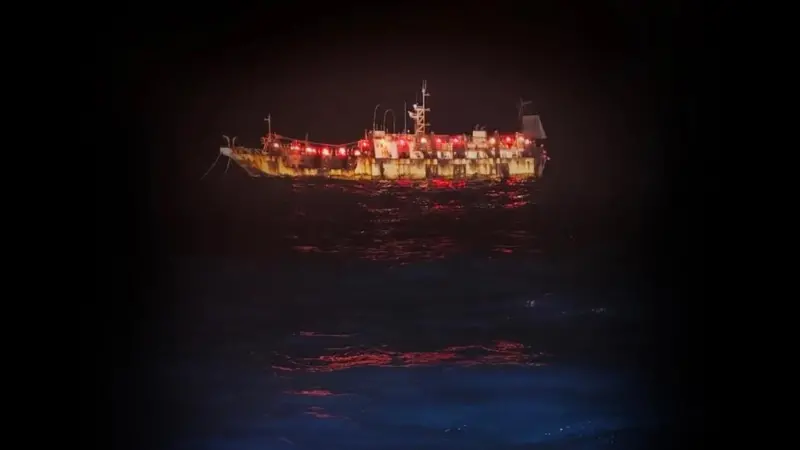
African waters, for example, have long been the target for European fishing fleets as vessels have moved East in the last decade due to fish stocks in the European seas falling dramatically – with the serious problem of overfishing migrating along with the vessels themselves.
Despite African waters being fragile, European trawlers could be allowed to continue to overfish in non-EU waters in the future, depending in the outcome of proposed changes to fishing policies.
According to a report in The Guardian newspaper in the UK, leaked documents show that Spain is fighting hard in EU meetings to get European vessels exempt from proposed tighter rules when they fish outside of European waters. The UK has apparently argued strongly for much stronger rules to govern EU fleets wherever they fish in the world.
Unfair competition
A recent report by Greenpeace International, shows that these agreements allow European fleets to unfairly compete with artisanal fishermen and that most commercial fish stocks in West African waters are now fully or over-exploited.
According to the study, the EU paid €142.7m to secure the fishing rights for just one fleet of 34 giant factory trawlers to work in Mauritanian and Moroccan waters between 2006 and 2012. Of this, EU taxpayers paid €128m, and the companies only €14m.
The report shows that these 34 vessels catch 235,000t a year of fish from the Moroccan and Mauritanian waters, leaving little for the local fishers.
Greenpeace has called on EU governments and the European parliament to agree new fishing rules that reduce overcapacity by decommissioning unsustainable fishing vessels. It also urged the EU to end subsidies to destructive fishing practices, and instead only invest public money in measures of public value, such as restoring and maintaining stocks.
Six years ago the writing was already on the wall. In 2006 a four-year study of 7,800 marine species around the world’s ecosystems concluded that all European waters would have collapsed by 2050 if the current rate of destruction and overfishing continues.
By 2048, says the report, catches of all the presently fished seafoods will have declined on average by more than 90% since 1950.
The study, by an international group of ecologists and economists, says the loss of biodiversity impairs the ability of oceans to feed the world’s growing human population — expected to rise by 50% to nine billion in 2050.
It says that overfishing also sabotages the stability of marine environments, profoundly reducing the ocean’s ability to produce seafood, resist diseases, filter pollutants and rebound from stresses such as climate change.
Brink of collapse
Previous studies of world overfishing have also singled out African waters as being on the brink of collapse. A study published in New Scientist in 2002 in particular warned about West African waters, where according to US researcher Daniel Pauly, fish stocks already had “crashed by 80%.”
With depleting resources along the West African coast, EU vessels have already moved further south with full strength and even into the Indian Ocean. Already the rich waters off Namibia and Angola are beginning to note reductions in fish stocks. Waters off the Seychelles and Madagascar are expected to be next.
Willie Mackenzie, policy campaigner at Greenpeace, told World Fishing & Aquaculture that worldwide overfishing was still an ‘unresolved concern’. He says: “There are some encouraging signs in some parts of the world but there is still a need for a massive rethink. We don’t want the world to stop fishing but we do want a sustainable approach otherwise this situation will get worse. Overfishing has to be curtailed.”
One Spanish fleet owner operating outside of Spanish waters told World Fishing & Aquaculture that overfishing was a serious concern: “Despite the opinion some people have of Spanish boats in African waters, most operate within the law and therefore overfishing is a major concern for us and a worry it is getting worse around the world. Tighter controls and more efficient monitoring are what is needed.”
But it is not just Africa where there are problems. Australia has battled against overfishing too. Overfished stocks in the past include eastern gemfish, school shark, orange roughy, yellowfin tuna and swordfish.
But tighter control has seen improvement. Successive Australian governments have introduced the cutting of fish quotas and licences as well as building marine reserves and introducing harvest strategies to shore up fishing stocks.
Anger
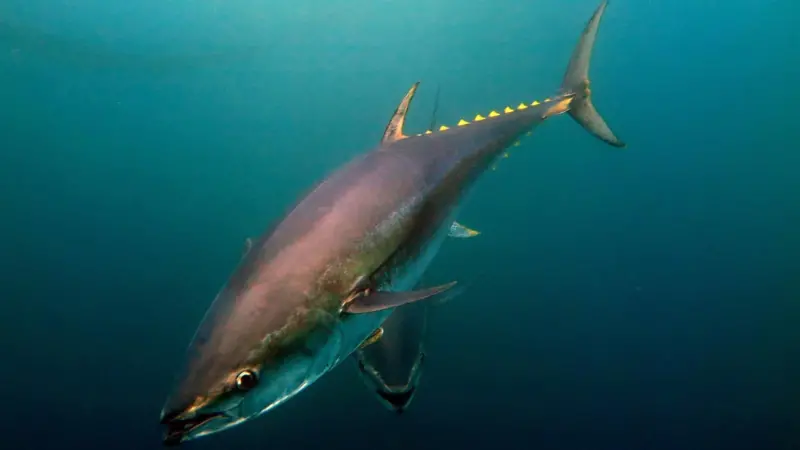
Recently, Australian fishermen called for a rethink with regards to southern bluefin tuna. A recent decision to cut the global quota of southern bluefin tuna by 20% has angered Australian fisherman, who say Japan has been overfishing. Australia has to slash its intake by 25%, while Japan has to cut its catch by 20% to help protect the species.
But recent research may point towards a sensible solution in tackling overfishing. Saving threatened coral reef ecosystems may be best handled by the people who make their living from them, says the study.
The report says that in many tropical countries, overfishing by even small-scale fishers threatens offshore reefs, which are some of the oceans’ most important ecosystems.
The new study confirmed what a growing body of research has shown: giving local fishers more control over how, when and where to fish usually results in better incomes, more cooperation with the rules, and more fish on the reef. Tropical coral reefs are fertile fishing grounds for some 200 million small-scale fishers around the world.
But many of these reefs are in decline. Tim McClanahan of the Wildlife Conservation Society who did part of the research, has followed the catch from one coastal fishing community in Kenya for more than a decade. The community he worked with decided to ban the use of very-fine-mesh nets that catch almost any kind of fish, large or small. Within six months, the catch started to slowly rise.
Tim Daw at the University of East Anglia says faraway authorities setting the rules but lacking the funds to enforce them are a major reason why fisheries around the world are in decline.
But he says this is changing. In the last decade or so, civil society groups and researchers have been helping fishing communities come together to set their own rules and enforcement mechanisms. His research has suggested that communities may decide to close off certain areas to fishing, for example, or restrict what kinds of equipment can be used.
In a recent study, published in the
Proceedings of the National Academy of Sciences
, 42 locations in five countries on two oceans were studied and more than 1,000 fishermen and local leaders were interviewed. It was found that people were generally better off with community management than without it. And there were generally more fish in community managed systems than without.