



Under ten fleet in grave danger
Bryan Gibson looks at the plight of England’s under ten metre fleet.
One of the best ways to get your cause noticed is to receive the enthusiastic support of a renowned conservation organisation such as Greenpeace, and then have it further buoyed-up by national radio and television, using music and humour as another powerful marketing tool.
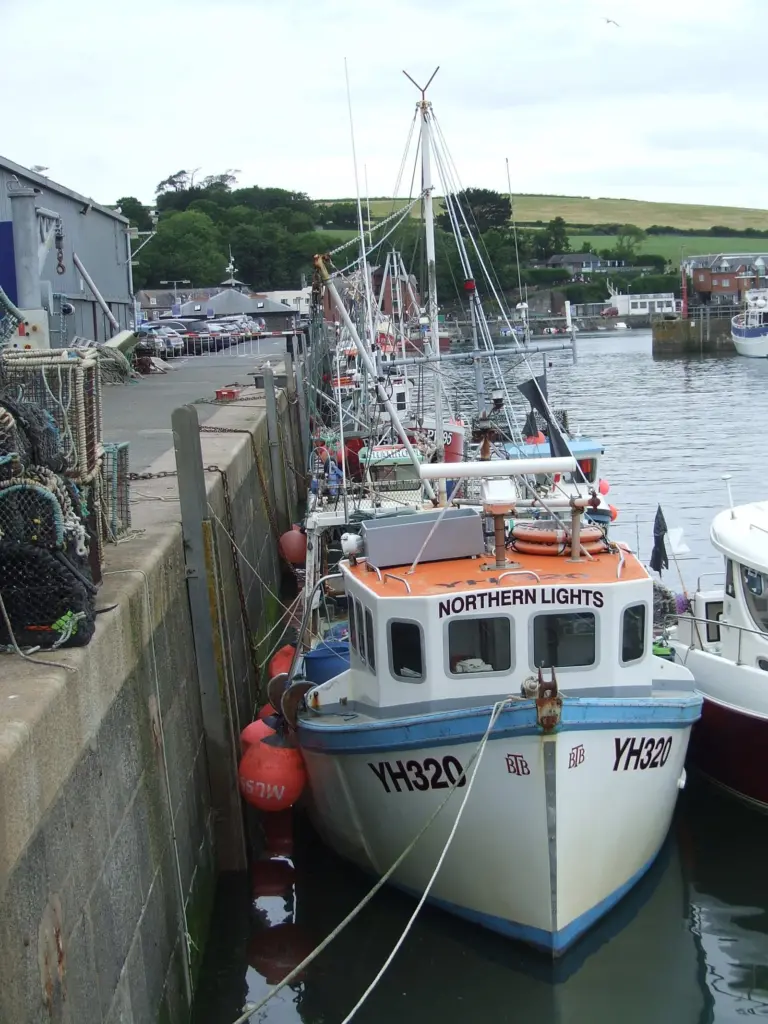
Shanty singers from Port Isaac in Cornwall, England, The Fishermen’s Friends, several of whom work from the picturesque fishing village as part of the ‘Under Tens’ fleet, are supporting a campaign to raise public awareness that their environmentally friendly method of earning a sustainable living around the UK coastline is in grave danger of becoming obliterated by unfair and unworkable EU fishing quotas.
Throughout August, Greenpeace joined forces with the National Under Tens Fishermen’s Association to launch a UK-wide campaign entitled, Be A Fisherman’s Friend, having ‘pirated’ their new objective’s name from the Port Isaac folk singers. The group were discovered by a holidaymaking record producer who successfully set about turning Port Isaac’s Fishermen’s Friends into a nationwide household name, assisted in no small part when they landed the starring role in the current Young’s frozen fish TV ad.
Greenpeace volunteers took their road-show to music venues, oyster festivals, maritime events and tourist centres, where, dressed in fish costumes, they informed members of the public, that no matter how far they may live from the sea, they can still play their own part in convincing our politicians, “that the EU Common Fisheries Policy is not working for our fishermen in the village communities along our coasts, it’s not working for the fish they catch, or the environment, and it’s certainly not working for consumers”. Just 4% of quota is being handed to 76% of the fleet which provides 65% of the jobs within the UK fishing industry, while Government continues to turn a blind eye to French and Spanish boats who plunder the ‘Under Tens’ resources a mere six miles from their homeport’s harbour mouth.
Greenpeace says, “The alliances that have been formed this year may seem unusual to some, but gone are the days of throwing stones at each other. At the end of the day, both Greenpeace and the UK’s inshore fishermen want a future with sustainable fish on the plate, but still with plenty left in the sea”.
Understanding
David Cuthbert representing The National Under Tens Fishermen’s Association (NUTFA) believes Richard Benyon, Parliamentary Under Secretary for Natural Environment and Fisheries, understands the plight of the under tens better than he receives credit for and thanks Mr Benyon for keeping the promise he made when, as Shadow Minister, he spent an entire day attending fishermen’s meetings at Hastings, Mr Cuthbert is also grateful for Mr Benyon’s continued willingness to present complex and diverse science to Government colleagues.
“Mr Benyon has also expressed an admirable understanding of how climate change, sea temperature and ocean acidification is having its own unique effect upon the species we hunt for human consumption. Considering the recent NUTFA/Greenpeace ‘connection’, the under tens may just have been given a once in a lifetime opportunity to put its case across to Government policy makers in language they can all understand”.
Mr Cuthbert says, “Despite the restrictions, there is still plenty of uncaught quota still in the sea, and if the UK fails to catch it, nations such as the French and Spanish will adopt a use-it-or-lose-it approach and take it for themselves, with UK fishermen failing to regain the loss in following years”.
Perhaps understandably, the small boat fishermen, who, up until 2006, were able to harvest the sea unfettered by a quota system, do not trust DEFRA’s objectives or its ability to understand their needs, while DEFRA expresses its own disappointment, that the Under Tens have been unable or unwilling to provide accurate historic catch data to assist it in apportioning future quotas.
The Under Ten fishermen answer such accusation by claiming they were never asked for previous catch records, and despite huge amounts of archive information still in existence, they claim ministry inspectors only spoke to the large PO’s (Producer Organisations). DEFRA is now further muddying the waters of understanding between fishermen and legislators by introducing a new Concordat, which, during this coming October, will block a loophole allowing Welsh and Scottish registered boats to fish out of UK ports unfettered by catch restrictions. The content of this new government ‘tome’ will take the cleverest of fishermen to work out its long-term implications.
David Cuthbert told World Fishing and Aquaculture that “fisheries inspectors, having previously been prepared to give a nod and a wink towards the amount of fish the inshore fleet was catching, when quotas were instigated, the authorities were shocked and surprised as to how much fish the Under Tens were actually landing, but they have never been able to find an effective way of allocating a fair share to a section of the industry they were failing to communicate with, hence the creation of NUTFA. Unless there are some real changes, the writing is on the wall for our fleet due to quota ending up in the wrong hands and in the wrong places. Science has been taking too long to catch up with reality, as perceived by the boats out on the fishing grounds and their observations that some white fish species have been able to recover faster than most scientists are currently aware of.”
Only 500 NUTFA members are currently lobbying for the commercial survival of 4230 registered under ten metre fishing vessels operating from beaches and tiny fishing villages around the British coastline. This leaves the majority of 3730 skippers who are still not members, but every last one is still hoping to have their needs recognised well enough to receive support from the general public as well as Government to continue fishing from their home ports, to go on paying their mortgages and providing financial security for their wives and children, and in the same process, helping to keep the village pub trading, the primary school fully subscribed and the local grocery store still in business.