

Training camp for salmon smolt
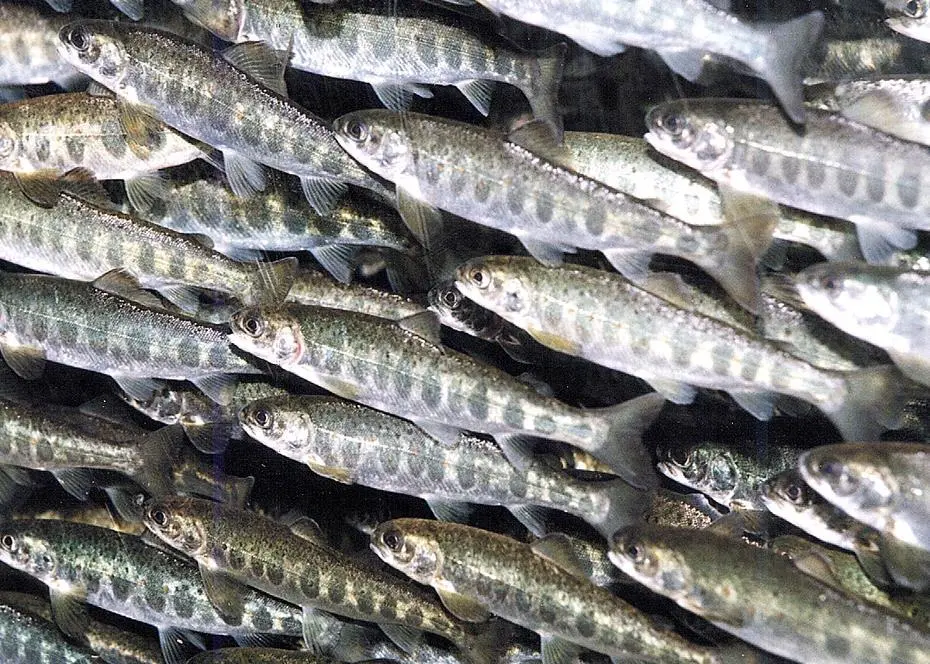
A new project coordinated by Nofima aims to improve the survival rate and health of salmon smolt transferred to cages at around one year old.
The three-year project, ‘FitSmolt’ has a budget of approximately NOK10m and is managed by Nofima senior scientist, Harald Takle.
“In this project we will focus on how the smolt can develop stronger disease resistance, how we can get it to handle various types of stress better and how the smolt can grow rapidly but with a natural development of organs,” says Mr Takle.
The project comprises three parts, and the scientists will coordinate the results and develop knowledge and tools that may be used to strengthen the robustness of the smolt.
The first part involves sorting, where the weakest individuals will be removed as early as possible in the production cycle. The main method of doing this is testing their swimming ability – those with poor swimming ability will be eliminated from the project.
The second part involves training the smolt to become stronger. In this project the smolt will start physical exercise earlier than in previous trials, to see whether the smolt achieves a higher survival rate if they are well trained before being transferred to the sea cages.
In part three of the project, the scientists will learn from the wild salmon and will compare smolts from two rivers, Lærdal and Flekke, to see whether there are any differences.
“The river in Lærdal is far more demanding in which to live than the river in Flekke as it is steeper and has a greater flow of water, and we wish to see whether the salmon smolts from the river in Lærdal are more robust than those from the Flekke river. We also want to compare the farmed smolts with the wild smolts in order to look for differences in cardiac capacity and find markers in order to identify these differences,” says Mr Takle.
Related Articles
 SEAFOOD
 AQUACULTURE
 SEAFOOD