

Traditional management: can it be revived?
In the 1980s the National Fisherman, an American fisheries journal featured a column written by an East Coast fisherman Captain Perc Sane.
At that time, governmental fisheries management was much less wide-ranging than nowadays. Nevertheless, the various limitations, including allowing catching only a single species, had been already practiced in the West Coast. In 1983, Perc Sane, visited the West Coast and was stunned by the various restrictions affecting small-scale fishery there. He described his impressions in his column, and explained why the less management at the East Coast makes more sense. Here are some extracts (Courtesy: National Fisherman):
Perc Sane goes West: The way it is, a Maine fisherman has to lobster a little in the summer, dig a few clams n’worms in the fall, jig some smelts through ice in the winter n’gillnet some alewives in the spring. When he ain’t busy with these, he catches a few rock crabs, drags mussels, seines a bunch of herrin’, pots a few snails, rakes irish moss, picks spruce gum n’snips the ends of balsam trees for Christmas wreaths, which is called tipping…
… In Maine, when she ain’t so good, we drive our lobster boats right up in the shore alders on a high tite n’say t’hell with it. Take off the CB maybe, n’let her sit there ‘till things look sunnier…
This is an excellent description of some of the old times small-scale/artisanal fisheries that in a few words explains why they were sustainable and why they wouldn’t overfish their resources. Such inherent flexibility allowed fishermen to move between the various stocks, or stop fishing, whenever their yields went down below a certain level, and to fish in accordance with nature’s shifting seasons. How wise and effective those traditional autochthonic management systems used to be, that followed the ways and seasonality of nature, moved among fishing sites and times and never tried to curb catches.
But today’s fishery managers consider such flexibility just another bygone along with the whole traditional management system, which is one reason why many coastal fisheries are being over-regulated to death. Now, however, in certain areas this trend shifted into a reverse gear due to a growing realisation that national governments are hardly able to control and manage small scale fishermen.
Recently, as reported by Islands Business, Secretariat of the Pacific Community (SPC) held a meeting to discuss what they called community-based ecosystem approach to fisheries management (CEAFM) that involves communities-run management within a broad view of the ecosystem. It appears that management rules, such as closed areas, restricted fishing seasons, fishing gear limitations, etc., are more effective, if developed, applied and enforced by fishing communities. This has been already recognised in a number of Pacific Islands where customary ownership of coastal fishing grounds by local communities is being practiced, and in nearly all can be traced to their traditional management controlling input but never catches.
Jeppe Kolding of the University of Bergen and Paul van Zwieten of the Wageningen University wrote recently on how global management affects small-scale fisheries in the South. Half a century old assumptions, born within the context of northern, single species fisheries, namely: the fear of open access regimes, and the condemnation of catching under-sized and immature fish are being quite absurdly transplanted into fluctuating multi-species, multi-gear artisanal fisheries (see Is Selectivity Wrong? in this Column of April 2005). The unconditional, though largely untested, acceptance that both open access and non-selective fishing will lead to overfishing and destruction of the resources with many small-scale fisheries are prime examples of this path to tragedy.
Fishing effort in ‘unregulated’ small-scale fisheries is often controlled by the natural production in line with other top predators, while targeted fish stocks and fish communities display a high degree of resilience. Furthermore, in spite of common belief, the small-scale unregulated, non-selective, adaptive fishing patterns could be healthier and far more ecosystem conserving than the imposed management thinking and economic theory based on flawed assumptions with negative social and biological effects.
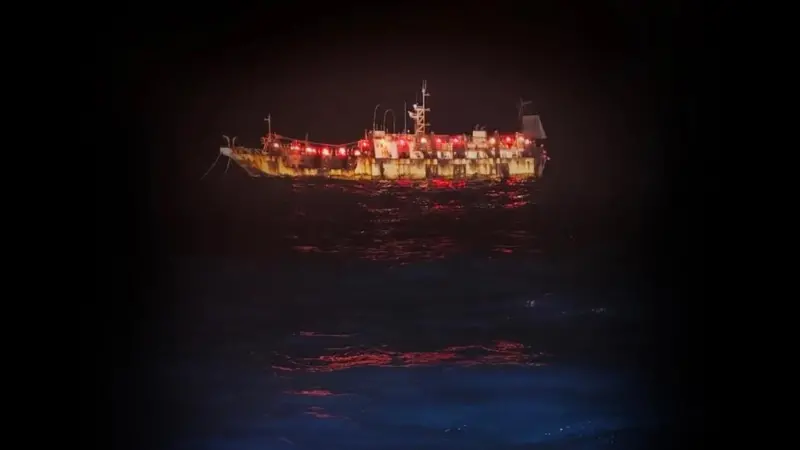
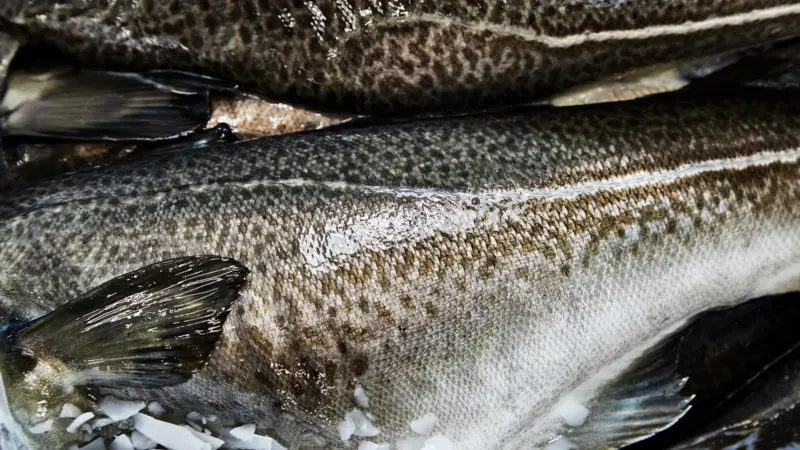
But even the best traditional management cannot prevent overfishing in coastal waters, if the respective government is opening them to foreign and industrial fishing fleets that target the same species, as well as their prey, as the small-scale fishermen. In Senegal, for example (and there are more), the government recently revoked the customary two month moratorium, because of pressure from its national industrial lobbyists, reports SAMUDRA News Alert. Such stop-fishing respite is vital because it gives fish populations, intensively fished by European trawlers, some time to recover and grow. Many species targeted by artisanal and small-scale fishermen, including Thiof (white grouper) – the traditional Senegalese delicacy – are now threatened. Such situations could be in many cases avoided, would the authorities prevent larger-scale fishing vessels from fishing in inshore and coastal waters fully but sustainably exploitable by local small-scale fishermen.
Complaints are also coming from other countries. Voice of America recently reported that fleets of foreign trawlers, some of them quite large, can be found plundering coastal resources in Ivory Coast, Guinea and, for that matter, along the whole W. African coast line stretching more than 5,000km from Mauritania to Angola. The usual excuses by the authorities responsible for offshore management are that they haven’t got the capacity and financial resources to do effective monitoring and enforcement. Fishermen explain this situation by sheer personal or institutional corruption, with the large vessels bribing their way into the coastal waters, and the authorities turning a blind eye.
Professor Elinor Ostrom, who was awarded Nobel Prize in economics for her thesis that people are able to well manage their local resources without and even better than government’s managers. “Humans have great capabilities and somehow we’ve had some sense that the officials had genetic capabilities that the rest of us didn’t have” – she quipped.
Well, they have no genetic capabilities and only too often they have no capabilities whatsoever.