
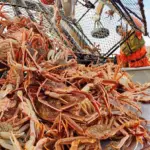
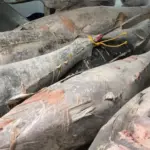


“Tho’ nature, red in tooth and claw….”
This was long before we saw on TV killer whales ripping apart seals, sharks savaging tuna, or grizzlies gorging on bloody salmon. As Tennyson and Charles Darwin spelt out, we, and the animal kingdom kill to survive, and survival of the fittest reaches out from our daily food tragically into civil war and invasion from behind the barrel of a gun.
Today, the supermarket consumer takes a plastic-wrapped chicken off a shelf. They are now also sans giblets – the broken neck, heart, kidney and liver which before we cooked for the dog or cat. The child pours ketchup on an anonymous fish finger, flesh masked by breadcrumbs. Blood pudding is “black” pudding. The blood and guts have gone, seen only by the invisible workers in the slaughter house, while the bloody surplus is sent sliding from the flashing gutting knife towards the holding buckets to become “protein for animal feed”.
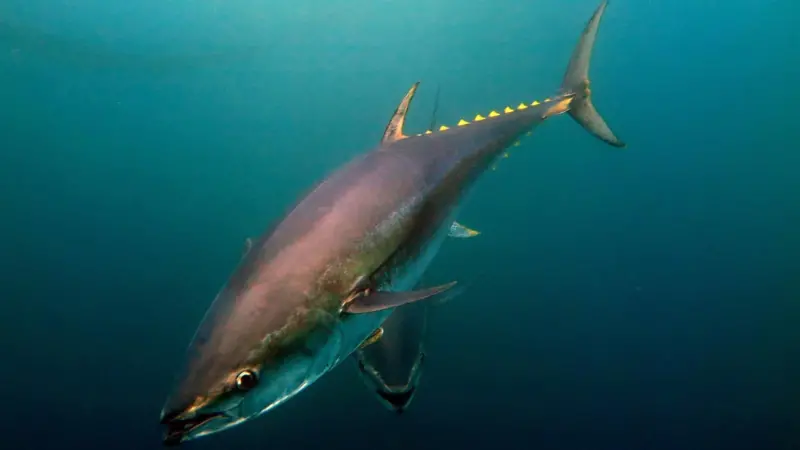
Our food, quite rightly, is now ‘sanitised’ but that should mean safe, not anonymous. Yet, until a child sees a cow, milk comes from plastic bottles. Crab paté, tuna chunks, smoked salmon, farmed seabass of the day (low-cost but hiding behind a sky-high price on the menu of the day) and cod liver oil carry no hint of the live crab in the boiling pot or the thrashing of caged tuna and seabass which surge to the surface for food pellets.
Honesty
Man has learnt to respect the animals and fish which provide him with sustenance. That is why welfare custom and practice, and then legislation, have grown over time. As more proposals come on stream for the welfare of fish, the industry seems to have several tasks it must show transparently to the consumer.
The first is to remind the consumer that both the wild and farmed industry are more than aware that good product is the result of careful breeding and growth in optimum conditions (clean seas as well as uncrowded farms) and that poor practice is not just bad for the welfare of fish but bad for quality and business.
The option is already here for practitioners to use information technology cheaply to show exactly how much care and effort goes into getting product from water to fork. Free DVDs (costing 20 cents ona €15 euro per kilo sale) or posting farming, catching and processing videos on company websites are easy. The video war has been controlled largely by organisations with an agenda of their own. Hard information which consumers can see will lead to brand loyalty. This has to go far beyond a few skimpy details on the label. TV documentaries like The Trawlermen from Scotland make consumers realise the sheer physical battle and life-threatening danger to produce that bland fish finger. The farmed industry can also show how its product is cared for. Humans should not abuse antibiotics but they do. The same issues are high on farming’s concerns about disease resistance and the need to find the right balance. The industry also needs to do some lateral thinking. Millions of schoolchildren are now interested in cooking. There is a clear opportunity for alliances with schools across the world to teach children how to check for healthy fish and muscle texture on the shop slab and how to gut, prepare, fillet and understand the physiology of quality. It is not enough to leave the debate on texture to the experts.
Pain
The issue of pain is central to the consumer debate about animal welfare. The core issue is whether fish feel pain: because they have no neocortex which allows that. That has been the benchmark. There is not enough room here for a detailed analysis of the science in this pain debate (www.vet.ed.ac.uk/animalwelfare/Fish%20pain/Pain.htm) But just as significant are “noxious” conditions (sea lice, pellet and faecal waste and diseases caused by poor conditions and antibiotic abuse). We do know that some 20+ million anglers across Europe believe fish do not feel pain. The analysis of stress, whether from overcrowding of tuna in a pen or finfish hauled in on kilometres of long lines, is not new. See www.fao.org/docrep/field/003/AB931E/AB931E00.htm ,1981! It is not good for the fish, the farmer, fisherman or consumer. Quota-dumping bycatch scars fishermen too. So good handling is a prime issue which the industry must be seen to lead on, while sensible use of bycatch is a job for the politicians.
Watching a celebrity chef kill a freshly-caught fish by banging its head against the gunnel of a fishing boat is a portrayal of the reality which should not be evaded. But the other side of the coin is that consumers be told the money and research put into electrical stunning systems and how they work. If consumers ‘see’ the detail and the science, then welfare can be separated out from pictures of seal cubs being clubbed for their fur during culling.
A wide set of veterinary guidelines have long been in place. Farmers need to explain them to those who buy their product. The thrust of EU proposals is in substantial part related to the conditions in which product is bred, grown and killed. The increase in vessels for transporting/growing live sea product is going to be closely watched in this context because space considerations are much tighter than in pens. For the public, the trawl net has been more bound up in the debate about alleged destruction of the seabed (which the evidence does not support) than it is about dying fish. Likewise for the hooked longline: which is also about birds caught snatching (naturally) an easy meal. The industry has come up with solutions for the latter and there will be more answers. However, wasteful shark de-finning is up there in the consumer mind with the sight of flensed whales “in the interest of research”.
BENEFISH
BENEFISH (http://ec.europa.eu/research/fp6/ssp/benefish_en.htm) is part of DG Fisheries plan for this area, to look at “operational welfare indicators, define relationships between selected welfare control measures and their consequences for production, quality and consumer perception”. It will back this with case studies for “cost-benefit analyses of potential welfare control measures” and tools to assess “biological and monetary consequences”. BENEFISH is focused on fish farming but the industry as a whole will do well to apply its results wherever relevant because BENEFISH says it is about meeting “consumers’ increasing expectations for animal welfare throughout the supply chain”. And it is open to receive data from the industry as well as share the results of research based on “A rigorous scientific approach” for decision-making…. [to] “optimise animal welfare”. It is already underway and we should watch and comment on its work as it progresses towards the final report by February 2010.