

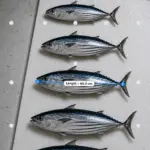




The value of DNA sequencing in fisheries
The way global fish stocks are protected and identified is currently being revolutionised by DNA detection tools.
Genetic-based approaches are beginning to play a key role in addressing problems of illegal fishing by revolutionising conservation and management of natural fish resources.
Leading scientists from 24 nations will be among delegates attending the Fish, Genes and Genomes: Contributions to Ecology, Evolution and Management conference at Bangor University, Wales from 18-22 July.
Gary Carvalho, professor of Molecular Ecology at Bangor University, said: “While global marine fish stocks continue to be worth around US$80-US$85bn annually, international bodies point out that many fisheries are already severely depleted or in sharp decline in nearly every part of the world.”
“Threats such as climate change, overfishing and changes to habitats, together with an increased use of wild fish to support aquaculture, means that livelihoods in many coastal communities and food security worldwide are under threat.”
The scientists will discuss the value of these new fisheries tools based on DNA sequencing; so-called genomics, and sharing the latest advances in genomic approaches in fisheries and aquaculture.
Since 2009, the MSC has worked with independent laboratories to carry out DNA tests on hundreds of products from around the world as a complementary measure to protect MSC seafood integrity from possible species substitution and mislabelling.
Recently, a randomly collected sample of 257 MSC labelled retail products from 16 countries yielded only a single case of mislabelling.
Jaco Barendse, MSC Product Integrity & Traceability Manager, who will be presenting at the conference, added: “The use of molecular tools like DNA test adds an extra level of scrutiny to the MSC Chain of Custody Standard. In the foodservice industry where average mislabelling rates over 30% are common, we are pleased that DNA testing confirms the credibility of MSC labelled products.”
He concluded: “Ongoing research and development of DNA and related techniques are very important to the MSC to allow monitoring of product integrity in more countries, greater diversity of species and products.”
Related Articles
 FISHERIES
 FISHERIES
 SEAFOOD