




The traditional fishmonger: The right horse for the course
Bryan Gibson looks at the benefits of buying fish from a traditional fishmonger, compared to a supermarket.
Throughout the past five decades supermarkets have successfully clawed their way up to the top of the food retailing chain by efficiently offering what and when an impatient consuming public has been convinced it needs, usually as a result of high profile promotions and TV advertising.
But unlike the rest of nature’s top predators with millions of years of evolution on their side, modern-day supermarkets still have not learned the simplest of lessons, unlike most other evolutionary victors, that some prey is just not worth chasing, and sometimes there are huge benefits to be gained by allowing a few smaller opportunities to swim past, uneaten.
Although supermarkets are extremely good (for the most part) at what they do, as long as produce and products can be stacked en-masse, upon shelves, inside freezers and chill cabinets, vacuum-packed and with their shelf-life substantially extended by costly and industrially complicated re-manufacturing processes, then all is usually well. But when it comes to ‘things still living’, such as pot plants, cut flowers, Christmas trees; and worst of all, ‘fresh’ fish, then the producer’s dedication to quality and the effort invested in carefully growing, harvesting and delivering his produce can become wasted in full view of countless unforgiving shoppers. And all too often it is the supplier who is then forced to foot the bill for a loss entirely not of his own making.
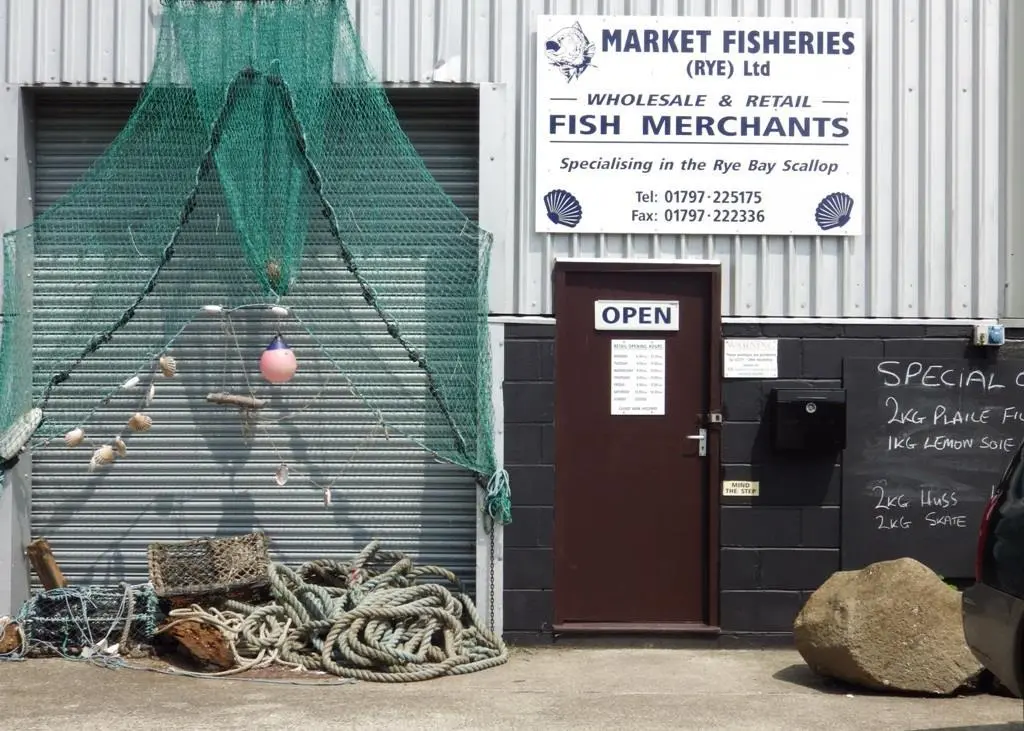
Russell Drew of Market Fisheries in Rye near Hastings, on the south coast of the UK, has been involved in fresh fish retailing and wholesaling for the past 40 years. “My dad taught me how to fillet a fish when I was just five years old, and the secret to providing fresh and attractive produce without an offensive smell is very simple. Presenting fish for public display is all about proper stock rotation and knowing the strengths and weaknesses of different species.
“Supermarket fish counters are usually located next to the chilled meat section at the back of the store, and despite the TV adverts claiming the man behind the ‘fresh’ fish counter is always a fully qualified fishmonger, in reality, the same person can be regularly seen ‘manning’ the deli counter, poking ham and chicken slices into polythene bags”.
Experts?
Russell admits to harbouring serious reservations as to whether such alleged ‘trained experts’ have the vaguest clue about properly filleting a fish or rotating their display to prevent valuable stock from spoiling.
Within just a few minutes, Russell had deftly filleted half a dozen small dabs, skinned and sub-divided a dogfish, rendered a john dory into its edible parts, served four customers and also found time to plunge a couple of live lobsters into his gas fired cauldron (ouch!).
All in a day’s work for a time-served fishmonger like Russell Drew, but what was clearly evident at his small retail/wholesale premises a few feet away from Rye’s commercial fishing harbour, was the total absence of the stomach-churning aroma of decomposing sea creatures and that he knew his trade to the final fish scale.
One might accept such unpleasant ‘pong’ to be part of the rustic character of any small fishing harbour filled with rusting trawlers on a sweltering high-summer’s afternoon, but not inside an air conditioned, hygiene-conscious supermarket, where public perception of quality and freshness of produce on display is supposedly paramount, but often begins and ends with a poster pinned on a wall.
Russell says, “Fish consumers in France and Belgium are accustomed to buying several small fish at a time for one meal and are willing to eat a greater variety of species. The British only ask for one large fish, which needs minimum preparation”.
Many a potential fish eater can be lost to the concept of ever eating fish without it always being encrusted in batter or bread crumbs, and has often been caused as a result of experiencing a smell strong enough to send a shopper scurrying back down the aisles in search of an alternative oxygen source.
Such neglect of attention to detail is no marketing tool to promote an entirely natural food high in beneficial oils, poly-unsaturated fats, protein and vitamins. And wasn’t it the supermarket who originally invented the idea of piping the aroma of freshly baked bread into their foyers to coax customers deeper into the store by making them feel hungry?
So it ought to be a no-brainer for the marketing gurus to realise, that having successfully tempted their prey deep into their store with a very pleasant smell, then confusingly zapping him with a really bad one pungently wafting from a slushy shelf occupied by half a dozen sad sardine-sized, commercially farmed sea bass and a handful of miserably withering mackerel, is not going to sell more fish, or anything else for that matter.
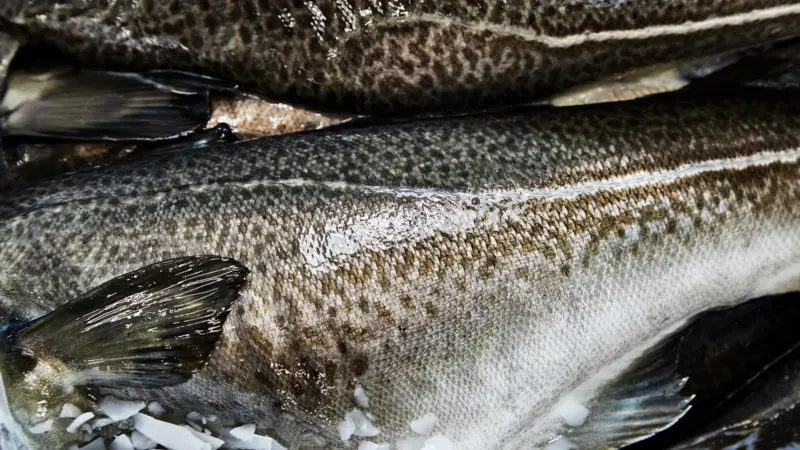
Publicly displaying fish UPON beds of crushed ice, instead of burying them WITHIN, leads to premature warming and drying. Leached body fluids then mix with the steadily warming melt water, and if regular stock rotation has not been observed, the biological soup starts to smell and taints all newly-added produce. And anyone who has ever been forced to throw the entire contents of his fridge away won’t be buying fish from his local supermarket any time soon.
Following In the wake of the horse meat scandal, it’s a good time for the fish retailing and wholesaling industry to redouble their efforts to promote the quality, nutritional value, sustainability and traceability, which seafood offers in such great abundance.
And where retailing easily spoilable food is concerned, supermarkets might be well advised to leave a few well alone. But if they insist upon selling fresh fish, maybe rubber replicas lying on artificial crushed ice might be the best route to a happy customer. The real stuff could then be safely stored on trays inside a conveniently located freezer placed close to the display. It’s not a new idea! They did the same with ice cream before chest freezers became widely affordable.