
The pressure increases onboard
As the demand for fresher fish increases the race to get it to shore in the best possible condition, onboard processing is becoming an even more important factor in the process, as Adrian Tatum reports.
Processing catch onboard has always given trawler owners and fishing companies the ability to get ahead of the game – to catch, sort, wash, process and freeze fish to order before it has even reached the shore. The technology behind this type of processing has developed rapidly over the past decade, taking into account the demands of fishermen and changes in the industry.
Fish processing technology in general has become very advanced. One of the latest developments from processing specialist Marel is the SensorX bone detection system. This enables processors to improve the quality of their fish and reducing handling as the fish goes through the machine without being touched.
After bone removal, fish are conveyed through SensorX, which serves as an automated quality control station. Bone-free product is directed to packing, without further handling, and any product with bone content is directed to an operator for manual bone removal.
The SensorX Fish delivers much more reliable and consistent results than manual inspection. The advanced technology provides bone detection capabilities that are said to be unprecedented among automatic bone detection systems, according to Marel.
This is just one example of how far technology has come.
Increasing efficiency
Onboard the challenge is maximising the small space available for processing and manufacturers and vessel designers have worked hard to increase efficiency and make systems more automated, meaning vessel owners are less reliant on labour intensive production lines.
But how far can that technology go in the future? And how much of it can go onboard?
“The answer is it is possible to achieve anything onboard – the potential is endless,” says Stella Kristinsdóttir of Marel. “The only challenges is the limited space onboard and the regulations that have to be adhered to. Apart from that anything can be achieved for the skipper or vessel owner in terms of the processing equipment that can be found in a unit on-land. Future onboard technology will focus on efficiency and accuracy.”
The trends, says Ms Kristinsdóttir are driven by the increasing need to deliver fresher fish, therefore efficient processing onboard for those vessels fishing further way from shore is even more vital than before.
In Iceland, this had led to the country’s biggest fishing company, HB Grandi, converting some of its freezer trawlers into wetfish trawlers. This has meant a redesign of the onboard processing decks by food research and development company Matis.
The main focus of Matís’ contribution to the work was to define the ideal methodology for ground fish handling and to be able to deliver fish of the highest possible quality and with a maximum shelf life.
Primary processing measurements and experiments were carried out onboard wetfish trawler Ottó. N. Þorláksson. The study results provided input for the processing deck’s design and raw material handling. The main focus of the research was on bleeding technologies, cooling and mechanical strains.
Based on the results from these studies, HB Grandi has reached an agreement with 3X Technology for the design, construction and implementation of solutions based on 3X ROTEX equipment for the processing deck. This also includes the RevoPortioner from Marel which enables processors to make perfectly portioned products at low pressure, thus retaining the texture and structure of the raw material. This can be done without the need for additives to make it stick together, thus avoiding additional costs and keeping the fresh flavour of the fish intact.
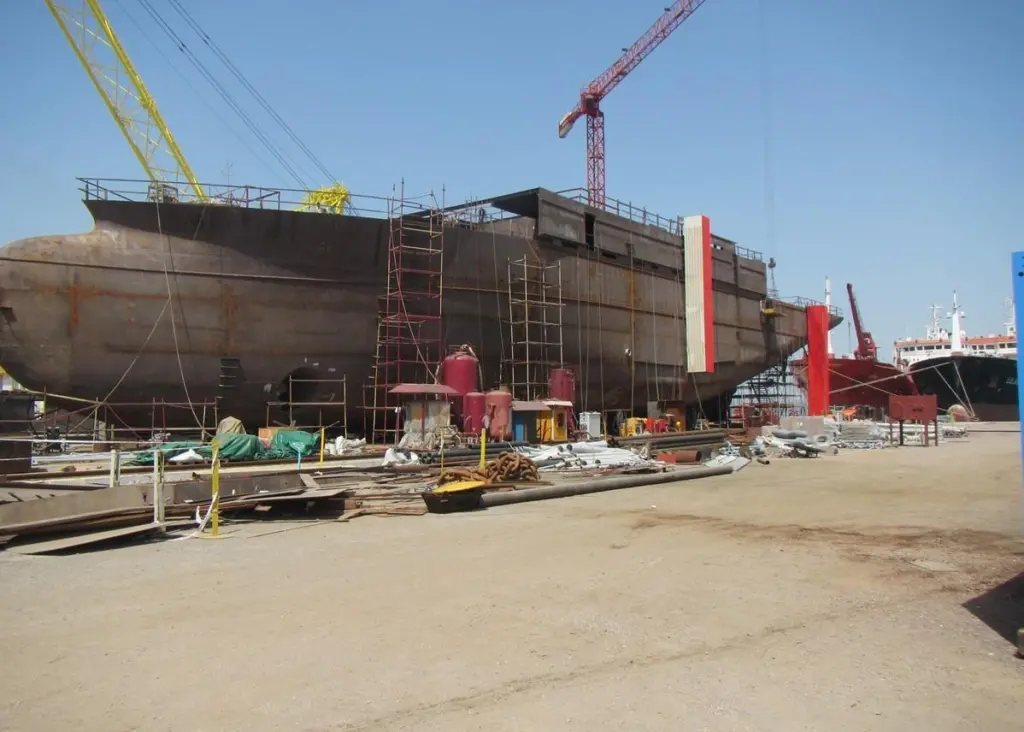
HB Grandi also has two new pelagic vessels under construction at the Celiktrans Denis Insaat yard at Tuzla in Turkey, and the company had started negotiations with the same yard for construction of three new fresher trawlers. This brings the investment in the company’s fleet to approximately ISK 14 billion, of which roughly half is accounted for by the two pelagic vessels.
“The new fresher trawlers represent a significant step forward,” said HB Grandi CEO Vilhjálmur Vilhjálmsson.
As the demand for fresher, added value fish product grows, so does the need for more accurate and efficient grading and weighing machinery onboard.
“The big question is how can we effectively deal with what is delicate raw material and bring it to shore quickly in the best possible condition to drive the best possible price,” says Ms Kristinsdóttir. This has led to the launch of Marel’s new Speed Batcher and underlines the importance of other products such as Flow Scale and a number of increasingly accurate onboard weighing machines.
Tighter rules and regulations in different fisheries means the accurate recording of data is becoming more important and many onboard processing units are built around this fact. Rules in the Pacific concerning the catch of Alaskan pollack is one example where regulations on the accuracy on catch weight underlines the need for more advanced equipment onboard.
The need to add value is still important too. Baader’s FDS 5N-S is a skinning machine built for high capacity skinning onboard factory ships.
The FDS 5N-S is a high capacity skinning machine, built for direct connection to modern filleting machines such as BAADER 182, 192 or 212. The machine can skin up to 300 pollack fillets a minute.
Compared to older versions of the FDS 5N-S, this machine has a clear advantage. A new knife section increases yield by 1-2% and there is a choice between skin on and skin off transportation of fillets.
It is yet another single example of the modern technology available to skippers and vessel owners onboard. But what can be achieved next?