
The Philippine disaster and local relief action
Small-scale fisheries (SSF) are not only a great provider of employment, and either the only or most important income source in poor coastal communities, but there is something in the fishing itself that makes it the preferred way of life for the fishing people.
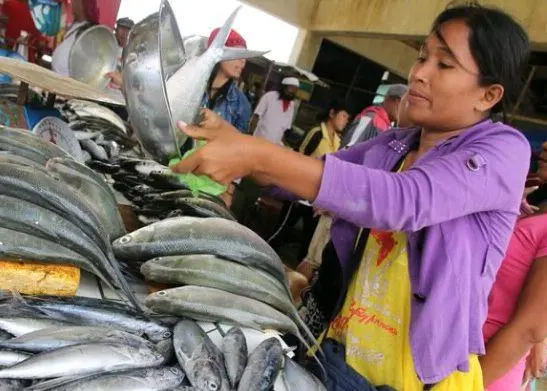
SSF produces over half of fresh food-fish and is the foundation of local economies. But, SSF – about the most dangerous occupation worldwide – only too frequently operate under adverse exploitative socio-economic conditions, facing greedy bureaucracy, exploitative fishmongers, insecure fishing rights, and inadequate access to on-shore services. SSF are also most affected by coastal and upstream pollution and degradation of natural habitats, including areas of spawning.
Thus, in many areas of the world fisherfolk are notoriously poor and their communities relatively underdeveloped. Into the bargain of poverty enter natural disasters, where in marine countries fishermen are the first to die, the first to suffer and the first to lose property. In southeastern Asian countries, even when times are ‘normal’, fisherfolk are plagued by bad weather and bad seasons.
The blow of Yolanda
Last November’s super-typhoon Haiyan, also called Yolanda, hit the eastern Vissayas and a cluster of islands in the central Philippines with sustained winds of 315km/hr (195mph) and squalls of 380km/hr (235mph) and was considered the strongest tropical cyclone on the record anywhere in the world. Its large diameter of 1,850km (approx. 1,000 nautical miles) caused clouds to affect two-thirds of the country, and tropical-storm-force winds to extend 240km from its centre.
With some four million houses heavily damaged or destroyed, more than nine million people were affected and nearly two million displaced in 44 provinces, 536 municipalities and 55 cities. Some 7,000 died or are missing (assumed dead) mainly due to unforeseen 6m (20ft) storm surges that deluged the port city and provincial capital Tacloban, where many of the inhabitants ignored evacuation advice. Around 16,500 seaweed farmers – mostly women – also lost their livelihoods.
According to Rodrigue Vinet, acting FAO Representative in the Philippines, “The damage caused to the fisheries sector in North Philippines by the super-typhoon is immense and spans the entire value chain, from catch to market, and in the context of livelihoods, these losses are crippling.”
The Philippine Department of Agriculture reported that small-scale fishermen were the worst affected by Yolanda with tens of thousands of small boats and their fishing gear destroyed or damaged, while larger commercial boats suffered less. The ‘municipal marine fishery’ exclusive from the shoreline to 15km offshore, lost most of the boats authorised to fish there.
The typhoon also destroyed fishing infrastructure including jetties and landing ports, ice and cold storage. processing and marketing facilities, boat repair and maintenance yards, as well as aquaculture infrastructure such as oyster rafts, crab, shrimp and mussel farms, inland tilapia cages, hatcheries, and fish ponds.
Rehabilitation
FAO has called for fast rehabilitation of the livelihoods of the small-scale fisherfolk and fish farmers, as well as people directly and indirectly dependent on the fishing sector. Because experience from the 2004 Indian Ocean Tsunami and other large-scale disasters has shown that unplanned oversupply of fishing boats and equipment during the recovery can cause excess pressure on fish stocks, and thus negatively affect livelihoods of the remaining fishermen, boats need to be rebuilt and replaced in a coordinated manner.
Replacement fishing gear should be legal and boats should be built and repaired with quality materials, taking no short-cuts on the safety of fishermen.
The Peter Project
The Peter Project was started by the Negrense Volunteers for Change (NVC) three years before the blow of Yolanda.The NVC foundation, based on the Negros Island in Central Philippines, has focused on providing classrooms in local schools and nutrition programs for children. Its first excursion into fisheries was to donate motorised bancas to 29 poor fishermen from a coastal village in Negros Occidental province.
Now, following Yolanda, NVC president Millie Kilayko said her group has launched Peter Project 2 to raise funds for motorised bancas after thousands of fishermen lost theirs to Yolanda. Yolanda has left 9,500 fishermen in Northern Panay and 981 in Negros Occidental and still more in Samar, Leyte and northern Cebu without fishing boats to earn a living for their families who are already reeling from the destruction of their houses and loss of most of their belongings. In response to this need NVC has been soliciting for donations from various parts of the world, and so far has collected sums sufficient to acquire at least 700 bancas for beneficiaries mostly on northern Panay Island.
“We designed The Peter Project to become more than just a boat-awarding facility,” said Ms Kilayko. “We crafted a comprehensive agreement with the fisherman, engaged and trained some of the wives in livelihood, and enrolled their children in NVC’s nutrition program.”
The Project’s site is www.nvcfoundation-ph.org/projects/the-peter-project. There are, of course, also international and national official relief efforts, but this initiative of a local/regional voluntary organisation most certainly deserves national appreciation and even admiration among developing countries worldwide.