
The most professional and international WFE
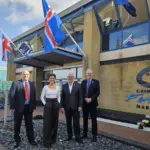
The World Fishing Exhibition (WFE) and Aqua Farming International (AQA) Exhibition were held from the 16-19 September 2009 in Vigo, Spain. At the final press conference, Mr Paz-Andrade, surrounded by the Executive Committee and the Regional Minister of the Sea, Rosa Quintana, expressed his satisfaction at the results of the event. He stated that he had the feeling of a “mission accomplished” and praised the high technological level of the exhibition, adding that this year’s show had broken all records for the number of professional international visitors to the event.
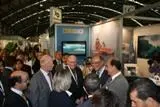
The exhibition was attended by more than 500 exhibitors from more than 50 countries representing a total of 800 companies. Exhibitors came from Japan, the Falkland Islands, Indonesia, Taiwan and Russia. There were also 10 national stands from Denmark, France, Faroe Isles, China, Holland, Iceland, Italy, Norway, Falkland Islands and Taiwan.
On 15 September, the day before the exhibition opened its doors, some 160 fishery ministers, government officials, scientists, lawyers, NGOs and representatives of the fishing industry met at the World Summit on Fisheries Sustainability in Baiona to discuss the development of methods to ensure long term sustainability of fisheries resources. They heard presentations on ecosystem based fisheries management, the problem of IUU fishing, the requirements for better governance and the ways to achieve this. The Summit recognised that efforts to reduce pressure on marine ecosystems through reductions in fishing effort, the elimination of overcapacity, adoption of targets such as MSY, rights of access to fisheries, prevention of significant adverse impact of bottom fishing on vulnerable marine ecosystems, and the implementation of ecosystem based management is essential to protect ecosystems and allow them to recover from exploitation. Dr David Agnew, Convener of the Summit, said “I was particularly pleased with the attendance at the Summit and the quality of the presentations and discussions that followed. The common understanding of all participants that changes need to be made to make fisheries sustainable, and that this is in the interests of all stakeholders, underpinned the constructive exchange of new ideas on the subject.”
The opening day of the exhibition also saw 43 fisheries ministers attending the Fifth Fisheries Ministers Conference at Baiona. Organised by the Government of Spain, the aim of the conference was to analyse the proposals, ideas and initiatives of fishing countries and formulate a global progress strategy to advance the sustainable regulation and management of fisheries. The success of the Conference was aided by the important role played by the World Summit on Fisheries Sustainability, which provided and improved understanding of the different facets of sustainability in the marine environment, and facilitated the identification of areas requiring political action at a global level. The Conference invited the various intergovernmental authorities and the regional organisations responsible for the management and conservation of living marine resource and States to take into account these conclusions in all future debates, internally and internationally.
Delegates at the first AQA Conference, held on the 18 September came from far and wide: Australia, Argentina, New Zealand, North and South America and from across Europe. Each session concluded with a lively question and answer debate, giving an indication of the high level of engagement enjoyed between delegates and speakers. Conference Chairman, Dr Selina Stead, President of the European Aquaculture Society, commented “The Conference marked an important step and a very exciting start of a crossover between fisheries and aquaculture”. The conference opened peoples’ eyes to the multitude of possibilities offered by aquaculture – traditionally aquaculture has been associated with species such as sea bass and sea bream, therefore it was surprising that local experiments of culturing species such as octopus and abalone were revealed to have been successful. It was agreed at the conference that marine aquaculture is the fastest growing food development sector and that despite this, one of the largest restrictions facing aquaculture is integrated coastal management; or as it is sometimes known, marine spatial planning. Many people felt that aquaculture was not given the same consideration for development on coastal areas as tourism developments or for offshore renewable sources.
The World Fishing Exhibition once again lived up to its reputation of being the benchmark for the worldwide commercial fishing gatherings and now coupled with the dedicated parallel event for the aquaculture sector, AQA, only bigger and better events can be in store for the future.