




From the 1960s to the 1980s this seafood paradise attracted tens of millions of summer tourists and now both Italian and the Eastern coasts are clawing back their clientele. Peter O’Neill finds governments talking more about serious collaboration on fish, trade and tourism, but there are some tricky whirlpools to be negotiated on the open water and your 'catch-of-the-day' lunch may be from the land.
Before leaving Albania for the annual informal get-together of agriculture and fisheries ministers in Maribor, under the Slovenian EU Council Presidency of Minister Iztok Jarc, World Fishing was struck (see Secret Albania, World Fishing, June 2008) by the importance of the link between sea, land and water. Albania’s still largely unpolluted coastline, the experts told WF, boasts probably four times the fish stocks of the opposite Italian coastal waters.
It is only 15 years since WF saw massive, toxic algal blooms on the coast below Trieste, at the top of the then Yugoslav coastline. The New York Times talked of “a symptom of a hidden sickness, a vast plague of algae has spread over much of the Adriatic Sea, sullying some of Europe's finest beaches and killing marine life in this part of the Mediterranean”. That cost several billion Euros in today’s money. A few mild winters and “decades of almost unbridled pollution from Italy's rivers” were destroying the Adriatic's eco-balance, not just the clams and mussels. The toxic tide crippled business for some 6,000 Italian hotels on some 600km of coast from Istria, past Trieste, Venice and as far south as Ancona, Rimini and Pescara. Greece and Turkey to the South of Albania were hit. Nor did the slime just kill sea life – its clagging weight burnt out engines and destroyed artisanal nets. Albania seems to have avoided this plague.
Mountain water
The Adriatic is no more tidal than the Med. But it is much narrower (from Bari port in Italy to Durres, Tirana’s fishing and merchant port, is just 80 nautical miles) and perhaps more at risk from what the coastal states do with their waste and the runoff of nitrates and other fertilisers. So, Albania’s 400km of unpolluted coastline may have far more importance for renewal of the whole sea. Sea water heads for land as cloud moisture and completes the cycle as Spring snow-melt and one of the highest annual rainfalls in Europe feed it back into the sea mainly through the vast northern Drin and southern Vjosa river systems. The Albanian mountains may be part of the anti-algal formula.
WF is a cold-water swimmer and after a comfortable 15-16ºC off Duress beach before fish lunch, it expected a little more warmth 200km down the coast at Himara under a blistering sun at 30ºC. In fact the sea water was chilly around 12ºC and the reason is simple. Dr Shaqir Krasta, Secretary of the Albanian Medical Association and a long-time coastal swimmer, explained to WF that the watershed mountains (amongst Europe’s highest) feed vast amounts of cold water into the sea where plunging rock meets the shoreline. This natural refrigeration system may deter algal growth, and fertiliser runoff has been minimal. This Albanian chilled mountain water may be important for the health of water and fish quality much further into the Adriatic, and benefit increasing sea-cage fish farmed by Greece and Turkey into the Ionian Sea.
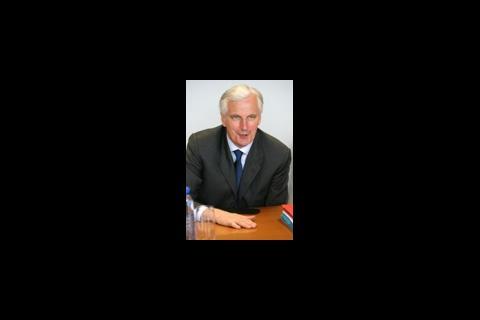
Agriculture and Rural Development Commissioner Mariann Fischer Boel said at the Informal she was always very happy not to have to handle the difficulties of the EU fisheries’ portfolio, particularly the fuel crisis. Indeed it was left to France’s Agriculture and Fisheries minister, Michel Barnier, to make the running on fuel prices and blockades by fishermen and truckers. By implication France’s unilateral moves might encourage national governments to bypass the EU Commission and reduce VAT and fuel tax unilaterally.
Barnier apart, Fischer Boel told WF that the new challenges facing the EU were precisely climate change, water management and biodiversity. She said money would be taken from the direct payments to farmers to tackle these issues in rural development. “With the changes we have seen in the climate, water scarcity becomes a huge problem in some Members States, therefore we need some elegant…solutions…to secure that we are getting the full benefit from this scarce resource,” she said. She added that recent changes meant a beneficiary was allowed up to €30,000 national help over three years without breaking EU subsidy, while ‘de minimis’ help to get farmers out of a crisis was still at €3,000 over three years.
Fish and pigs
What also emerged from this Council Informal on the Adriatic is a return to the old paradigm: a country is strong economically if its agriculture and fisheries production are strong. Further, the rise of the international food conglomerate has forced out of sight the statistical evidence that small producers give higher quality, have lower costs and produce more from less area worked. On the eastern coast, and inland, of the Adriatic the family or cooperative run unit is very widespread. A family often runs a 'rural' restaurant with a menu based on own-farmed or wild-caught fish, plus own-bred pork, lamb and goat products and a range of their own seasonal fruit and veg.
This is much more sophisticated than the fisherman who just increases his catch income by expanding into a little fish farming. The trend is there. TV programmes, across the Northern EU, laud farmers’ markets in cities, showing celebrity ‘sustainable’ chefs with locally-sourced smoked and barbecued fish at market stalls -- and the value-added is local. The South may have an important lesson for Northern skippers. These small family units, like Unilever, offer a range of products, but of literally unique quality. Just-filleted fresh carp or roach garnished with home-growns, easily beat the lowest common, packaged, palate test of the 'international product'.
Easing friction
It is almost impossible to work out stock levels in Adriatic and Ionian waters. The European Environment Agency (EEA) says that stock assessment drops significantly as you move from the Northern seas through the Med, Adriatic and Ionian and finally to the Black Sea, the last having none at all. Large artisanal fleets may also mean many landings do not reach the statistics.
Greek, not only Turkish, sea-cage production of bass and bream has mushroomed, with both countries being criticised by northern producers for selling at low cost. The year-long marketing campaign of Greek seafood in the UK, by the Hellenic Foreign Trade Board may be a symptom of Turkish-Greek competition in the sector. Yet, from being uncomfortable neighbours, Turkey is now not only a major supplier of fish to Greece but its fifth largest trading partner at more than €2 billion+ last year. Greek banks and businesses are investing significantly in the Turkish fishing sector.
This is one of world’s major fish-eating regions. As free movement of capital grows and conflict and old ideologies diminish, trade circulates and the richer states are taking advantage of cheaper labour and product costs in their neighbours’ fish sector. The anchovies being processed in the four old sardine factories on the Albanian coast are in fact supplied by Croatia up the coast, the bulk exported to Italy and it is all funded by Italian money. In Slovenia, the loose anchovies on sale on the multi-metre fish counter in the giant Maribor Expo shopping centre were labelled as being from...Italy.
Several former Yugoslav states and Albania and Turkey are all doing the pre-EU accession dance (Slovenia is already in) to show what good partners they can be. Their fishing regimes would come under the EU, so they have been staking their water claims.
In March, Brussels warned Croatia (at the front of the EU queue) that its row with Slovenia and Italy could set back its EU membership application. According to EUBusiness.com, the dispute followed moves by Zagreb, the Croatian capital, to apply a fishing and eco zone of 23,800km2 on 1 January. The Croatians said they were protecting stocks against alleged incursions from Italian trawlers, the same worry as for Albania which has zapped Italian trawlers with massive fines (Secret Albania, WF, June 2008). The report added that Italy and Slovenia had responded with their own zones.
Božidar Pankretić, Croatian Minister of Agriculture, Fisheries and Rural Development is also keen to extend cooperation generally “on a correct basis,” with Italy. “We are working together with the other countries” he says and everyone has to protect their own interests. He sees the EU fishing framework, (Croatia, Montenegro and Albania will be in the consultations), bringing everyone together. However, it is clear that Italy is the big worry factor for everyone on the opposite coast. Italian minister Luca Zaia only had a few generalities for WF and left it to his officials to promise some data which at the time of going to press was still lost at sea.
And a quick word about Lake Ohrid, shining between Albania and the Former Yugoslav Republic of Macedonia (FYRM). FYRM minister Aco Spasenovski told WF there is good cooperation with Albania on water – the giant Drin river runs from shared Lake Ohrid, one of Europe’s largest and deepest. It is said to have 10 commercially important species and feeds a whole range of towns in both countries. It is famous for its large trout and 45% of catch is put down to very valuable eels. But “Ohrid water level is reaching a critical level”, Spasenovski said, “with 2005, 2006 and 2007 being very bad [for rain] and we must look everyday to make sure the situation is secure. He thinks things will “not be so good” for Albania in the future because of climate factors and less rain. However, the Albanians told WF 2008 rain has meant full rivers and reservoirs everywhere.
Farmed futures
The Turkish delegation (Informals always invite non-EU ministers so they can get to know their EU counterparts), cancelled their attendance at the last minute. Though well to the South, Turkey is important. It illustrates the boom in aquaculture and its importance for regional job-generation on coast and inland. Wild catch from all waters fished by Turkey dropped from a late 1980s high of 500,000t to just over 400,000t a decade later. Water pollution apparently hit the anchovy catch which dropped from 310,000t in 1987 to 98,000t in 1989.
Turkey’s rise in farmed product cannot match China’s 60-70%. But Turkey’s water conservation expansion, with many projected new dams, will add to its existing 1,100 or so natural lakes, reservoirs, ponds and rivers which already cover 177,715km2. The 2004 FAO figures (issued 2006) put Turkey in fourth place globally, in terms of aquaculture growth, at 24%. (Myanmar led with 45.1% growth followed by Vietnam on 30.6%). In tonnage Turkey’s 50,000t for fresh and marine farmed in 1998 rose to 61,000t in 2002 and nearly 100,000t in 2004. Backing that is a significant educational infrastructure with 16 universities offering fishery courses and two vocational schools for 'master' fishermen and fish processors. Recent university fisheries’ student numbers, taught by some 500+ staff, totalled 3,720 postgrads and 3,470 undergrads.
Aquaculture around the Adriatic will grow, though against a retail premium for fresh-today-wild. Sea-cages on the coast may cause serious conflict with the resurgent tourism population, jet-skis and scuba divers. The future stakes for seafood will depend on whether the Eastern coast learns from mistakes made elsewhere in Europe’s tourist waters. Corfu, a longish swim just across the water from Albania’s Sarande, now struggles with tens of millions of discarded plastic water bottles – which could calculate to at least a 1-litre bottle a day for a 14-day tourist and up to one million tourists a year.
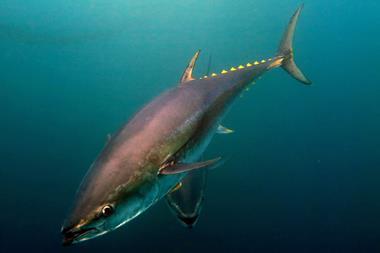
Aquaculture will also no doubt benefit from the very public rows and exposés who is taking what bluefin tuna from the Adriatic. Algeria, Libya, Morocco and Tunisia all have catch interests there and the Japanese are transhipping from local catchers too, just as their sushi market is fed from local interests up the Med around Malta.
One final thought for those Northern producers who have not grasped the appetite for seafood in this region. There is an economic and building boom in progress in all the countries down the Eastern Adriatic. Wages may be low but there is plenty of money about and migrant workers returning from abroad have also learnt to enjoy ‘foreign’ fish. There is profitable collaboration to be had and good friendships to be made through this kind of swap-marketing – at the small unit level of course.