




Menakhem Ben-Yami reports on the online marketing of fish.
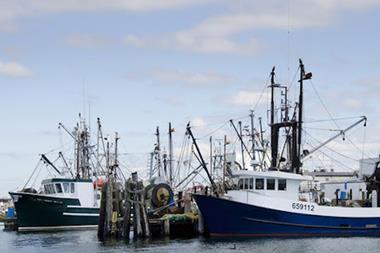
In the 1970s, when working for the FAO and based in Rome, we used to buy fresh seafood on the quay of the Fiumicino fishing harbour. We were waiting at the quay in the evening, after an always excellent supper at one of the dockside restaurants, when the local 20-30m trawlers were returning from a day's fishing. Once moored, often joined by their womenfolk, the fishermen were spreading out alongside their boats some boxes with prime fish for direct sale to individual clients. In this way, we were getting fresh fish at prices usually somewhat lower than we'd have to pay in a fish shop in the city, though no doubt much higher than the fishermen could've obtained from fish merchants. With the women taking care of the sales, the crew made themselves busy with other chores.
In many harbours fishermen used to sell the larger and more expensive fish ‘on the side’, directly to fish retailers and restaurants. The sales might be agreed beforehand by radio or cellular phones, or only upon arrival in harbour. In the Kishon fishing harbour in Israel, for example, fish merchants have set up stores with refrigerators directly opposite the landing quay, where they both receive the catch and retail them to mainly private customers. In other places, like some South American and Mediterranean countries, local boat owners may own their own little shops, or just refrigerated or ice-cooled boxes at the quayside to store their catch for on-the-spot sales. Such family-operated fish trade is sometimes being enhanced by growing association between fishermen and individual merchants, some of whom may open shops and even restaurants in fishing harbours, and in due time may become co-owners or sole owners of fishing boats.
Sometimes, fish captured in southern oceans' small-scale fisheries, especially where some tuna species are designed for sashimi or raw-fish sushi, are kept alive until landing. FAO reported that in China, Hong Kong, Indonesia, the Philippines and also in the Bahamas live fish are sold on arrival to wholesalers or retailed directly to the consumers. When it is important to land the fish when still alive, they are stored onboard in live-fish holding tanks or hull compartments, which are constructed so as to provide for a constant exchange of water.
Electronics step in
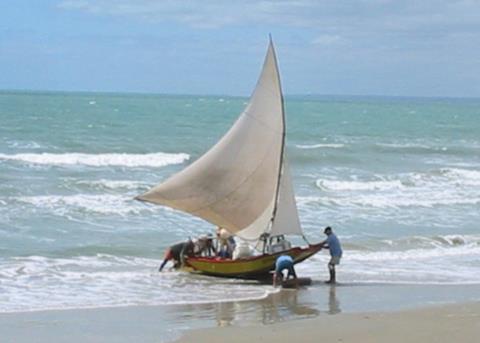
The expansion of electronics is surprisingly advancing Third World fisheries, where kattumaran and jangada fishermen, not to speak of more advanced fishing craft, carry GPS and cellular phones onboard their sail and outboard-powered rafts. This enables local customers to maintain direct access and close relations with such fishermen at sea. With access to Internet, online reality has created a new era for the small fishing business. One, most basic way are simple announcements on a boat-owner's Facebook or other network page, such as these that I have randomly picked from online:
DOCKSIDE FISH SALE ** TODAY!! Great prices, tons of seafood! Friday and Saturday only! 8a - 6p!! Hurry in, don't want to miss this! THE FISH SALE IS THIS WEEKEND!! Lobster Tails, Crab Legs, Salmon, Crab Cakes, Scallops, Haddock and much more!! 2 days only! Friday, Dec 14 & Sat, Dec 15 8a - 5p. Stay tuned for more updates!
TODAY WE HAVE FRESH SHRIMP 10/15's and 40/50's. We, also, have bait. 985-257-1200. We would appreciate you sharing this with your friends. Have a wonderful day!
A step forward is a website dedicated to small-scale marketing, usually by local fishermen directly to local consumers. Such virtual fish marketplace was recently announced In Louisiana, USA, where independent small-scale fishermen have now a new means to connect in true time to both commercial customers and private consumers. This is a website, (www.laterdirectseafood.com) on which fishermen can advertise daily, online, detailing their fresh catches. Their customers, logging in to this website, can now be fully informed on the sorts and quantities of fish, and the time and place of their landing so that they can acquire wild-caught, fresh seafood directly from fishermen. In Louisiana such offerings may include fresh shrimp and live crabs, as well as salty oysters and crab patties. According to Alan Matherne, of the LSU AgCenter, this virtual marketplace enables small-scale fishermen dispersed over the Mississippi Delta bayous to receive phone and online orders directly from the potential buyers, who found the product they want on the website and wish to place an order. The fishermen are also prepared to take orders in advance of making a trip.
This virtual marketplace is one of several regional marketplaces under Louisiana Direct Seafood with the goal of building community support to connect consumers with fresh seafood straight off the boat. The program is administered by the LSU AgCenter and Louisiana Sea Grant with money from the Gulf States Marine Fisheries Council. One may assume that on-line retail fish marketing would in due time spread out over most, if not the whole US coastline.
Online marketing has been already practiced in Western Europe. There, it works like this: skippers still at sea post their catch details on the marketplace website. Local fish merchants, restaurants, as well as private consumers scan these announcements, post their choice and collect freshly-caught fish straight at the dockside. According to reports, there are over 20,000 users of this online marketplace.
Online marketing spreading over small-scale fisheries also carries consequences that may be negative for all those who are employed today in the marketing systems that have been, until recently, customary in advanced countries, and traditional in the developing ones. Multitudes of ‘fish mammies’ market women and other small-scale fishmongers can be ousted from of their present business and face major dislocations that would require social adjustments.