


Menakhem Ben-Yami looks at British Columbia''s fishing industry, which has endured some hard times but continues to thrive in the face of adversity.
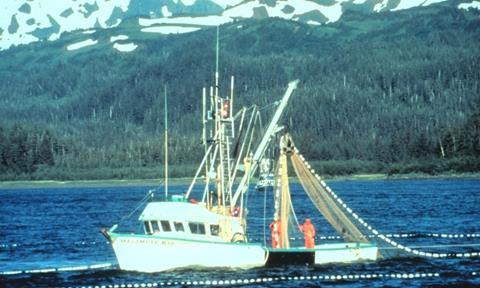
Thirteen years ago, in the November 1997 issue of World Fishing, I reviewed a book written by Alan Haig-Brown and published by Harbour Publishing entitled ‘Fishing for Living’. Now the same publisher has published a book by the same author, under the title ‘Still Fishin’ – the BC Fishing Industry Revisited’.
In his former book, Haig-Brown described among other accounts how my late friend, Capt Fred Kohse, had started his fishing career back in 1931 by rowing a skiff, together with his brother-in-law, from Salmon River for more than 200km all the way to Smiths Inlet, where he persuaded the plant manager in Margaret Bay to lend them a fishing boat and an old net, a saga Fred himself never told me about.
Capt Kohse is dead, along with many other pioneers of British Columbia’s fishing industry, but the industry itself is still alive and kicking… sort of. This is what Haig-Brown is writing about in his new book.
Haig-Brown, who 50 years ago went seining for salmon and herring, after some 15 years of fishing the BC coastal waters shifted to a career in journalism and other writing.
His other two books and his years-long reporting to and editing journals dedicated to the west coast fisheries and logging have made him an undisputed authority on the history of BC fisheries.
In the first chapter, Haig-Brown does not spare words in his criticism of the Canadian federal west coast fisheries management. He interviewed, for the purpose of this book, a selection of fishermen, old-timers and youngsters, and described how many of them were forced out of the industry by management regulations, which intended to limit the fleet’s fishing power but served only to increase it.
He recounts in great detail the history of the various fishermen and fishing families and even dynasties, the vessels they used and had to forfeit, and the developments that occurred during the last two decades.
The consequences of the 1970s’ limited-entry plan and the 1990s’ Mifflin plan have been burgeoning prices of boats cum licenses and, in the words of a veteran skipper, who was one of the diminishing number of truly independent owner-operators, resulted in – “…systematic transfer of the fishing privileges from individual vessel-owners to large fishing corporations, which both numerically and functionally control the operation of the industry from fishing to marketing.”
“I owe my soul to the company store…”
There’re examples in this book of the vulnerable situation of many BC fishermen. Among others, Haig-Brown writes about two brothers, Native Amerindians, both salmon seining skipper-owners with debts to a packer company and tenuous fishing rights: “When (Mark’s) fishing contract was sold from one company to another, he decided that the only way that he could escape corporate control was to sell his salmon licence to the government-sponsored buy-back programme and pay off his company debt.”
His brother… “did the same. The result was that the two brothers owned two boats and only a single herring seine licence.”
Fortunately one of them won on a tribal council lottery the right to use for two years a salmon licence and an uncertain future later on. This was their price for a shaky independence. Others made different decisions.
Notwithstanding the general background of closed processing plants, downsized fleets and corporate consolidation, the author reports on pockets of surprising activity and adamant survival of ‘still fishin’ people’.
Fishing, but not quite
Another book approaches the same and similar problems, but quite differently. Entitled ‘Enclosing the Fisheries: People, Places and Power’and edited by ME Lowe and C Carothers, both of Alaska, this volume represents the proceedings of a November 2006 session of the American Anthropological Association, and was published in 2008 by the American Fisheries Society.
The book comprises eight papers dealing with social and cultural consequences of various forms of fisheries privatisation in fishing communities in Alaska, BC, Iceland and New Zealand. The authors separately and collectively challenge economists’ and fishery managers’ basic assumption “that privatising fishing rights best serves the long-term interests of harvesters, processors and local communities”, an assumption enabling “the misuse of legislative authority to further private gain under the guise of economic liberalism.”
In her Introduction, Prof Bonnie McCay points out that almost all fisheries are now “open only to those who hold privileged access rights”, which to some people is seen as necessary, but according to others the costs and effects involved are threatening their livelihoods and cherished values.
One of the problems consists in the costs of the marketable individual transferable quotas (ITQ). Although, management by quotas is portrayed as reducing over-capitalisation, “much of the capital invested in boats is shifted to ITQ itself” – wrote McCay and – “The cost of entry often becomes consolidated in fewer hands, reducing the size of the market and making it difficult to find any ITQ to buy, especially in smaller lots.”
Another problem, stressed in most of the book’s chapters, is that the various management programmes, especially those introducing privatisation, outright or by stealth, are proposed and implemented without profound understanding of their consequences with regards to the socio-economic plight of the fishing people and communities affected.
The authors of the chapters of this book are anthropologists and present their cases using extracts from numerous interviews with fishing people affected by quota management. Some are illustrative: “If they turn it over (the quotas) to the canneries, it’ll go back to the serf… medieval times where you’re working for the cannery again. Company town, you got the castle up there and you gotta mow the fields and if you’re attacked, you run into the castle and hope to god they let you in! ”
And: “I see a time in the future when Alaskans won’t be able to fish in Alaska waters. They’re chipping away at us all the time. There’s getting to be less and less of us there.”