




Speaking up for small-scale fisheries
Menakhem Ben-Yami fights the case for small-scale fisheries throughout the world.
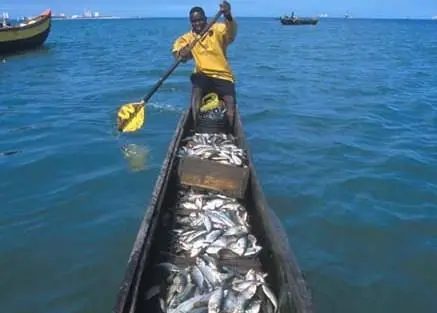
The considerable social and economical role of small-scale fisheries (SSF) has long been recognised.
They contribute significantly to food security, economic growth and development, and employment in coastal communities. SSF are characterised by great technical/operational diversity, diverse values and ways of life, and usually a low environmental impact. Official science and management systems should recognise the value of their local knowledge and traditional management practices, in spite of often sparse data and social and economic information.
In September 2014, a panel of international and Mexican research institutions and other organisations will host the 2nd World Small-Scale Fisheries Congress in Merida, Mexico (http://2WSFC.wordpress.com).
Under the title ‘Options and Opportunities for Small- Scale Fisheries’ it will deal with economic viability of SSF, including livelihoods, food security, and wellbeing in fishing communities. Other themes include ecosystem stewardship; rights and access to fisheries; their governance, governability, assessment, and monitoring.
Six years ago, Ichiro Nomura, at that time the FAO assistant director-general in charge of fisheries, gave a keynote address at the workshop on ‘Asserting rights, defining responsibilities: perspectives from small-scale fishing communities on coastal and fisheries management in Asia’, which took place in Siem Reap, Cambodia. He said that at the heart of all efforts to manage fisheries should be preferential criteria for SSF, with respect to allocation of access and benefits. This, in spite of the daunting task of designing management for the multi-species and multi-gear fisheries of the tropics, he said.
“This requires a redistribution of access from the industrial fleets to small-scale fishermen, combined with improved protection of inshore areas, some of which have already been made exclusive to artisanal fisheries”, he said. Nomura called for responsible and equitable policy towards SSF through a combination of decentralisation of management responsibilities, a rights-based approach to fisheries management that meets social objectives, strong support to social development and poverty alleviation, and co-management.
Three years ago, Grimur Valdimarsson, director of FAO’s Fish Products and Industry Division declared: “In fish production, a large share is carried out by the small-scale sector, including over half the world’s marine and inland catch. And they employ over 90% of the world’s 28 million capture fishers and support another 84 million people employed in fish processing, distribution and marketing. Therefore, it is crucial that we arrive at policies that safeguard the interests of the small-scale sector and enable these operators in developing countries to access international markets and receive a fair price for their products”.
Finally, in 2012, Olivier De Schutter, the UN Special Rapporteur on the Right to Food, paid specific attention to the dismal situation of SSF. His report emphasised the need for guidelines respecting the rights and livelihoods of small-scale fishermen and coastal communities, and the food security of all groups depending on fish and fishing. He calls attention to the importance of “(a) grounding of the guidelines in international human rights standards and principles; (b) free, active and meaningful participation of small-scale fishermen, which is key in the design, implementation and assessment of the fisheries policies and interventions affecting them; (c) access to information and transparency; (d) accountability; and (e) policy coherence across various sectors”.
FAO Guidelines
However, in spite of such high-level statements, the trials and dislocation of small-scale fishermen seem to be inversely proportional to their declared importance in food production and employment, while their situation in some countries seems to be tumbling from bad to worse.
This, apparently, has been recognized by FAO, whose Committee on Fisheries(COFI) has decided to develop and promote implementation of VOLUNTARY GUIDELINES FOR SECURING SUSTAINABLE SSF, again stating that the needs of small-scale fishermen along with their contribution towards worldwide eradication of hunger and poverty must be more widely understood and recognised.
On another FAO consultation that took place last February, these guidelines received the support of several international non-government organisations of fishworkers. Their view was that these guidelines should be helpful in defending the rights and interests of small-scale fishermen and other fishworkers, who are excluded from decision-making, face poverty and lack of access to basic services, and suffer from overfishing by industrial vessels, conflicts over access to fishing grounds, and takeover of their rights to fish. Once agreed upon, the guidelines should be officially adopted by COFI next June. The million dollar question is: when and to what degree would the concerned governments adopt and then implement these guidelines?
And it would be a mistake to think that the whole SSF problem is typical mainly of the ‘Southern’ fisheries, where such guidelines are needed. Across Europe, small-scale fishermen have been joining forces to put their artisanal and low-impact fishing at the heart of the European Union’s (EU) Common Fisheries Policy (CFP).
Historically, European SSF have endured many ups and downs. They still make up a majority of the SSF fleet, with around 70,000 of the 84,000 commercial fishing vessels (83%) in Europe below 12m in length. They face challenges such as market competition, urban development, and the expansion of coastal tourism. Despite their numbers, SSF have been suffering from years of neglect and little attention in fishery management debates.
Nevertheless, the ‘western style’ individual (tradable) quota systems, applied on both sides of the North Atlantic, facilitate the displacement of smaller-scale traditional fishermen out of their fisheries, as larger owners and corporate companies are buying their fishing quotas, whenever annually changing regulations reduce quota sizes until they are unable to operate without losses. As fishermen lose their livelihoods, unemployment rises in the communities’ whose economies become severely affected.
Still, the vast majority of fishing quotas and EU subsidies have gone to industrial fishing operations, blamed for overexploiting some 60% of European fish stocks. As SSF are more sustainable and environmentally friendly than large-scale fisheries, if the CFP intends to trim down the number of fishing vessels to fit available fish stocks, it should target the larger-scale fleets rather than the smaller, low-impact boats that provide food fish to local consumers and support coastal communities.