





Solar-powered drone offers krill insight
Aker BioMarine has launched an unmanned solar-powered ocean data drone to collect detailed data on the biomass of Antarctic krill.
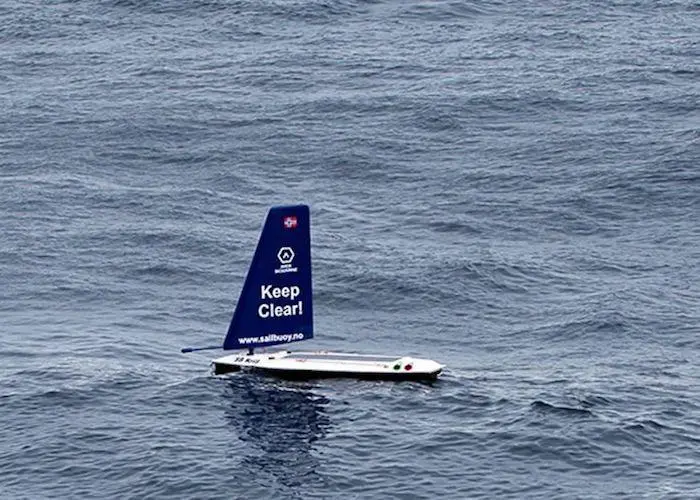
Offshore Sensing’s 2m long Sailbuoy drone is equipped with echosounder and environmental sensors and collects, processes and transmits density and distribution data from wherever it is deployed, in real time. The drone, which has a carbon footprint of zero, has been deployed as part of Aker BioMarine’s operations in the Antarctic to take the next step a new data-driven era of sustainable fishery and fishery management.
Frank Grebstad, SVP vessel operations, said: “Finally deployed, after a number of years in development, the Sailbuoy is changing how we work. We can position it close to the vessel and it will do the searching for us, or we can let it cover remote areas for up to months at a time, telling us where and when to proceed.”
Easy to operate, launch and recover, the drone uses wind for propulsion while the electronics is powered by solar panels, which charge the internal batteries. The Sailbuoy can reach a speed of two knots. It is built to survive the tough Antarctic conditions, but also be small and unobtrusive, so that it does not disturb the local wildlife.
By minimising the need for fishing vessels to spend time and resources looking for krill, the use of the drone significantly reduces the financial and environmental costs of searching for krill.
Related Articles
 FISHING TECHNOLOGY
 FISHING TECHNOLOGY
 COMMENT