



Selective science
Menakhem Ben-Yami looks at the issue of selectivity in fisheries.
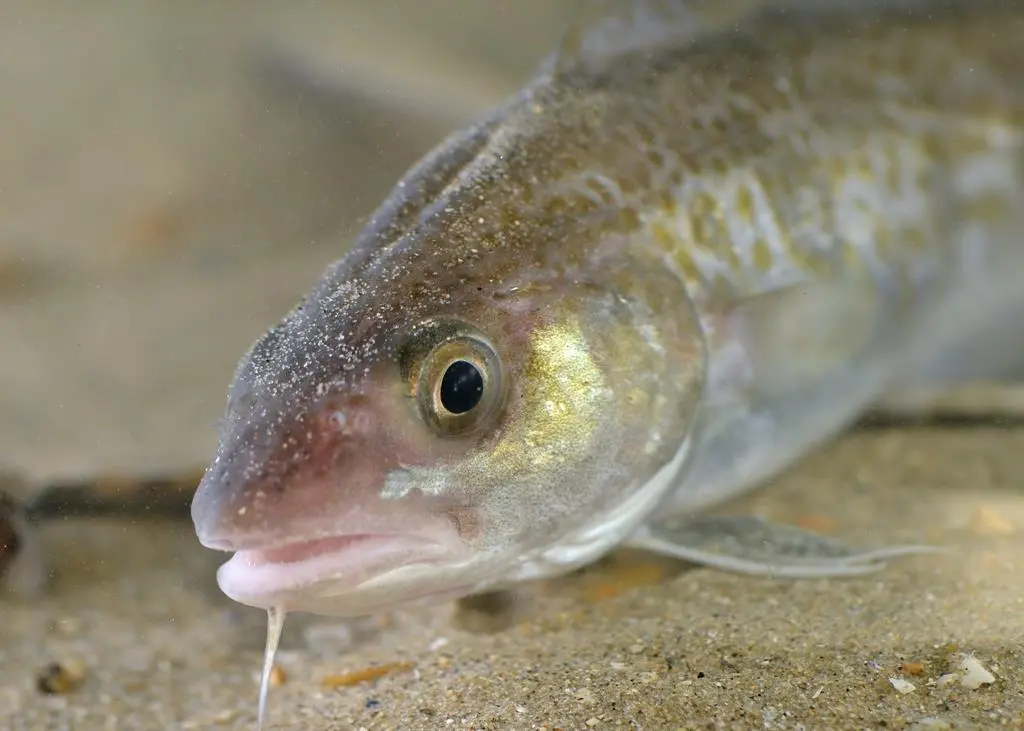
Nine years ago, I wrote here a column entitled ‘Is selectivity wrong?’ It told how since the dawn of modern fisheries releasing the smaller and younger fish from nets has been management’s dogma, and how we’ve been always told to fish only or mainly older, larger fish, and let the younger and smaller fish grow, mature and procreate. Hence, mesh size and hook size regulations for selective fishing.
But, since the early 2000s, fisheries scientists have started questioning this old, almost axiomatic assumption. Most of the sceptics came to the conclusion that sustained creaming off the larger and more prolific individuals brings about dwarfing in exploited fish populations. An argument even started among them as to whether selective fishing also causes genetic evolution in fish stocks, or if the process is reversible.
Blaming ocean warming
But now, in a study, funded by Marine Scotland Science (MSS), published in the January issue of Global Change Biology, Dr Alan Baudron, Research Fellow at the University of Aberdeen, and his co-authors are linking the decline in the length of fish in the North Sea to climate change. Dr Baudron and his colleagues used 40 years of age and length data of commercial fish in the North Sea collected by the International Council for the Exploration of the Sea. Over a 38-year period, the maximum body length of haddock, whiting, herring, Norway pout, plaice and sole in the North Sea has decreased by as much as 29%, coinciding with an increase in water temperatures of between 1 and 2 degrees C.
Since these six species differ in their biology, fishing mortality, diets, and living at different depths, the authors’ reasoning is that the main villain is the increasing water temperature, however subtle (up to 2 degrees C).
According to Dr Baudron, those findings are consistent with current understanding of the physiology of fish that are ‘cold-blooded’ animals and their metabolic rates are determined by the ambient temperature. “In general, fish grow more rapidly during their early life when temperatures are warmer. The consequence of rapid juvenile growth is that they become mature at a smaller length and therefore don’t grow as large as they would have in colder waters”.
But, wait a minute! He also said that “…the synchronous reduction in length did not apply to all species – cod, for instance, did not conform to it. It is also important to remember that these other factors – food availability and fishing pressure – may have impacted growth individually for each species along with the common effect of temperature, and will continue to do so into the future”. And Dr Coby Needle of Marine Scotland Science (MSS), Aberdeen, added: “This study contributes important information to help us address the issue of how fish growth is changing through time and highlights the importance of considering environmental issues when managing fisheries.”
Ignore selectivity
Somewhere between Scotland and ICES, of which Scotland must be a member, something got lost: the problem of selectivity. Without questioning the data in the Aberdeen study, one cannot agree with the authors’ concluding reasoning. This is because decrease in the average size of individuals in the Atlantic cod population has been documented long before any ocean (‘global’) warming was observed and reported. The earliest report comes from almost 100 years ago, when according to Hansen’s 1949 paper, the average age at first maturity of Atlantic cod at West Greenland declined from 9.9 years in 1917 to 6.4 years in 1936 in the northern fishery, and from 9.3 years in 1922 to 7.6 years in 1936 in the southern fishery.
A Russian scientist, V. M. Borisov reported in 1979 that in the Arcto-Norwegian stocks of Atlantic cod the majority of the fish matured at 8-10 years in the 1930s but by the 1970s the majority of cod matured at 6 years. This decline he attributed to a selective removal of late maturing cod from the population.
Apparently, the MSS-scientists have ignored or haven’t read the 1983 Beacham report from the Scotian shelf in the Northwest Atlantic, where cod catches peaked at over 80,000 tonnes in 1968 and were accompanied by a marked decline in biomass and corresponding decline in mean fish size and age. In addition, the median length and age of cod at maturity declined: the median age at sexual maturity declined from >5 years in the 1960s to <3 years in 1978 for both males and females. Cod that matured at smaller or younger sizes would have an advantage under heavy fishing pressure as the larger and older maturing cod would be fished out selectively. A similar trend was observed in haddock.
And, in the April 2004 issue of Nature, Norwegian fishery scientists E. L. Olsen and his co-authors published a study to the same effect, after analysing some 30 years of data involving the plunge in Atlantic cod populations around southern Labrador and Newfoundland’s Grand Banks. They wrote that there was a decline in the ages and sizes at maturity even before the northern cod population had collapsed, and that the cause was selective fishing pressure against those larger individuals that genetically tend to mature later.
Not just cod
Dr Jonas Bjarnason of Iceland, explains that due to selective fishing, stocks abound now with smaller, slower growing fish with inferior reproductive qualities. A genetic change occurs in fish populations, and fish mature sooner, spending most of their energy on spawning at the expense of body growth. They’re more vulnerable to predation and their natural mortality increases.
Steve Berkeley of the University of California in Santa Cruz, saw the same phenomenon in long-lived rockfish species and reported to a meeting of the American Association for the Advancement of Science (AAAS): “We shouldn’t be selectively protecting just the young ones, but add special protection for the biggest fish…you need to maintain older fish in the population, because those are the most successful at reproducing”, Berkeley said.
See also: http://benyami3.wix.com/benyami – go to ‘Essays in Fisheries Management and Development’.